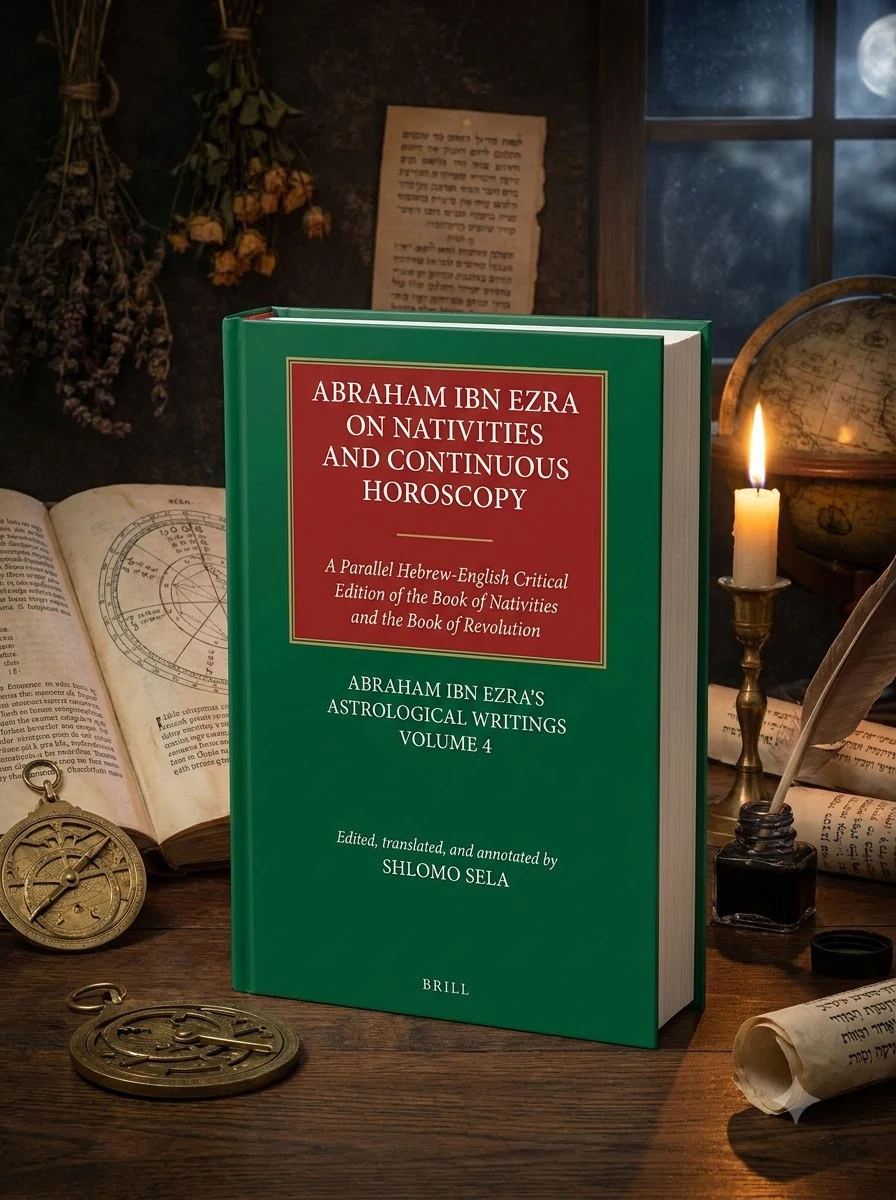
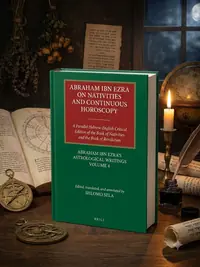
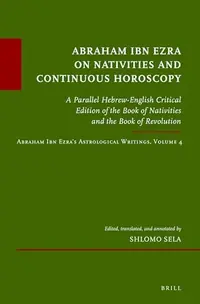
Abraham Ibn Ezra on Nativities and Continuous Horoscopy: A Parallel Hebrew-English Critical Edition of the Book of Nativities and the Book of Revoluti - Ingram Academic Sela, Shlom
Sela, Shlomo 86
86
 Editorial score
How we rate
Editorial score
How we rate
Stock reported in the catalog; fulfillment is confirmed with your request.
Unearth the profound astrological wisdom of Abraham Ibn Ezra through this definitive edition.
Delve into the foundational astrological doctrines of Abraham Ibn Ezra, one of the medieval era's most influential scholars. This volume presents the first critical edition and English translation of two pivotal works: *Sefer ha-Moladot*, which unveils the principles of nativities, and *Sefer ha-Tequfah*, dedicated to the nuanced system of continuous horoscopy. Discover how Ibn Ezra viewed these practices not merely as predictive tools, but as the very essence of astrological mastery, offering insights into an individual's entire life trajectory from birth to death.
This work sits at the intersection of medieval Jewish scholarship and classical Hellenistic astrology, preserving the intellectual legacy of Abraham Ibn Ezra within the academic framework of modern critical editions. It bridges ancient esoteric traditions with contemporary scholarly analysis for an English-speaking audience.


📝 Description: Abraham Ibn Ezra on Nativities and Continuous Horoscopy: A Parallel Hebrew-English Critical Edition of the Book of Nativities and the Book of Revoluti - Ingram Academic Sela, Shlom
💎 Expert review
📖 Why choose it
Why this book is worth reading
This volume is an essential resource for serious historians of astrology, scholars of medieval Jewish philosophy, and practitioners seeking the foundational texts that shaped Western astrological theory. By providing the first critical edition and English translation of Ibn Ezra’s *Sefer ha-Moladot* and *Sefer ha-Tequfah*, it offers unparalleled access to his systematic approach to nativities and continuous horoscopy. Readers will gain a deep understanding of how Ibn Ezra viewed these practices not merely as predictive tools, but as the essence of astrological mastery. It is indispensable for those who wish to trace the lineage of astrological thought from its classical roots through medieval interpretation, providing clarity on complex doctrines that have long been inaccessible outside of specialized academic circles.
⭐ Reader reviews
Reader rating
Sela’s edition is a monumental contribution to the field, offering rigorous textual analysis alongside accessible translation. However, it is strictly an academic work; casual readers or those seeking quick horoscopic tips will find its dense structure and scholarly apparatus overwhelming. It does not suit general astrology hobbyists looking for practical, immediate applications without prior theoretical background. The text demands patience and a willingness to engage with complex Hebrew-English parallel formats. While invaluable for researchers, it lacks the narrative flair of popular esoteric books. Readers must be prepared for a steep learning curve regarding medieval astrological terminology and methodology, making it better suited for those already familiar with the broader context of classical astrology.
❓ Frequently asked questions
📖 Who should read this
If you are a serious student of historical astrology, Jewish intellectual history, or medieval science, this critical edition is indispensable. Researchers and practitioners seeking a deeper understanding of classical astrological techniques will find it profoundly illuminating.
🎯 Key themes and symbolism
Natal Chart Predetermination
This work meticulously outlines how the precise moment of birth, captured in the natal chart, serves as the ultimate blueprint for an individual's entire life. Ibn Ezra considers this initial celestial configuration as a profound indicator of destiny, revealing the overarching arc of one's existence from beginning to end.
Dynamic Horoscopic Progression
Beyond the birth chart, the text explores the sophisticated system of continuous horoscopy, particularly through anniversary charts. This method details how yearly planetary returns, when juxtaposed with the original natal chart, provide ongoing, refined predictions and insights into the evolving periods and events throughout a person's life until their demise.
Medieval Jewish Astrology
Through Ibn Ezra's writings, readers gain a unique window into the integration of astrological science within medieval Jewish thought. The book highlights how this esteemed rabbinic authority considered astrological practice, particularly nativities and continuous horoscopy, to be a central and legitimate component of intellectual and spiritual inquiry during his time.
💬 Quotes from the book
“The celestial moment of one's first breath is the seed from which all future events unfurl, a decree written in the stars for the span of earthly life.”
“Yet, the heavens do not stand still; each revolution of the Sun, each yearly return to the natal degree, brings new measures and influences that refine the initial promise.”
📜 Historical context
📚 Glossary
- Nativities
- Continuous Horoscopy
- Natal Chart
📔 Questions to reflect on
- How might understanding the 'continuous horoscopy' of your own life alter your perception of past challenges or future aspirations?
- Consider the idea of a 'natal decree.' In what ways do you feel your life path has been predetermined, and where have you exercised free will?
- If medieval scholars like Ibn Ezra integrated astrology into their spiritual and intellectual framework, how does modern thought reconcile (or diverge from) such ancient wisdom traditions?
✍️ More books by this author Sela, Shlomo
All books by this author →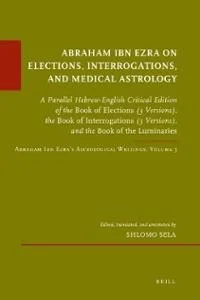
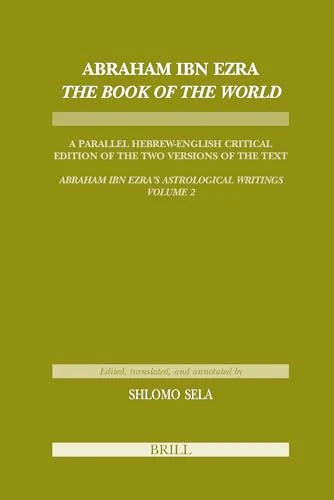
🏛 Books from this publisher Brill
All books from this publisher →
You might also like
See more →
 91
91
![The Instant Astrologer [With CD]](/img/the-instant-astrologer-with-cd-scene.webp) 91
91