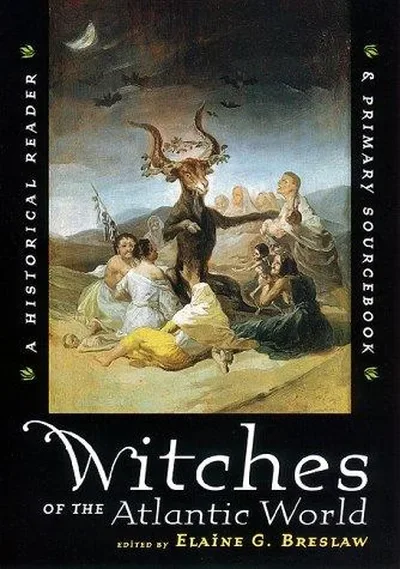
Witches of the Atlantic World: An Historical Reader and Primary Sourcebook
✍️ Breslaw, Elaine GAn anthology of primary source documents and scholarly interpretations covering 15th to 18th century witchcraft.
This volume provides a multicultural perspective on early American witchcraft by pairing historic source materials with modern scholarly analysis. The compiled documents reveal how various cultural groups, including Native American, African, South American, and European communities, interpreted evil and misfortune. By highlighting the interplay between Christian traditions and regional folk beliefs, the collection clarifies the broader Atlantic background that informed the Salem trials.
This collection sits within the Atlantic world from the 15th to 18th century. It covers colonial North America, New England, South America, and Europe, detailing how European, Native American, and African traditions influenced early American witchcraft concepts.


📝 Description: Witches of the Atlantic World: An Historical Reader and Primary Sourcebook
💎 Expert review
📖 Why choose it
Why this book is worth reading
This anthology is essential for scholars, practitioners, and history enthusiasts seeking to understand the true multicultural roots of Atlantic witchcraft. Readers who feel constrained by the singular narrative of Salem will find profound liberation in Breslaw’s expansive scope. It offers marginalized voices from Native American, African, and European traditions a platform to demonstrate how they utilized beliefs in possession and magic to navigate misfortune and assert control over their realities. By presenting primary documents rather than just secondary analysis, it provides an intimate look at spiritual survival during the early modern era. Those interested in the intersection of colonialism, power dynamics, and esoteric practice will gain a richer, more nuanced perspective on how diverse cultures interpreted evil and magic beyond simple demonology.
⭐ Reader reviews
Reader rating
Finally got around to ordering this. The symbolism is layered and generous to patient readers. My only regret is not ordering it sooner.
Needed this for my research. Not a light read, but far more accessible than I feared. Every rereading turns up something I missed. I'd have loved an index, but that's on the original text.
Perfect companion for my morning study sessions. It rewards patience more than any book I've bought this year. The language takes some getting used to, but it becomes part of the charm. Recommended with reservations.
This exceeded my expectations. I appreciated how the argument builds steadily from first principles. Delivery took a bit longer than quoted. Still worth having on the shelf.
This has been on my wishlist for months. Some chapters demand a slow, careful read, and that's exactly the point. A few pages arrived with light corner wear, though nothing serious. Happy enough with the purchase.
Bought this as a gift for my sister and ended up ordering a second copy for myself. Some chapters demand a slow, careful read, and that's exactly the point. The typesetting is comfortable for study, with good margins for notes.
My third book from this store and this one might be the best. The print is clean and easy on the eyes for long sessions.
Breslaw delivers a vital corrective to the narrow lens often applied to Atlantic witchcraft studies. The collection’s strength lies in its rigorous use of primary sources to expose cultural collisions and spiritual resilience among marginalized groups. However, readers seeking entertaining folklore or practical magical instruction will find this text dry and overly academic. It is not suitable for those who prefer a romanticized view of witchcraft devoid of historical grit or political complexity. The dense nature of the documents may alienate casual readers looking for a quick overview of Salem. This work demands patience and an interest in rigorous historiography, making it less accessible to those without a background in early modern history or cultural studies.
❓ Frequently asked questions
📖 Who should read this
Scholars of early American history, students of comparative religion, and practitioners interested in the diasporic roots of magical traditions will find this essential. It is for those who seek depth beyond the sensationalism of Salem.
🎯 Key themes and symbolism
Multicultural Witchcraft Dynamics
The text dismantles the Eurocentric view by integrating African, Indigenous, and Creole sources, showing how witchcraft was a shared, yet distinct, language of power across racial and religious lines in the New World.
Theology of Evil and Control
Breslaw analyzes how both Protestant and Catholic frameworks were adapted by colonists and the colonized to explain unexplained disasters, positioning witchcraft as a pragmatic, albeit feared, method for managing cosmic chaos and personal suffering.
Gender and Spiritual Authority
The volume critically examines how gender roles dictated who could be labeled a witch, highlighting how women often navigated limited social power through alleged magical agency, challenging traditional narratives of passive victimhood.
📜 Historical context
📚 Glossary
- Atlantic World
- Primary Sourcebook
- Diabolical Possession
📔 Questions to reflect on
- How might the concept of 'evil' shift when viewed through a non-European lens?
- In what ways do modern magical traditions still bear the imprint of these historical cultural collisions?
- How did the intersection of power and spirituality define who was labeled a witch in these primary accounts?
📖 Read on the blog
✍️ More books by this author Breslaw, Elaine G
All books by this author →


🏛 Books from this publisher New York University Press
All books from this publisher →
You might also like
See more →
Have a question about this item?
Ask about the edition, condition, delivery or anything else — we reply by email or phone, usually within a day.
