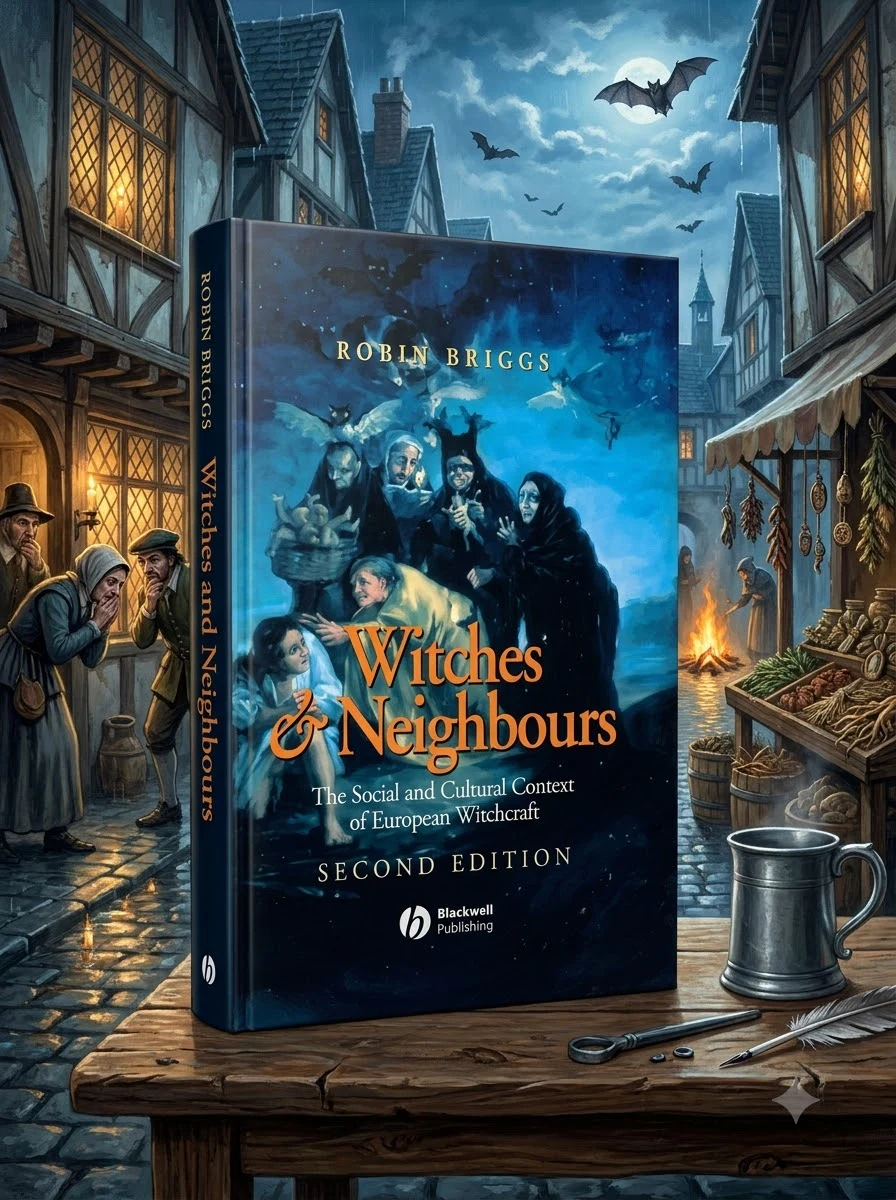

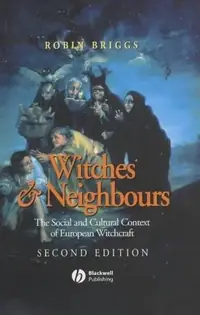
Witches and Neighbours: The Social and Cultural Context of European Witchcraft (Revised)
Briggs, Robin 82
82
 Editorial score
How we rate
Editorial score
How we rate
Stock reported in the catalog; fulfillment is confirmed with your request.
Witchcraft was not a fringe threat, but the very fabric of early modern European daily life.
Robin Briggs shatters the myth of witchcraft as an isolated phenomenon of mass hysteria. Instead, he reveals it as a complex social dialogue woven into the everyday interactions of early modern Europe. By examining original court records and local disputes, Briggs demonstrates how accusations served as mechanisms for resolving neighborly conflicts, economic grievances, and community tensions. This revised edition refreshes that groundbreaking argument with an updated bibliography, offering a nuanced view where witchcraft is less a supernatural battle and more a reflection of the societal fractures of its time.
This work sits firmly within the historiography of early modern Europe, challenging traditional narratives of mass hysteria by framing witchcraft as an integral part of daily social fabric. It belongs to the tradition of cultural history that examines how supernatural beliefs intersected with mundane community dynamics.


📝 Description: Witches and Neighbours: The Social and Cultural Context of European Witchcraft (Revised)
💎 Expert review
📖 Why choose it
Why this book is worth reading
Readers seeking to understand the human mechanics behind historical persecution will find profound value in this text. It is ideal for those tired of sensationalist ghost stories who want rigorous academic insight into how neighbors used accusations as tools for resolving economic grievances and personal feuds. By revealing witchcraft as a reflection of societal fractures rather than supernatural evil, Briggs offers a compassionate yet critical lens. Anyone interested in the sociology of fear, the dynamics of rural communities, or the legal history of early modern Europe will gain a nuanced perspective that transforms their understanding of these tragic events.
⭐ Reader reviews
Reader rating
Briggs delivers a compelling revisionist argument that demystifies the witch trials by grounding them in local disputes and court records. The updated bibliography ensures its relevance for contemporary scholars. However, readers expecting atmospheric horror or detailed magical practices will be disappointed. This is a dry, sociological study focused on conflict resolution mechanisms rather than esoteric rituals. It may feel overly academic to casual history enthusiasts who prefer narrative-driven accounts. Those seeking straightforward moral judgments or supernatural validation will find little here, as the text strictly focuses on the mundane social contexts that fueled accusations.
❓ Frequently asked questions
📖 Who should read this
Scholars of social history and practitioners interested in the anthropological roots of magical beliefs will find this essential. Avoid if you seek supernatural manuals; this is a study of human behavior, not ritual practice.
🎯 Key themes and symbolism
Social Fracture and Witchcraft
Briggs posits that witchcraft accusations were rarely about demonic pacts, but rather tools used to police community boundaries. When neighbors disagreed on property, debts, or social standing, the label of witchcraft became a convenient weapon to enforce conformity or settle scores, revealing the deep interpersonal stresses of village life.
Witchcraft as Social Mirror
The book treats the witch craze as a cultural mirror, reflecting the anxieties of a changing society. Rather than a top-down conspiracy of persecution, Briggs illustrates how local dynamics, economic shifts, and gender roles shaped who was accused and why, showing witchcraft evolving alongside the communities that feared it.
Revisiting the Historical Record
Through meticulous analysis of primary sources, Briggs challenges the notion that witchcraft was merely a delusion propagated by elites. He argues that the phenomenon was organic, deeply rooted in the lived experiences of ordinary people, and that understanding it requires looking at the mundane, not just the mystical.
💬 Quotes from the book
“Witchcraft was an all-pervasive aspect of life in early modern Europe.”
“Witchcraft was as complex and changing as the society of which it formed a vital part.”
📜 Historical context
📚 Glossary
- Social History
- Early Modern Europe
- Primary Sources
📔 Questions to reflect on
- How do modern community disputes reflect the social tensions once addressed through accusations of witchcraft?
- In what ways do our current fears of the 'other' mirror the boundary-policing mechanisms of early modern villages?
- Reflect on a time when a social grievance was resolved through indirect or symbolic means rather than direct confrontation.
✍️ More books by this author Briggs, Robin
All books by this author →
🏛 Books from this publisher Wiley-Blackwell
All books from this publisher →
 75
75
You might also like
See more →
 91
91