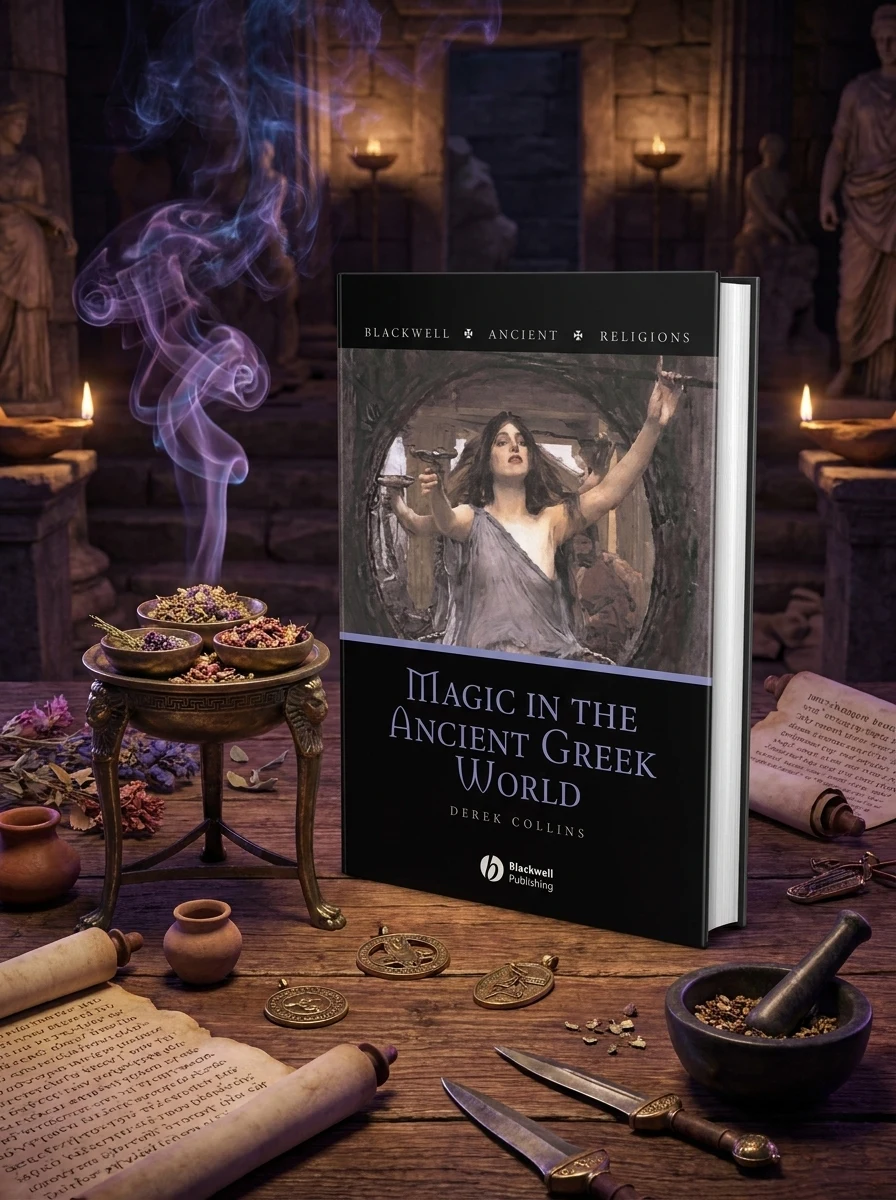
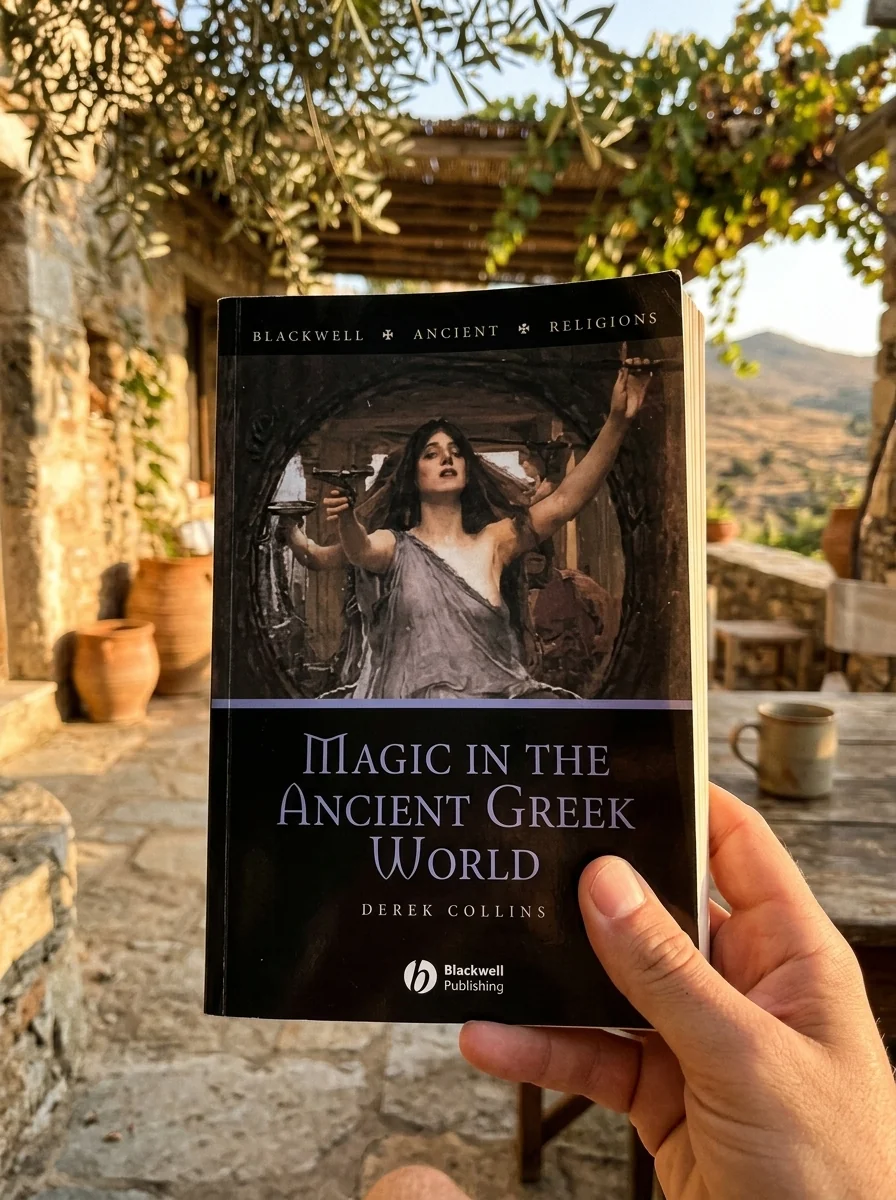
Magic in the Ancient Greek World
✍️ Collins, DerekDerek Collins meticulously uncovers the profound role of magic within the ancient Greek world, moving beyond simplistic notions to a nuanced understanding. This comprehensive study delves into both the collective social imagination and the practical ritual reality that imbued magical practices with deep cultural significance. Readers will explore the extensive application of incantations, herbal concoctions, and various mystical arts, revealing how these elements were deeply woven into the fabric of daily existence and cultural belief across all strata of society.


📝 Description: Magic in the Ancient Greek World
📑 What's inside
- Acknowledgments
- Abbreviations
- Introduction
- Part I: Magic: What Is It and How Does It Work?
- Frazer and Tylor
- Malinowski
- Magic as Communication
- Lévy-Bruhl
- Evans-Pritchard
- Sympathetic Magic
- Magic and the Extended Person
- Magic and Analogy
- Beyond Frazer
- Tambiah and Persuasive Magic
- Conclusion
- Part II: A Framework for Greek Magic
- Magic and the Gods
- Divinity and Nature
- The Hippocratics: Magic, Divination, and Epilepsy
- Plato and Greek Psychology
- Magic and Causality
- Greek Magicians
- Magoi
- Gorgias, mageia and goēteia
- Other Magical Terms
- Conclusion
- Part III: Binding Magic and Erotic Figurines
- Binding the Gods
- Divine Agents
- 'Characters'
- Body Parts and Health
- Erotic Magic
- Figurines
- Erōtes
- Part IV: Homeric Incantations
- Pythagoras and Empedocles
- The Mechanics of Homeric Incantations
- Obstetrics and Gynecology
- Verse Combinations and the Power of Metaphor
- Intoxication, Choking, and Gout
- Incantations and Divination
- Neoplatonic Theurgy and Homer
- Conclusion
- Part V: Magic in Greek and Roman Law
- Magic in Greek Law and Legal Imagination
- Trials for Erotic Magic
- Theoris, the Lemnian Witch
- Plato's Laws Against Magic
- Magic in Roman Law and Legal History
- The Twelve Tables
- The Lex Cornelia
- Magia and Maleficium: Magic and Witchcraft
- Apuleius the Magus
- The Opinions of Paulus and Later Law Codes
- Interpretationes Christianae
- The Medieval Inheritance
- Conclusion
- Bibliography
- Index
💎 Expert review
📖 Why choose it
Why this book is worth reading
Scholars of classical antiquity and practitioners of Western esotericism will find immense value in Derek Collins’ meticulous exploration of how magic functioned in ancient Greece. This book is essential for those seeking to understand the practical ritual reality that underpinned daily life, rather than just abstract philosophical concepts. Readers interested in the intersection of herbal lore, incantations, and societal belief systems will appreciate the nuanced view of collective social imagination. It offers a deep dive into how mystical arts were woven into the fabric of existence across all strata, providing context for modern interpretations of ancient spirituality. If you desire a comprehensive study that moves beyond simplistic notions to reveal the profound cultural significance of these practices, this text provides the rigorous academic grounding necessary for true understanding.
⭐ Reader reviews
Reader rating
Derek Collins delivers a dense, scholarly examination of magic in the ancient Greek world, prioritizing academic rigor over accessible narrative. This book is ideal for those willing to engage with complex sociological and historical analyses of ritual reality. However, it does not suit readers seeking entertaining tales of sorcery or quick, practical grimoires; the tone is strictly analytical rather than instructional or mystical. Casual hobbyists may find the depth of cultural context overwhelming without prior background in classical studies. It is a serious work for those who appreciate detailed dissections of incantations and herbal concoctions within their societal framework, but it lacks the whimsy or immediacy expected by general occult enthusiasts looking for inspiration rather than historical evidence.
❓ Frequently asked questions
📖 Who should read this
If you're fascinated by ancient civilizations, the history of religion, or the enduring presence of magic in human culture, this book offers an essential, rigorous exploration. It’s for those seeking to understand Greece's spiritual landscape beyond its familiar myths.
🎯 Key themes and symbolism
Social Belief Systems
Collins examines how ancient Greeks conceived of magic, not as an isolated superstition, but as an integral part of their worldview. He explores the mental frameworks, shared narratives, and collective fears and hopes that gave form and meaning to magical acts within their society.
Ritualistic Practice
This section illuminates the actual methodologies and performance of ancient Greek magic. From detailed spells and invocations to the use of specific substances like drugs or charms, the book reconstructs the tangible actions and practical applications that defined these mystical engagements.
Ubiquitous Influence
The author demonstrates how magical practices permeated every level of ancient Greek life, from personal dilemmas to public affairs. It wasn't confined to a fringe; rather, it was a pervasive element that offered solutions, protection, and influence in a world where divine and human realms were intimately connected.
📜 Historical context
📚 Glossary
- Social Imagination
- Ritual Reality
- Pharmaka
📔 Questions to reflect on
- How might understanding ancient Greek magic challenge our modern, often reductionist, views of historical religious practices?
- Consider a specific aspect of your own culture; how might it be viewed as 'magic' by an outsider with different cultural assumptions?
- In what ways did magic likely offer ancient Greeks a sense of agency or control in an often unpredictable world?
📖 Read on the blog
📖 From the series “Blackwell Ancient Religions”
All books in the series →


✍️ More books by this author Collins, Derek
All books by this author →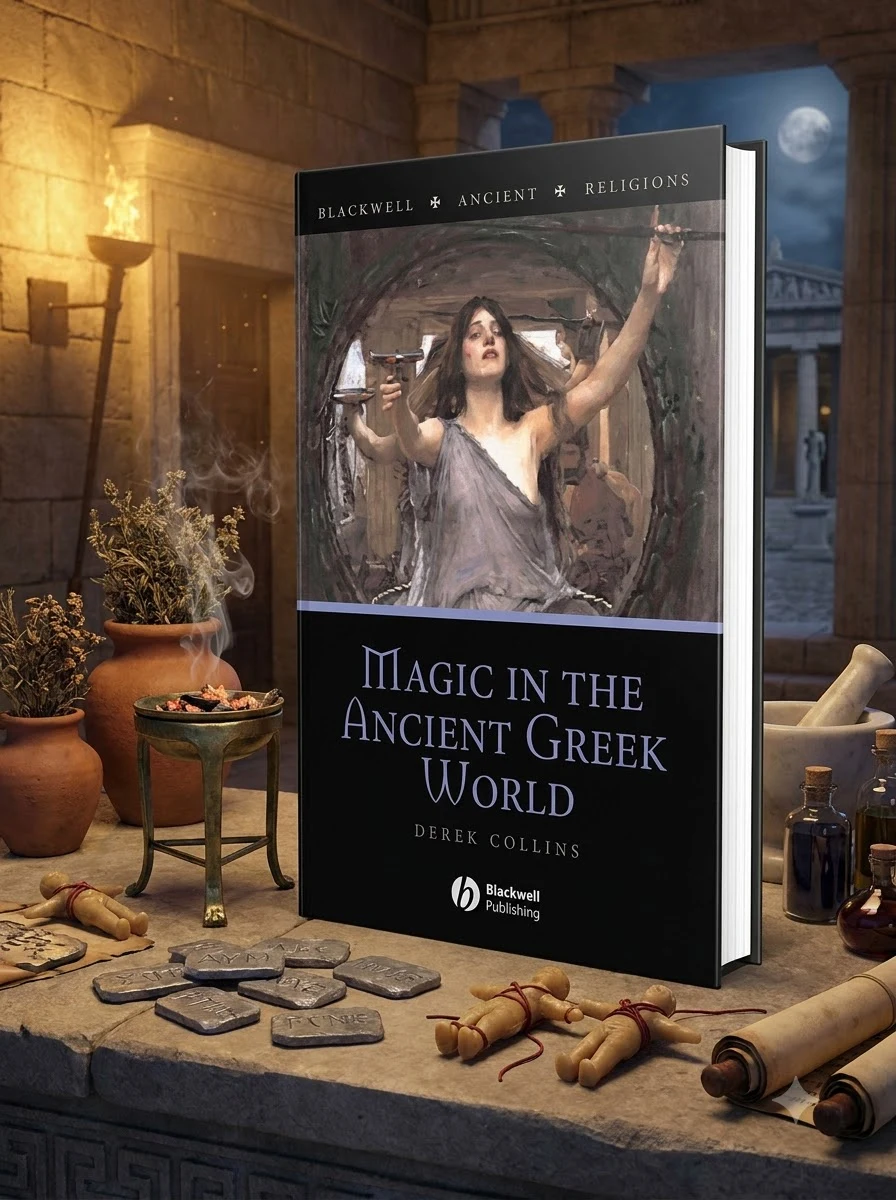
🏛 Books from this publisher Wiley-Blackwell
All books from this publisher →


You might also like
See more →







Have a question about this item?
Ask about the edition, condition, delivery or anything else — we reply by email or phone, usually within a day.
