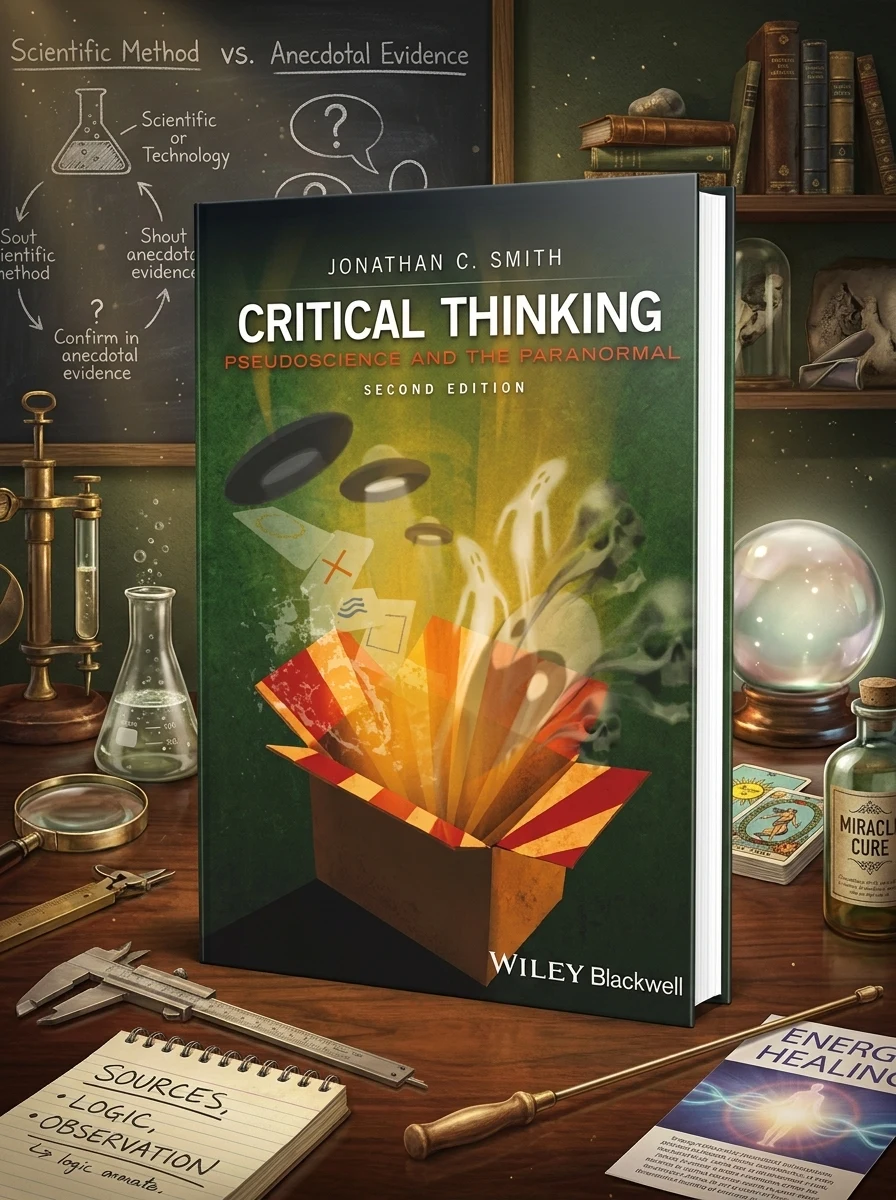
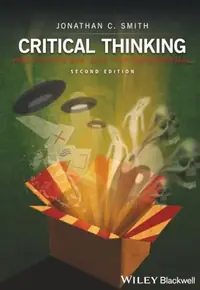
Critical Thinking: Pseudoscience and the Paranormal
Smith, Jonathan CStock reported in the catalog; fulfillment is confirmed with your request.
Unmask the illusions of the unseen; sharpen your mind against mystical claims.
This compelling guide offers a robust framework for intellectual discernment, using the intriguing landscapes of pseudoscience and paranormal phenomena as its primary classroom. Readers are systematically led through the process of evaluating claims, scrutinizing sources, applying logical reasoning, and interpreting scientific observations to rule out alternative explanations. From assessing the efficacy of 'energy treatments' to dissecting the foundations of astrology, parapsychology, and creationism, this volume empowers you to approach extraordinary assertions with informed skepticism and analytical precision, fostering a truly open yet discerning mind.
This volume resides within the modern tradition of scientific skepticism and critical inquiry, serving as a contemporary counter-narrative to traditional occultism by emphasizing empirical evidence over mystical belief. It bridges the gap between philosophical discourse and popular science writing, addressing the perennial tension between faith in the unseen and the demand for rational verification.


📝 Description: Critical Thinking: Pseudoscience and the Paranormal
💎 Expert review
📖 Why choose it
Why this book is worth reading
This book is an essential resource for individuals who find themselves drawn to the allure of paranormal phenomena but crave a rigorous intellectual framework to evaluate such claims. It empowers readers by teaching them how to apply logical reasoning and scrutinize sources, transforming vague curiosity into sharp analytical precision. By dissecting everything from astrology to energy treatments, it helps you rule out alternative explanations with confidence. If you wish to approach extraordinary assertions with informed skepticism rather than blind acceptance, this guide fosters an open yet discerning mind. It is perfect for those who want to unmask illusions without closing themselves off to the mystery of the unknown, ensuring their beliefs are built on a foundation of robust intellectual discernment.
⭐ Reader reviews
Reader rating
Jonathan C. Smith provides a compelling and systematic guide to evaluating pseudoscience, using paranormal phenomena as its primary classroom. The text excels in teaching readers how to assess efficacy and interpret scientific observations, making complex logical processes accessible. However, it may not suit those seeking validation of mystical experiences or those who prefer intuitive, non-analytical approaches to spirituality. Readers looking for esoteric wisdom or practical magical instruction will find this volume dry and dismissive of their interests. It is strictly for the skeptic or the aspiring skeptic who values analytical precision over emotional resonance. While it lacks poetic flair, its utility in fostering a truly open yet discerning mind is undeniable for the right audience.
❓ Frequently asked questions
📖 Who should read this
Are you fascinated by the paranormal but desire intellectual rigor? Do you wish to fortify your mind against unsubstantiated claims? This book is for the curious skeptic, the aspiring critical thinker, and anyone seeking a clearer lens through which to view the world's mysteries and marvels.
🎯 Key themes and symbolism
Mastering Critical Inquiry
The book meticulously outlines the fundamental steps of critical thought. It instructs readers on how to assess the credibility of information sources, identify logical fallacies, and interpret empirical data. This foundational approach equips you with the tools to deconstruct any claim, ensuring a rigorous and evidence-based understanding of the world around you.
Deconstructing Esoteric Claims
Utilizing a wide array of fascinating examples, from alternative healing modalities to astrological predictions and spiritualist communications, this work demonstrates how to apply critical thinking to popular esoteric and paranormal beliefs. It encourages a structured examination of these subjects, moving beyond mere belief or disbelief to a deeper, evidence-informed comprehension.
Belief, Evidence, and Mind
Exploring the intricate relationship between personal conviction and empirical evidence, the text delves into concepts like the placebo effect and the justifications for various beliefs. It offers an open-minded exploration of how faith and critical reasoning can coexist or conflict, providing insights into the psychological underpinnings of belief systems.
💬 Quotes from the book
“Before accepting any extraordinary claim, we must first ask: What is the quality of the evidence, and are there simpler, more mundane explanations we've overlooked?”
“The allure of a 'miracle cure' often overshadows the rigorous scrutiny required to truly understand its mechanisms, or lack thereof. Our desire for hope must not blind us to facts.”
📜 Historical context
📚 Glossary
- Pseudoscience
- Paranormal
- Placebo Effect
📔 Questions to reflect on
- Reflect on a belief you once held strongly that you later re-evaluated. What critical steps did you take to change your perspective?
- Choose a current paranormal claim frequently discussed in media. How would you apply the critical thinking process from this book to investigate its validity?
- Consider the relationship between faith and evidence in your own life. Are there areas where you prioritize one over the other, and what are the implications?
✍️ More books by this author Smith, Jonathan C
All books by this author →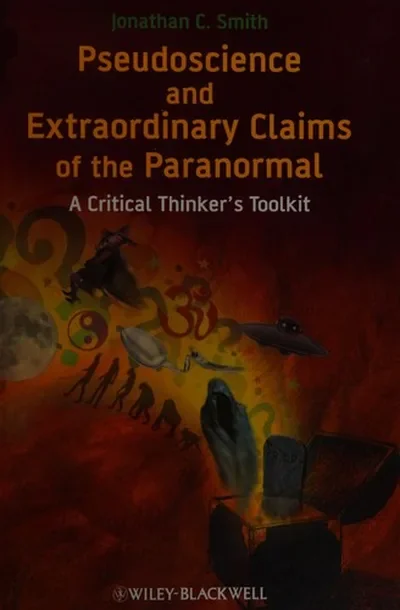
🏛 Books from this publisher Wiley-Blackwell
All books from this publisher →
 75
75
You might also like
See more →