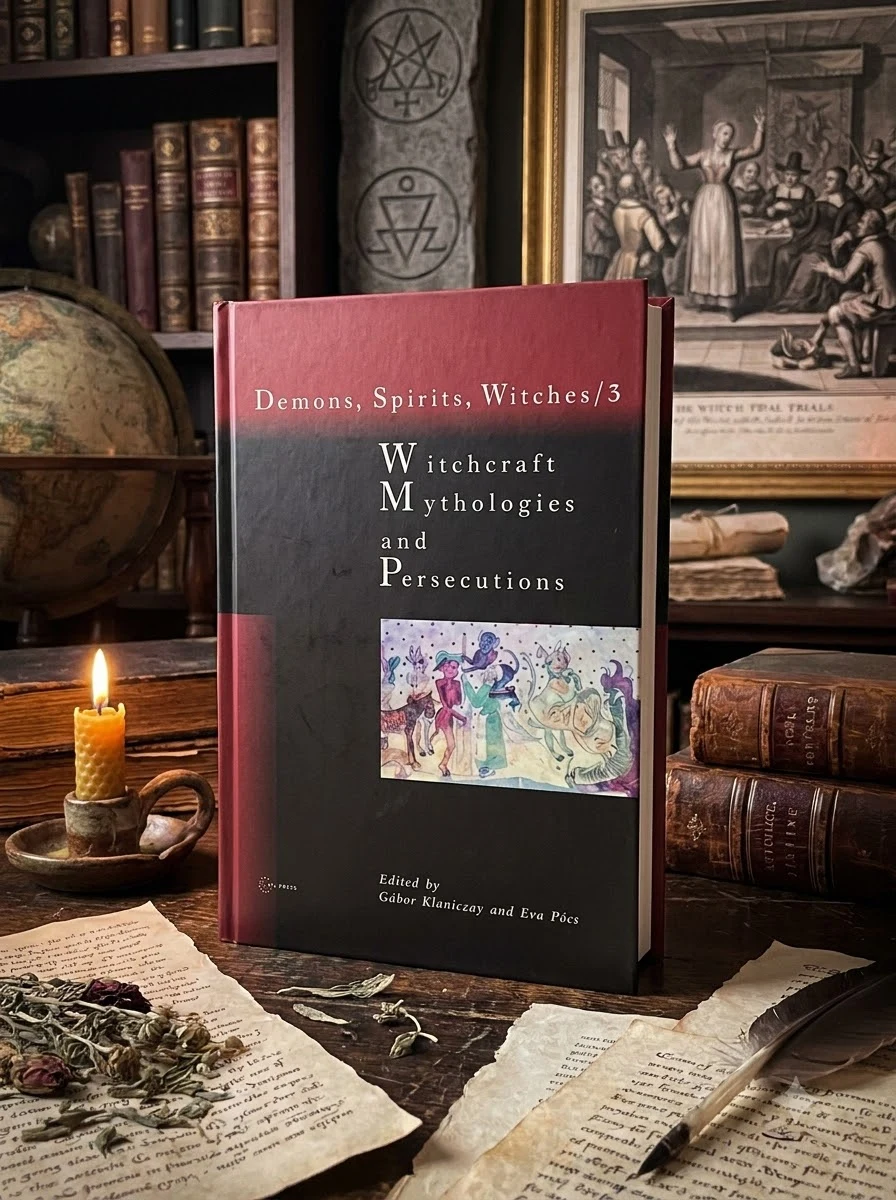
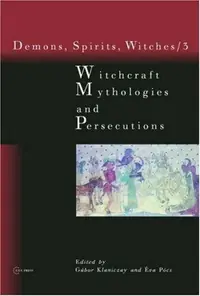
Witchcraft Mythologies and Persecutions Klaniczay, Gábor
 79
79
 Editorial score
How we rate
Editorial score
How we rate
This edition can be ordered. No arrival date is confirmed.
Unravel the dark threads of witchcraft's enduring mythologies and persecutions.
This compelling third volume in a distinguished series delves deeper into the complex interplay of witchcraft mythologies and their historical persecutions. Building on previous explorations of spirit communication and Christian demonology, it adopts a robust historical-anthropological lens. The authors meticulously dissect the origins and evolution of the Witches' Sabbath, employing micro-historical analysis to reveal the social, religious, and legal forces behind accusations. Furthermore, the book uncovers how lingering folklore continues to echo the traumatic memories of witch hunts across various regions, offering a comprehensive, interdisciplinary perspective on a pivotal historical phenomenon.
This volume extends the scholarly discourse on Christian demonology and spirit communication within the broader field of historical anthropology. It situates itself firmly in the academic tradition of dissecting the socio-legal mechanisms behind early modern witch persecutions.


📝 Description: Witchcraft Mythologies and Persecutions Klaniczay, Gábor
💎 Expert review
📖 Why choose it
Why this book is worth reading
This book serves as an essential resource for serious scholars, historians, and occultists seeking a rigorous, evidence-based understanding of witchcraft persecutions. Readers who appreciate robust historical-anthropological frameworks will find immense value in its meticulous dissection of the Witches' Sabbath. It is ideal for those interested in how social, religious, and legal forces shaped accusations. By uncovering how folklore echoes traumatic memories, it offers a comprehensive perspective that goes beyond simple narrative. If you desire to understand the enduring mythologies behind these events through an interdisciplinary lens, this text provides the necessary depth and scholarly integrity to illuminate the complex interplay of history and belief.
⭐ Reader reviews
Reader rating
This academic work demands patience from its audience, offering dense micro-historical analysis rather than accessible storytelling. It is strictly for readers comfortable with rigorous historical-anthropological methodology and those invested in the socio-legal dimensions of witch hunts. Casual readers seeking engaging narratives or practical magical advice will find this text dry and overly theoretical. The authors prioritize scholarly precision over readability, making it unsuitable for general audiences or those looking for light entertainment. However, for specialists and dedicated students of esoteric history, its comprehensive, interdisciplinary approach provides invaluable insights into the traumatic memories embedded in folklore.
❓ Frequently asked questions
📖 Who should read this
This volume is essential for scholars of social history, religious studies, and cultural anthropology, as well as anyone deeply invested in understanding the complex origins and profound impact of witchcraft persecutions through an interdisciplinary lens. Researchers and dedicated students will find its rigorous analysis invaluable.
🎯 Key themes and symbolism
Sabbath Mythology Deciphered
The book meticulously deciphers the complex and varied mythologies surrounding the Witches' Sabbath. It investigates the intricate historical processes that led to its formation, demonstrating that this central image of witchcraft was a confluence of popular beliefs, learned demonology, and societal fears rather than a singular, unified tradition.
Persecution's Social Tapestry
Through micro-historical analysis, this volume illuminates the specific social, religious, legal, and cultural environments that fostered witchcraft accusations and persecutions. It moves beyond generalized theories to examine localized dynamics, revealing the profoundly human and contextual factors that drove these tragic events in different communities.
Echoes in Folklore
Exploring the enduring impact of witchcraft persecutions, the book investigates how contemporary popular beliefs and folklore in affected regions still carry the indelible traces of these traumatic historical memories. It connects past suffering to present cultural narratives, showing how history shapes collective consciousness.
💬 Quotes from the book
“The intricate tapestry of the Witches' Sabbath reveals not a singular origin, but a confluence of popular belief, learned demonology, and judicial pressure.”
“Micro-historical inquiries illuminate the profoundly human dimensions of fear and accusation, often rooted in specific community dynamics rather than abstract theological tenets.”
📜 Historical context
📚 Glossary
- Witches' Sabbath
- Demonology
- Historical Anthropology
📔 Questions to reflect on
- How might understanding the historical construction of the Witches' Sabbath challenge modern perceptions of 'witchcraft' or 'occult' practices?
- Reflect on how collective anxieties in your own historical or contemporary context might manifest in scapegoating or persecution, drawing parallels to the book's themes.
- Consider the role of folklore in preserving traumatic historical memories. What modern equivalents exist for carrying forward the echoes of past societal traumas?
📖 From the series “Demons, Spirits, Witches”
All books in the series →
🏛 Books from this publisher Central European University Press
All books from this publisher →
You might also like
See more →

 91
91