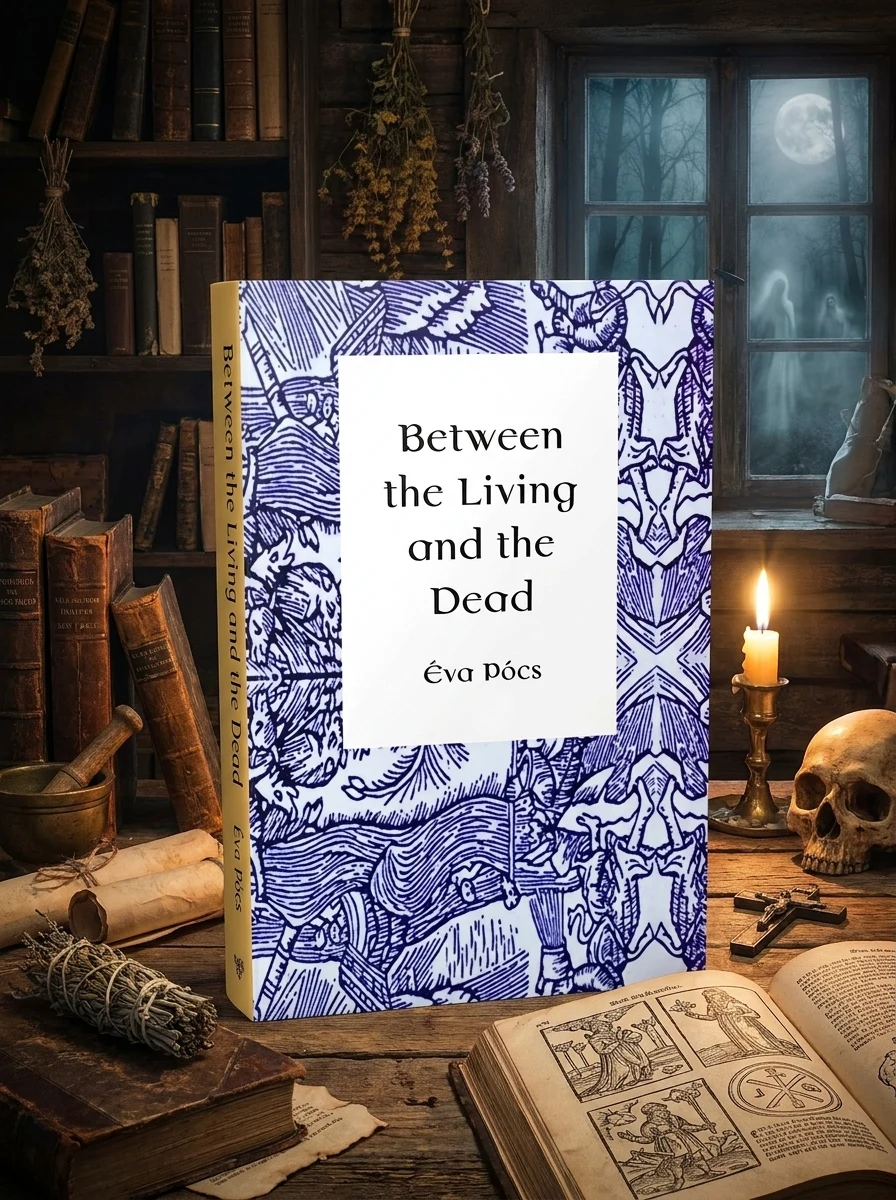

Between the Living and the Dead: A Perspective on Seers and Witches in Early Modern Age
 81
81
 Editorial score
How we rate
Editorial score
How we rate
This edition can be ordered. No arrival date is confirmed.
Unearth the hidden world where early modern seers bridged the veil between life and death.
Éva Pócs, a leading historical anthropologist, meticulously explores the intricate systems of belief and communication with the otherworldly in early modern Europe. Drawing significantly from previously underutilized East European archives, this work illuminates the practices of seers, witches, and other mediators as documented in 16th to 18th-century witchcraft trials. Pócs reveals the enduring presence of shamanistic traditions and their crucial role in village life, connecting these local practices to broader European patterns and their surprising persistence into the twentieth century.
This work sits at the intersection of historical anthropology and early modern European history, specifically examining the liminal spaces of witchcraft trials and shamanistic traditions. It bridges the gap between academic archival research and the esoteric study of seers who mediated between the living and the dead.


📝 Description: Between the Living and the Dead: A Perspective on Seers and Witches in Early Modern Age
💎 Expert review
📖 Why choose it
Why this book is worth reading
Scholars of early modern Europe and practitioners of contemporary witchcraft will find this text invaluable for its rigorous yet accessible exploration of how seers functioned as vital community mediators. Éva Pócs draws on underutilized East European archives to reveal the enduring nature of shamanistic practices that persisted well into the twentieth century. Readers interested in the anthropology of belief, the sociology of the occult, or the historical roots of Wiccan and pagan traditions will appreciate how this work connects local village practices to broader European patterns. It offers a nuanced understanding of the 'otherworldly' communication systems that defined early modern spiritual life, providing a scholarly foundation for those seeking deeper historical context beyond popular folklore.
⭐ Reader reviews
Reader rating
Pócs delivers a meticulous anthropological study that will appeal primarily to academics and serious historians of religion. The reliance on specific archival data from witchcraft trials demands patience and intellectual rigor from the reader, making it unsuitable for those seeking light reading or practical magical instruction. While the analysis of shamanistic persistence is fascinating, the dense academic style may alienate casual enthusiasts of the occult who prefer narrative over exposition. This book is a significant contribution to the field but requires a dedicated mindset to fully appreciate its detailed examination of belief systems and historical continuity in East European contexts.
❓ Frequently asked questions
📖 Who should read this
If you're drawn to the historical realities of folk magic, the evolution of spiritual practices, or the anthropology of belief systems, this scholarly work is for you. It offers unparalleled depth into early modern European supernatural beliefs, with a unique focus on East European traditions.
🎯 Key themes and symbolism
Relics of Shamanism
Pócs meticulously traces the surviving threads of ancient European shamanistic practices within the early modern period. She uncovers how these traditions manifested through seers and healers, exploring their methods for interacting with the spirit world, and demonstrating their unexpected resilience despite the changing religious and social landscapes of the era.
Supernatural Communication Systems
This volume delves into the diverse ways individuals in early modern societies sought to communicate with the supernatural realm. From prophetic dreams to ritualistic interactions, Pócs examines the established protocols and personal experiences that facilitated these exchanges, highlighting their societal importance beyond mere superstition in daily life.
Witchcraft Trials & Mediators
By analyzing detailed records from 16th to 18th-century witchcraft trials, the author reconstructs the roles of various spiritual mediators. She demonstrates how these figures, often labeled as witches, were integral to communal spiritual life, and how their perceived powers brought them into conflict with emerging legal and religious authorities, leading to their persecution.
💬 Quotes from the book
“The persistent threads of archaic shamanic practices, often masked by Christian overlays, reveal a deep-seated human need for mediation with the unseen world.”
“Analysis of judicial records from the 16th to 18th centuries uncovers not merely accusations, but a detailed ethnographic landscape of supernatural interaction and community belief.”
📜 Historical context
📚 Glossary
- Early Modern Age
- Shamanism
- Witchcraft Trials
📔 Questions to reflect on
- How might our modern understanding of "supernatural communication" be informed or challenged by the early modern perspectives presented in this book?
- Consider the societal role of "mediators" or "seers" in pre-modern communities. What contemporary roles, if any, parallel these functions today?
- Reflect on the interplay between official religious doctrine and persistent folk beliefs. How do these dynamics shape our perception of history and spirituality?
🏛 Books from this publisher Central European University Press
All books from this publisher →
You might also like
See more →