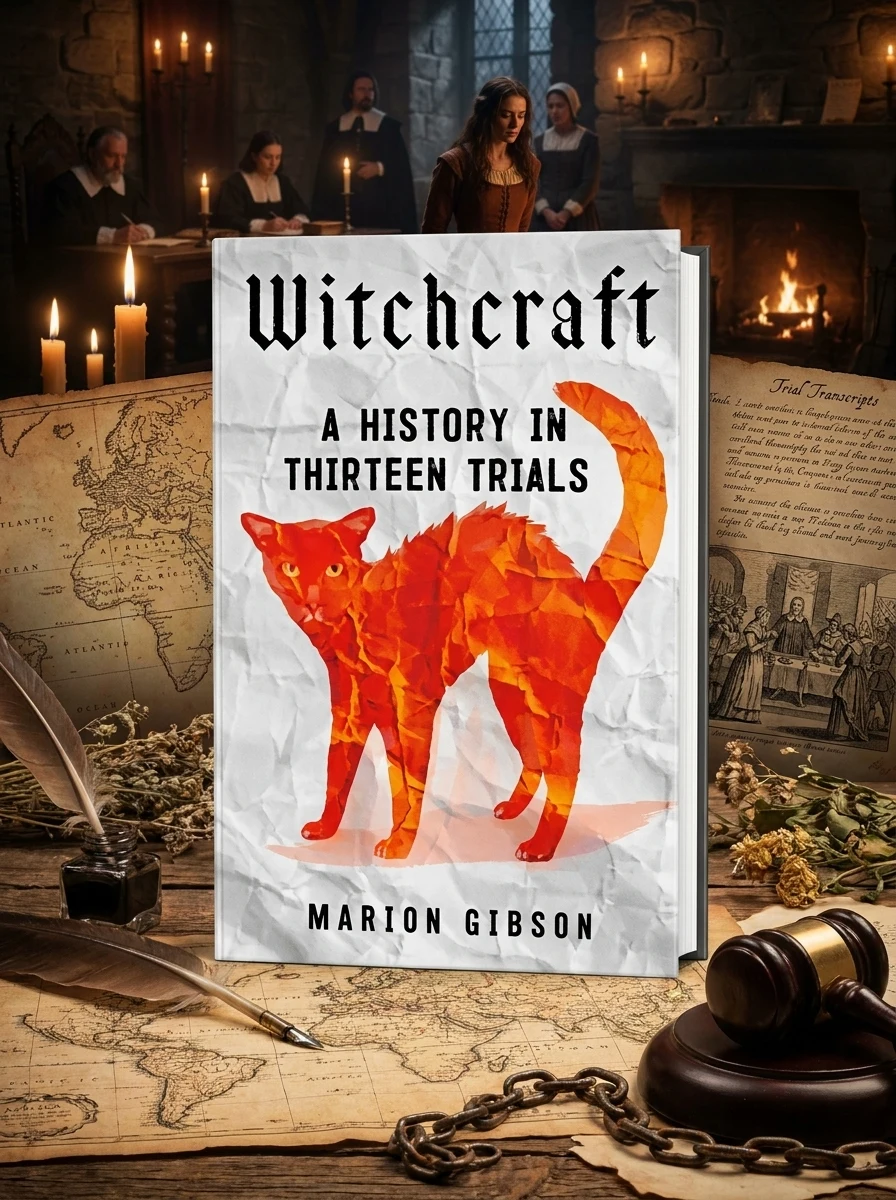
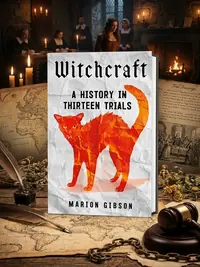
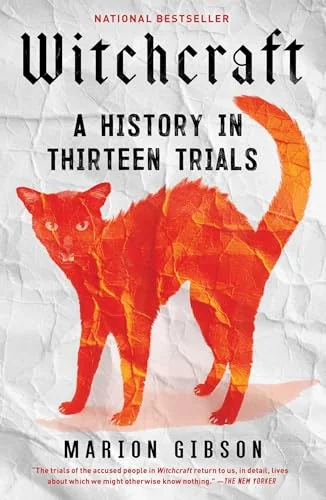
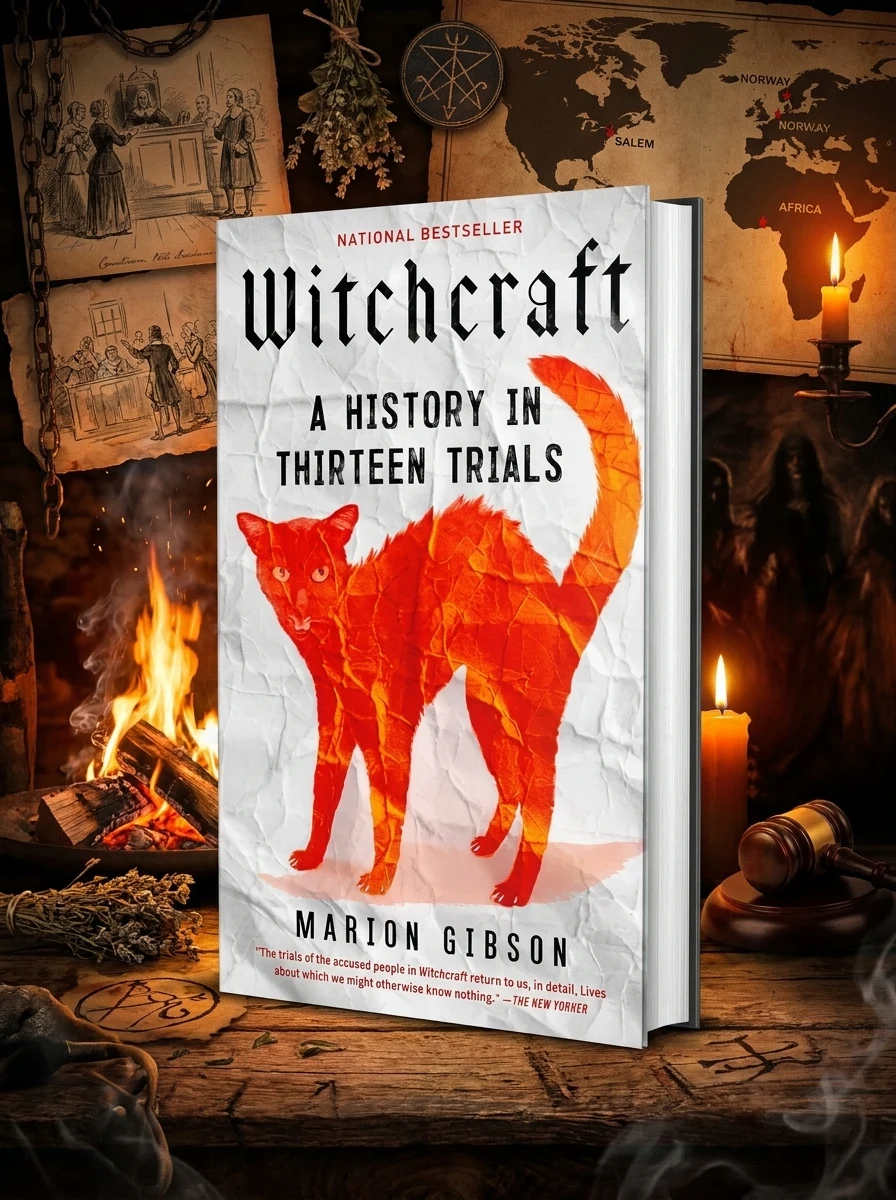
Witchcraft: A History in Thirteen Trials
Gibson, MarionStock reported in the catalog; fulfillment is confirmed with your request.
Thirteen trials reveal how the witch hunt shaped global power, gender, and resistance.
Marion Gibson dismantles the myth of a single witch craze by examining thirteen pivotal cases spanning continents and centuries. From indigenous Sami women in Norway to colonial executions in Lesotho, she exposes witch trials not as isolated hysteria, but as calculated tools of political control and social regulation. This narrative challenges the notion that witchcraft is purely a historical artifact, instead framing it as a dynamic site where gender, empire, and spirituality collide. By tracing the evolution from criminal accusation to modern Wiccan identity, Gibson offers a rigorous social history that redefines how we understand the demonization of the 'other' throughout human civilization.
This work sits firmly within the historiography of European and colonial witchcraft, bridging the gap between academic social history and esoteric studies. It recontextualizes the traditional narrative of the witch craze by examining its global dimensions and political utility.


📝 Description: Witchcraft: A History in Thirteen Trials
💎 Expert review
📖 Why choose it
Why this book is worth reading
Readers seeking a rigorous intellectual framework for understanding the weaponization of superstition will find profound value in this text. It is essential for those interested in how gender dynamics and imperial power structures collaborated to demonize marginalized groups across different eras. By moving beyond the simplistic view of mass hysteria, Gibson provides a compelling lens through which to view resistance and survival. Those who appreciate social history that intersects with spirituality will gain a deeper appreciation for the complex legacy of witchcraft as a site of political control rather than mere folklore.
⭐ Reader reviews
Reader rating
I collect works on this subject and this is a worthy addition. The text itself is dense but rewarding — you get out what you put in. I'd have loved an index, but that's on the original text. Solid, if not essential.
I've read excerpts online before, but having the full text is different. The text itself is dense but rewarding — you get out what you put in. The ideas are old but land with surprising force today. A keeper.
Was skeptical at first. The material is presented clearly and the structure makes it easy to revisit key passages. I appreciated how the argument builds steadily from first principles. Some archaic spellings slow things down.
Gibson delivers a formidable scholarly argument that dismantles the monolithic myth of the witch hunt. While intellectually stimulating, this book is not suited for casual readers seeking lighthearted folklore or modern Wiccan practice guides. It demands patience and a willingness to engage with dense sociological analysis rather than narrative entertainment. Readers expecting a straightforward chronicle of magical practices may find the focus on political regulation and global power dynamics too abstract or dry. However, for those committed to understanding the structural roots of persecution, it is an indispensable, albeit demanding, contribution to the field.
❓ Frequently asked questions
📖 Who should read this
Scholars of gender studies, history enthusiasts, and modern practitioners seeking to understand the political roots of witchcraft accusations beyond the Salem stereotype.
🎯 Key themes and symbolism
Political Weaponization
Colonial Power Dynamics
Gendered Persecution
💬 Quotes from the book
“Witchcraft was feared, then decriminalized, and then reimagined as gendered persecution.”
“A pattern of demonization and conspiratorial thinking that has profoundly shaped human history.”
📜 Historical context
📚 Glossary
- Social History
- Indigenous Spirituality
- Demonization
📔 Questions to reflect on
- How might the label of 'witch' be used today to silence marginalized voices?
- In what ways do modern conspiracy theories mirror the accusatory patterns of historical witch trials?
- How does the intersection of gender and power change the way we interpret historical justice?
✍️ More books by this author Gibson, Marion
All books by this author →
 89
89
 89
89

🏛 Books from this publisher Scribner Book Company
All books from this publisher →
You might also like
See more →
 82
82
 90
90

 89
89
 88
88