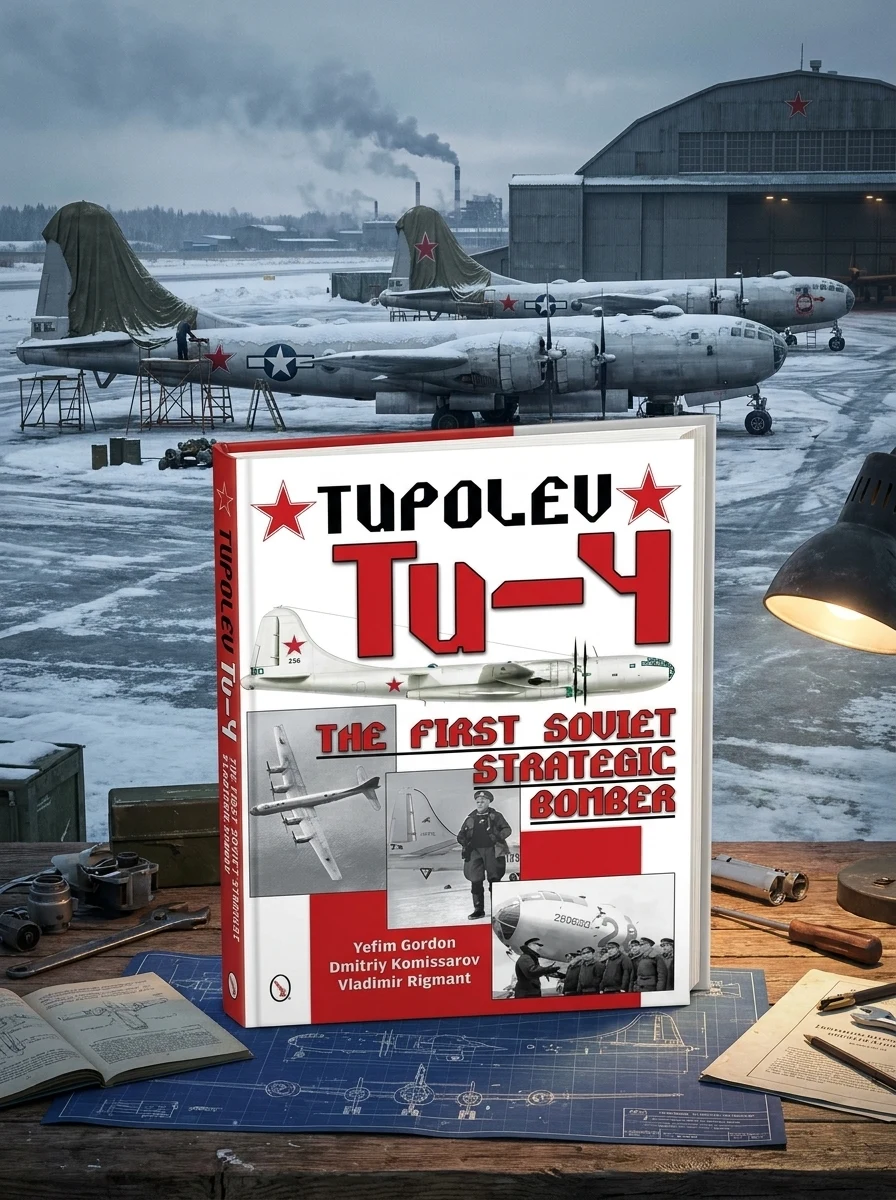
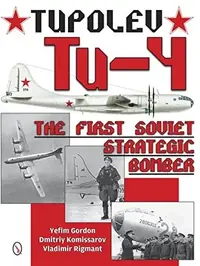
Tupolev Tu-4: The First Soviet Strategic Bomber
Gordon, YefimThis edition can be ordered. No arrival date is confirmed.
How Moscow stole America's skies by cloning the B-29 into a nuclear threat.
This volume chronicles the remarkable genesis of the Tu-4, the USSR's first strategic bomber. Born from three crash-landed B-29s, this reverse-engineering marvel forced Soviet engineers to dismantle and rebuild American technology. The text details not just the initial copy, but the Tu-4's evolution into nuclear carriers and tankers. It explores production challenges and operational history, including its service in China. For aviation historians, this work provides an essential look at how espionage and engineering collided to reshape Cold War aerial power dynamics.
This work sits at the intersection of military history and Cold War espionage, documenting how reverse-engineering altered global power dynamics. It serves as a technical chronicle of Soviet industrial capability during the early atomic age.


📝 Description: Tupolev Tu-4: The First Soviet Strategic Bomber
💎 Expert review
📖 Why choose it
Why this book is worth reading
Aviation historians and enthusiasts of Cold War espionage will find this volume indispensable for understanding a pivotal moment in aerial warfare. Readers interested in the mechanics of reverse-engineering will appreciate the detailed account of how Soviet engineers dismantled and rebuilt American technology from crash-landed B-29s. The book offers a unique perspective on industrial ingenuity under pressure, tracing the Tu-4's evolution into nuclear carriers. It is essential for those who wish to comprehend how espionage and engineering collided to reshape strategic balance. This narrative provides clarity on production challenges and operational history, including its service in China, making it a vital resource for grasping the technical realities behind geopolitical shifts.
⭐ Reader reviews
Reader rating
First purchase from this shop. Not a light read, but far more accessible than I feared. It's become a regular reference in my practice. My only regret is not ordering it sooner.
This title offers a rigorous examination of the Tu-4’s genesis, appealing strongly to those fascinated by Soviet industrial history and reverse-engineering processes. It provides valuable insights into the collaboration between espionage and engineering that defined early Cold War aerial power. However, readers seeking narrative drama or political analysis may find the focus on technical specifications and production challenges dry. It is not suited for casual readers looking for a gripping story of pilot heroics or high-level diplomatic maneuvering. Instead, it serves as a specialized reference for understanding the mechanical and logistical feats required to clone American technology. The work excels in factual density but lacks the narrative flair found in broader historical accounts.
❓ Frequently asked questions
📖 Who should read this
Readers fascinated by Cold War espionage, aviation engineering, and the geopolitical chess game of the 1950s. Ideal for military historians seeking technical depth rather than just political narrative.
🎯 Key themes and symbolism
Reverse Engineering Legacy
The book meticulously dissects the process of taking apart American B-29 Superfortresses. It highlights the immense technical hurdles faced by Soviet engineers who had to adapt foreign metrics and materials. This theme underscores how stolen blueprints became the foundation for an independent Soviet aviation industry.
Cold War Nuclear Shift
Focuses on the Tu-4A variant, which marked Moscow's entry into the nuclear age. The narrative explains how this aircraft changed global strategy by giving the USSR the capability to strike American soil. It frames the bomber not just as a machine, but as a geopolitical lever.
Derivative Aircraft Evolution
Explores how the airframe was modified for diverse roles beyond bombing. The text covers tankers, missile carriers, and even airliners like the Tu-70. This demonstrates the versatility of the design and its lasting impact on Soviet transport and military aviation development.
💬 Quotes from the book
“The windfall of three battle-damaged B-29s forced to land in Soviet territory was most welcome.”
“The Tu-4A was the first Soviet nuclear-capable bomber.”
📜 Historical context
📚 Glossary
- Superfortress Clone
- Tu-4K Variant
- Avionics Adaptation
📔 Questions to reflect on
- How does the theft of technology differ from organic innovation in shaping military history?
- What ethical implications arise when studying the reverse-engineering of enemy capabilities?
- How did the Tu-4's existence alter the psychological dynamic of the Cold War?
✍️ More books by this author Gordon, Yefim
All books by this author →
🏛 Books from this publisher Schiffer Publishing
All books from this publisher →
 89
89



You might also like
See more →
 91
91
 91
91

 91
91
 91
91