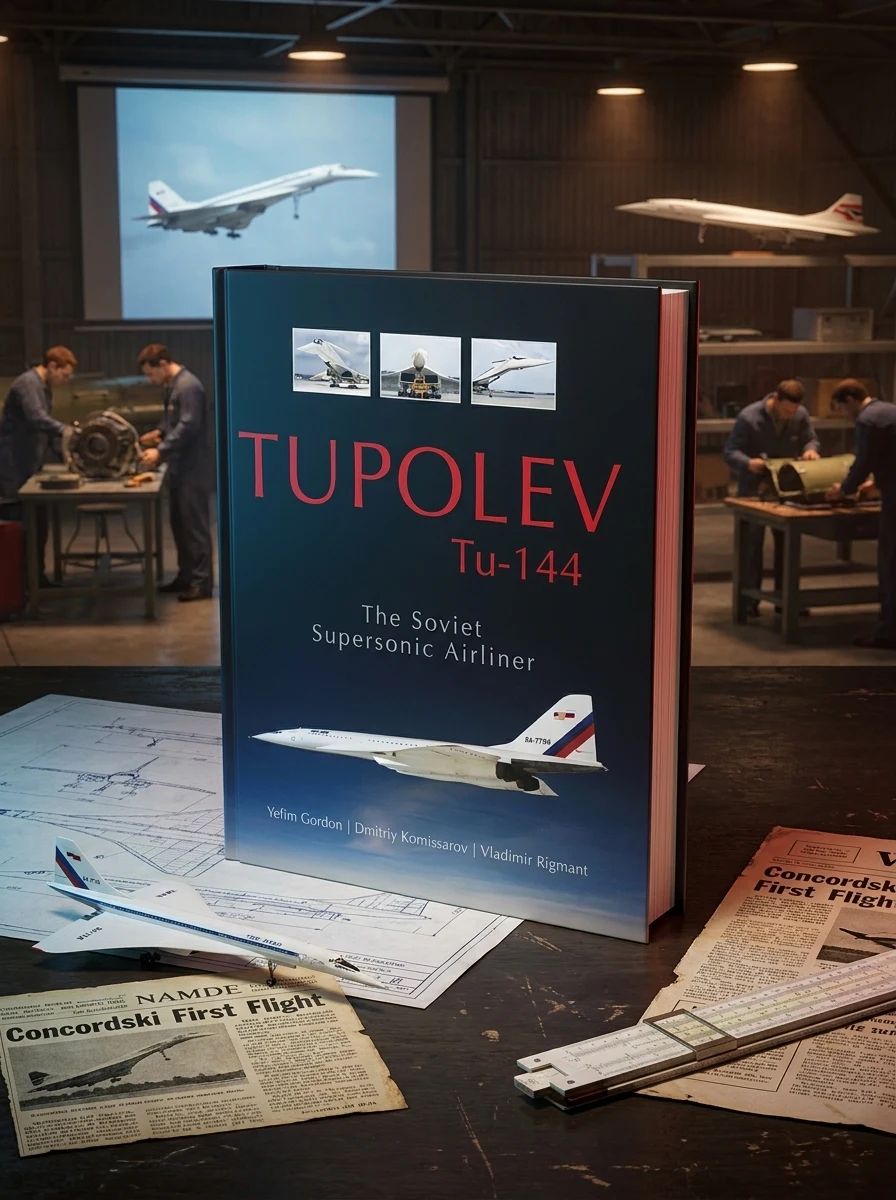
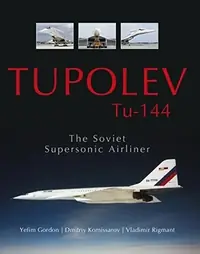
Tupolev Tu-144: The Soviet Supersonic Airliner
Gordon, YefimThis edition can be ordered. No arrival date is confirmed.
The Tu-144 defied odds, soaring into history before vanishing in a flash of supersonic ambition.
This volume chronicles the Soviet Union’s audacious attempt to conquer the skies with the Tu-144, a aircraft that debuted before its Western counterpart yet met a swift demise. Gordon details the complex gestation from 1968’s maiden flight to its 1977 service entry, exploring the political and technical hurdles that led to its premature withdrawal. With rare photographs and side-profile illustrations, the text dissects every variant, including the collaborative Tu-144LL research plane, offering a definitive account of this controversial marvel of aerospace engineering.
This volume sits within the genre of specialized aerospace history, documenting the intense technological rivalry of the Cold War era through the lens of Soviet engineering ambition. It serves as a definitive archival record of a controversial marvel that challenged Western aerospace dominance during the late twentieth century.


📝 Description: Tupolev Tu-144: The Soviet Supersonic Airliner
💎 Expert review
📖 Why choose it
Why this book is worth reading
Readers with a deep fascination for Cold War aviation history and the audacious engineering feats of the Soviet Union will find this book indispensable. Yefim Gordon provides a comprehensive narrative that dissects the complex gestation of the Tu-144, from its early development hurdles to its controversial service entry. Those interested in the political and technical struggles behind supersonic travel, as well as enthusiasts who appreciate rare photographs and side-profile illustrations, will gain a definitive account of this ambitious yet flawed marvel. It is essential for understanding the intersection of aerospace innovation and geopolitical pressure during a pivotal period in aviation history.
⭐ Reader reviews
Reader rating
Was skeptical at first. Solid binding, decent paper — holds up to heavy use. Some archaic spellings slow things down. Solid, if not essential.
Needed this for my research. It rewards patience more than any book I've bought this year. Solid binding, decent paper — holds up to heavy use. Happy enough with the purchase.
Honestly wasn't sure what to expect, but I'm impressed. I appreciated how the argument builds steadily from first principles. Delivery took a bit longer than quoted.
Added this to my reference shelf. It pairs well with more modern commentaries on the same tradition. Some chapters demand a slow, careful read, and that's exactly the point.
Gordon’s work offers a meticulous dissection of the Tu-144’s development, appealing strongly to technical historians and aviation buffs who crave detail on variants like the Tu-144LL. However, this book is NOT suited for casual readers seeking a narrative-driven biography or those uninterested in aerospace engineering specifics. The dense focus on political hurdles and technical specifications may alienate general audiences looking for accessible storytelling. It is a scholarly resource rather than light reading, best appreciated by those who value exhaustive documentation over dramatic flair in their historical accounts.
❓ Frequently asked questions
📖 Who should read this
Readers fascinated by Cold War aviation history, engineering enthusiasts, and those interested in the political narratives behind technological failures. This title appeals to anyone who wonders how ambition and rivalry shape the machines we build.
🎯 Key themes and symbolism
Supersonic Competition
The narrative frames the aircraft as a Cold War symbol, contrasting Soviet engineering with Western counterparts. It examines how geopolitical rivalry drove rapid development, resulting in a plane that prioritized speed and state prestige over commercial viability and safety protocols.
Engineering Legacy
Beyond the crashes, the book honors the technical brilliance of the design. It analyzes the aerodynamic innovations and the collaborative research phases, particularly the later joint programs that kept the airframe alive for scientific study, proving its utility beyond mere passenger transport.
Operational Tragedy
The text explores the political forces that grounded the aircraft. It details the intense lobby against the Tu-144 and the catastrophic events that ended its passenger service, illustrating how bureaucracy and public fear can stifle even the most advanced technological achievements.
💬 Quotes from the book
“A marvel of Soviet engineering that dared to touch the sky before the West could catch up.”
“Its career was brief, yet its shadow looms large over the history of supersonic travel.”
📜 Historical context
📚 Glossary
- Concordski
- Tu-144LL
- Sweep Wing
📔 Questions to reflect on
- How might the Tu-144’s fate have changed if safety protocols had matched its engineering ambition?
- In what ways does the story of the Tu-144 reflect the broader tensions of the Cold War era?
- What lessons does the aircraft’s legacy offer for modern aerospace projects balancing innovation with public trust?
✍️ More books by this author Gordon, Yefim
All books by this author →
🏛 Books from this publisher Schiffer Publishing
All books from this publisher →
 89
89






You might also like
See more →
 91
91
 91
91

 91
91

 91
91