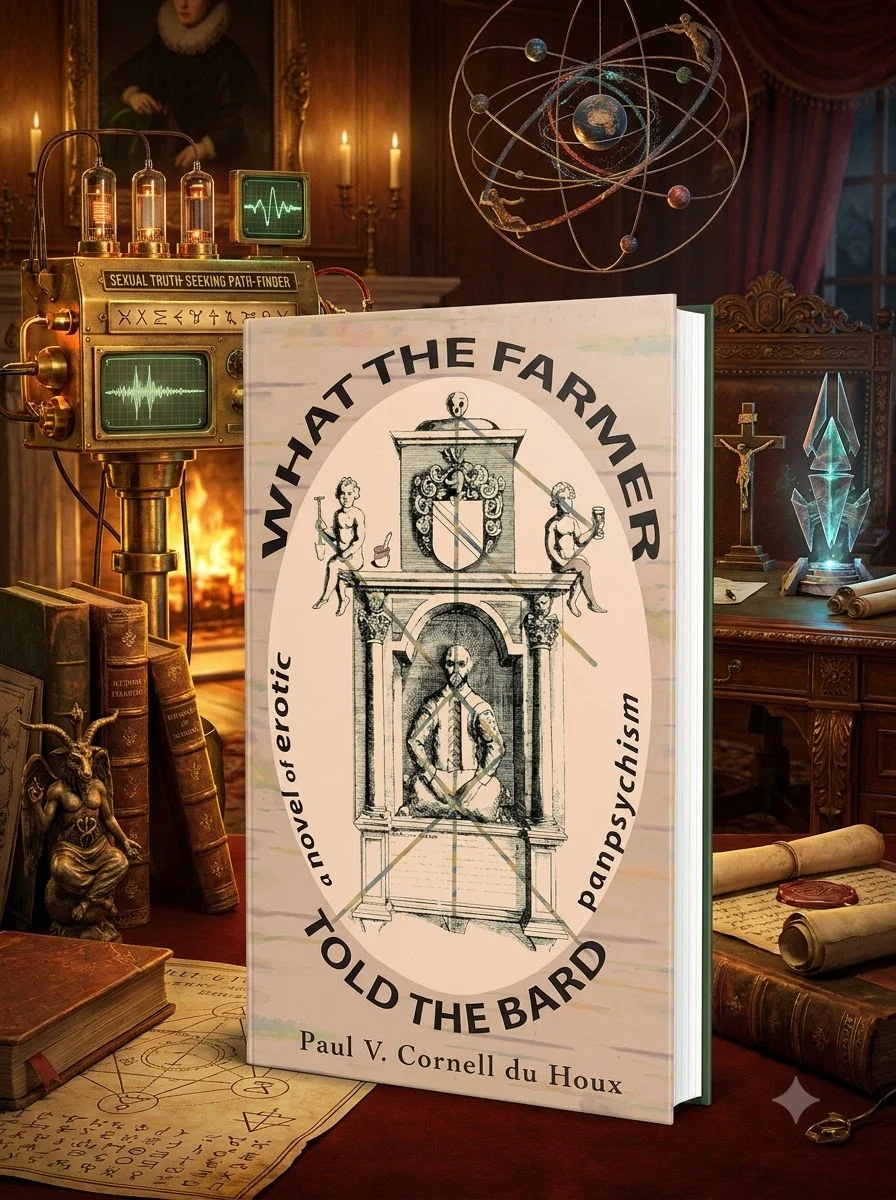
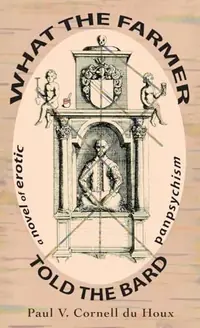
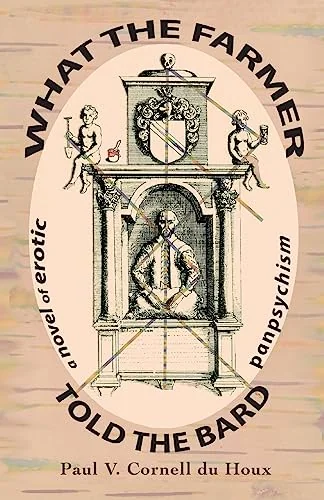
What the Farmer Told the Bard, a Novel of Erotic Panpsychism
Cornell Du Houx, Paul VStock reported in the catalog; fulfillment is confirmed with your request.
A radical invention unveils cosmic sexuality, igniting a tale of gods, technology, and planetary fate.
This audacious novel plunges into a world where a groundbreaking invention reveals the erotic polarity underlying all existence and uncovers past lives. Its creator, a computer scientist, is chosen by his own device, targeted by an elite who see him as a messianic figure. They plot to sacrifice him, aiming to reshape global religion and invite alien influences, threatening democracy. The narrative critiques a society where identity is reduced to 'cybertypes,' souls are consumed by digital conformity, and the planet spirals towards ecological disaster. Ancient gods, awakened by Shakespearean runes, guide a polyamorous cast through this metaphysical maelstrom.
Situated within the esoteric tradition of erotic panpsychism and techno-occultism, this work bridges ancient mythological frameworks with contemporary digital anxiety. It reflects a period where spiritual seekers grapple with the intersection of artificial intelligence, ecological crisis, and metaphysical identity.


📝 Description: What the Farmer Told the Bard, a Novel of Erotic Panpsychism
💎 Expert review
📖 Why choose it
Why this book is worth reading
Readers fascinated by the convergence of technology, spirituality, and ecology will find this novel a provocative exploration of cosmic sexuality and planetary fate. It appeals to those weary of digital conformity who seek narratives where ancient gods and polyamorous relationships challenge elite power structures. The book offers a radical vision for reimagining democracy and identity beyond 'cybertypes,' providing intellectual stimulation for anyone interested in how technology might unveil deeper metaphysical truths about existence and divine influence.
⭐ Reader reviews
Reader rating
This audacious novel demands readers comfortable with dense metaphysical concepts and unconventional plot structures involving alien influences and sacrificial messiahs. It is not suited for those seeking straightforward sci-fi or traditional romance, as its focus on erotic polarity and political critique may feel abstract or overly complex. The narrative’s reliance on Shakespearean runes and polyamorous dynamics requires an open mind to its esoteric logic. Those preferring grounded realism or simple technological thrillers will likely find the metaphysical maelstrom and philosophical density overwhelming rather than engaging.
❓ Frequently asked questions
📖 Who should read this
If you crave a truly unconventional read blending philosophical inquiry with speculative fiction, exploring erotic spirituality, technological dystopia, and the re-emergence of ancient divinity, this novel is for you. Prepare for a dense, playful, and thought-provoking journey that challenges modern paradigms.
🎯 Key themes and symbolism
Cosmic Sexual Polarity
The novel's central conceit is a device uncovering the erotic energy uniting all particles in the universe. This radical concept challenges traditional post-Pagan theology, suggesting a fundamental, pervasive sexuality as the fabric of reality, influencing everything from interpersonal relationships to planetary systems.
Cybernetic Soul Erosion
Du Houx critiques modern society, portraying individuals as 'cybertypes' whose identities are built on 'armor of credit.' This digital existence leads to a gradual draining of authentic soul energy through 'effortless everyday actions,' trapped in a heroic, yet ultimately empty, feedback loop of self-observation.
Divine Intervention & Reboot
The narrative introduces ancient Pagan gods from Shakespeare's comedies, brought to life by encoded runes. These deities, along with the manipulation of a 'Return of Christ' figure, signify a cosmic struggle for planetary destiny, aiming to 'reboot world religion' and introduce extraterrestrial influences.
💬 Quotes from the book
“a new invention that reveals the polarity of sex uniting all the universe's particles and upends all post-Pagan theology”
“We build an armor of credit. We wear it like an invisible suit of linked coinage and rise in society as cybertypes, sacrificing our souls by increments of increasingly effortless everyday actions...”
📜 Historical context
📚 Glossary
- Erotic Panpsychism
- Cybertypes
- Orpheus Chronicles
📔 Questions to reflect on
- How might a universal 'erotic polarity' reshape our understanding of science, spirituality, and human connection?
- In what ways do you see your own 'authentic soul energies' being consumed by digital conformity or societal expectations, as depicted in the novel?
- If ancient deities were to re-emerge in our modern world, how might their influence challenge or transform contemporary power structures and belief systems?
✍️ More books by this author Cornell Du Houx, Paul V
All books by this author →🏛 Books from this publisher Polar Bear & Company
All books from this publisher →
 82
82


You might also like
See more →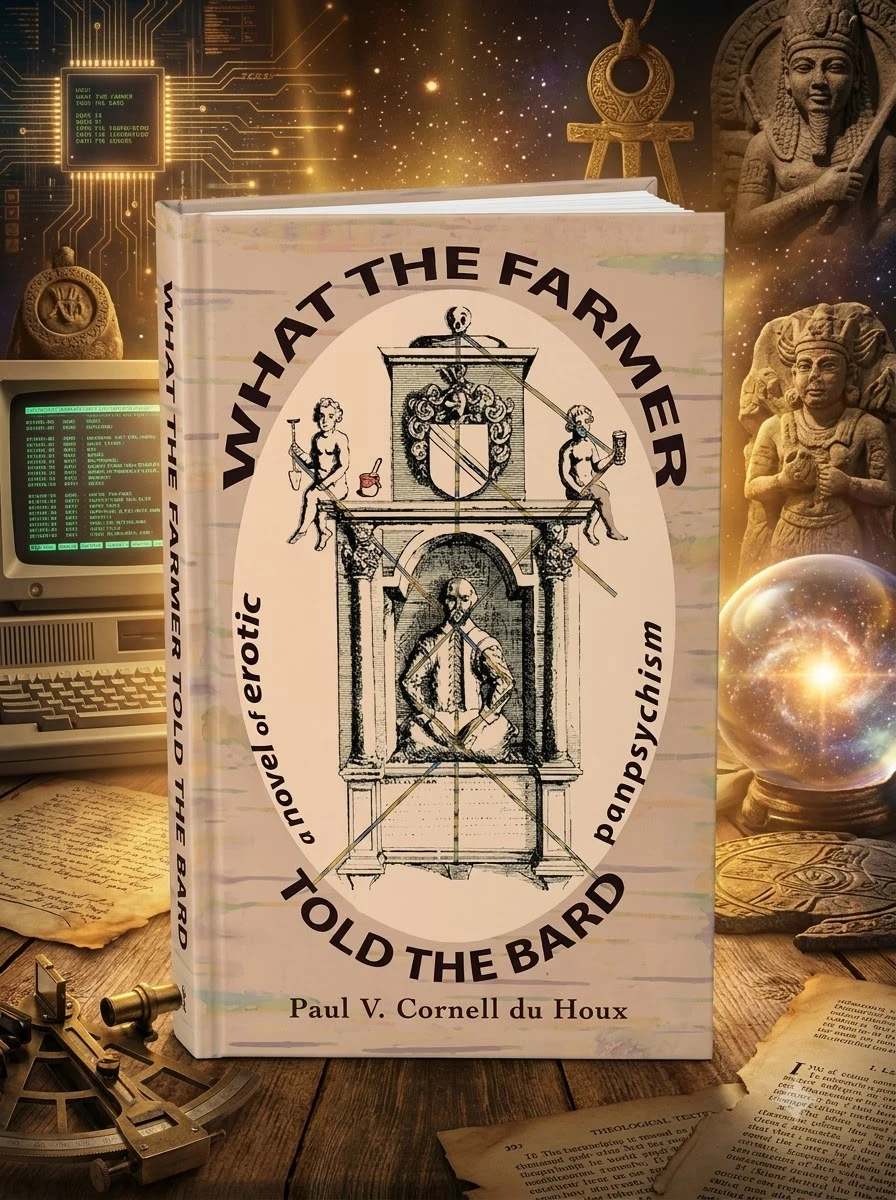

 89
89