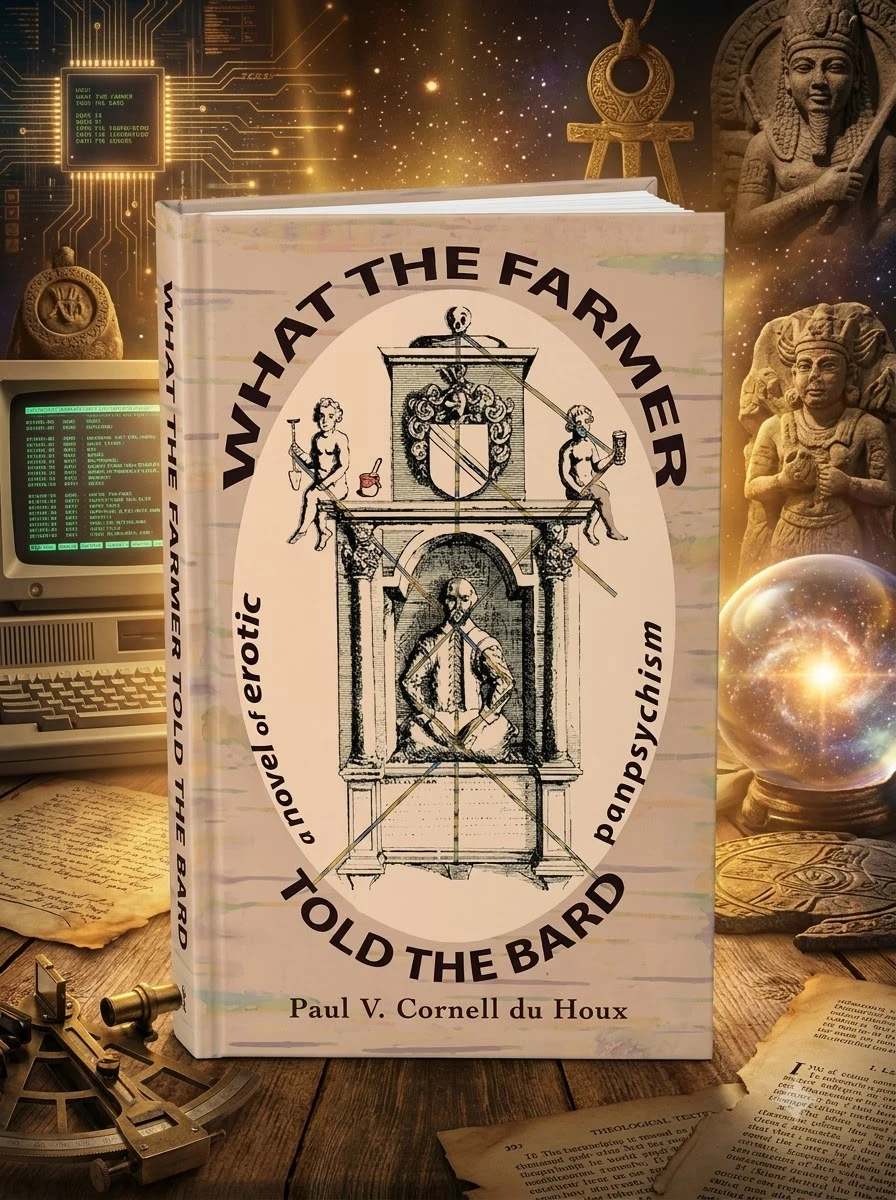
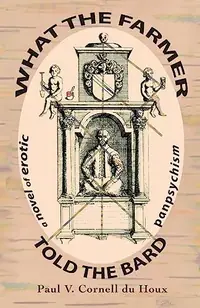
What the Farmer Told the Bard, a Novel of Erotic Panpsychism
Cornell Du Houx, Paul VStock reported in the catalog; fulfillment is confirmed with your request.
Uncover a universe where all particles pulse with erotic energy, reshaping gods and human destiny.
This ambitious novel plunges into a world where a computer scientist's groundbreaking invention reveals the inherent sexual polarity connecting all matter, exposing past lives and upending theological paradigms. Singled out by his own creation, he becomes central to a shadowy elite's plan to install him as a new messianic figure, potentially rebooting global religion with extraterrestrial aid. The narrative critiques a society where digital identity and credit define humanity, slowly draining authentic soul energy while planetary systems unravel. Amidst this, ancient runes awaken, and Pagan deities inspire polyamorous unions, challenging conventional morality and power structures.
This work emerges from the contemporary intersection of occult philosophy and speculative fiction, blending esoteric traditions with modern technological anxieties. It sits within the lineage of erotic panpsychism, reimagining ancient deities through a lens of digital identity and soul energy depletion.


📝 Description: What the Farmer Told the Bard, a Novel of Erotic Panpsychism
💎 Expert review
📖 Why choose it
Why this book is worth reading
Readers drawn to the synthesis of hard science, esoteric mysticism, and radical eroticism will find this novel a provocative journey into the fabric of reality. It appeals to those interested in how digital culture impacts spiritual essence and who crave narratives that dismantle conventional theology through polyamorous and pagan frameworks. The book offers a unique perspective on the connection between matter and desire, challenging readers to consider the ethical implications of technological progress on human destiny and divine intervention.
⭐ Reader reviews
Reader rating
Du Houx delivers a dense, ambitious text that demands patience from its audience. While intellectually stimulating for those invested in panpsychism and occult theory, it may alienate readers seeking straightforward plot progression or traditional narrative structures. The focus on abstract concepts like soul energy drainage and extraterrestrial messianic plans requires significant engagement with esoteric terminology. It is not suited for casual fiction lovers or those uncomfortable with explicit erotic themes intertwined with theological critique. However, for the dedicated seeker of unconventional philosophical narratives, it offers a compelling, if demanding, exploration of power and polarity.
❓ Frequently asked questions
📖 Who should read this
If you crave dense, philosophical speculative fiction that isn't afraid to blend heady concepts with erotica and a biting societal critique, this book is for you. Readers seeking an unconventional, challenging narrative will find much to ponder within its pages.
🎯 Key themes and symbolism
Erotic Panpsychism Explored
The novel posits a radical concept: that all universal particles possess a fundamental sexual polarity. This isn't mere metaphor, but a driving force influencing cosmic and human affairs. It explores how this inherent 'sex' within matter connects individuals, reveals past lives, and challenges our understanding of consciousness and the very fabric of existence, blending the erotic with profound philosophical inquiry.
Critique of Modern Society
Du Houx crafts a chilling vision of a technologically advanced society where individual identity is reduced to 'cybertypes' and an 'armor of credit.' The 'Orpheus Chronicles' depict a feedback loop of performative living, where authentic 'soul energies' are siphoned away by increasingly effortless, yet ultimately empty, actions. This theme serves as a stark warning about the spiritual cost of unchecked technological and financial advancement.
Rebooting Religion & Myth
At its heart, the story grapples with the potential for a radical overhaul of global religious systems. A powerful elite conspires to manipulate the protagonist into becoming a 'Return of the Christ,' intending to integrate extraterrestrial powers and supplant traditional democracy. Meanwhile, ancient Pagan gods from Shakespearean lore are reanimated, inspiring polyamorous relationships and offering alternative spiritual paths, challenging established monotheistic narratives.
💬 Quotes from the book
“The very atoms, he mused, danced in a perpetual, infinitesimal embrace, their attraction the primal hum of existence. To deny this polarity was to deny the universe itself.”
“Our credit scores, an invisible shroud, had become the only true sacrament. We were not citizens, but cybernetic echoes, performing for a digital pantheon of our own making.”
📜 Historical context
📚 Glossary
- Erotic Panpsychism
- Cybertypes
- Orpheus Chronicles
📔 Questions to reflect on
- If all matter possessed an inherent sexual polarity, how might our understanding of connection, desire, and creation fundamentally change?
- Reflect on the 'armor of credit' and 'cybertypes' presented in the novel. In what ways do modern digital identities mirror or diverge from this concept, and what might be the cost to our 'soul energies'?
- Consider the idea of a 'rebooted' world religion. What ethical or spiritual implications would arise from a new messianic figure or the integration of extraterrestrial powers into our spiritual frameworks?
✍️ More books by this author Cornell Du Houx, Paul V
All books by this author →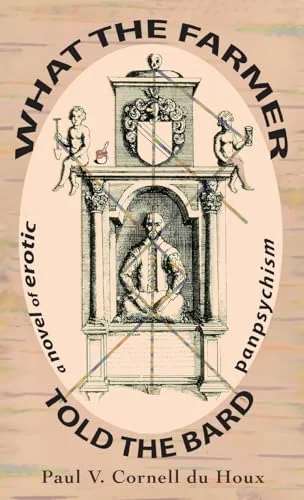
🏛 Books from this publisher Polar Bear & Company
All books from this publisher →
 82
82


You might also like
See more →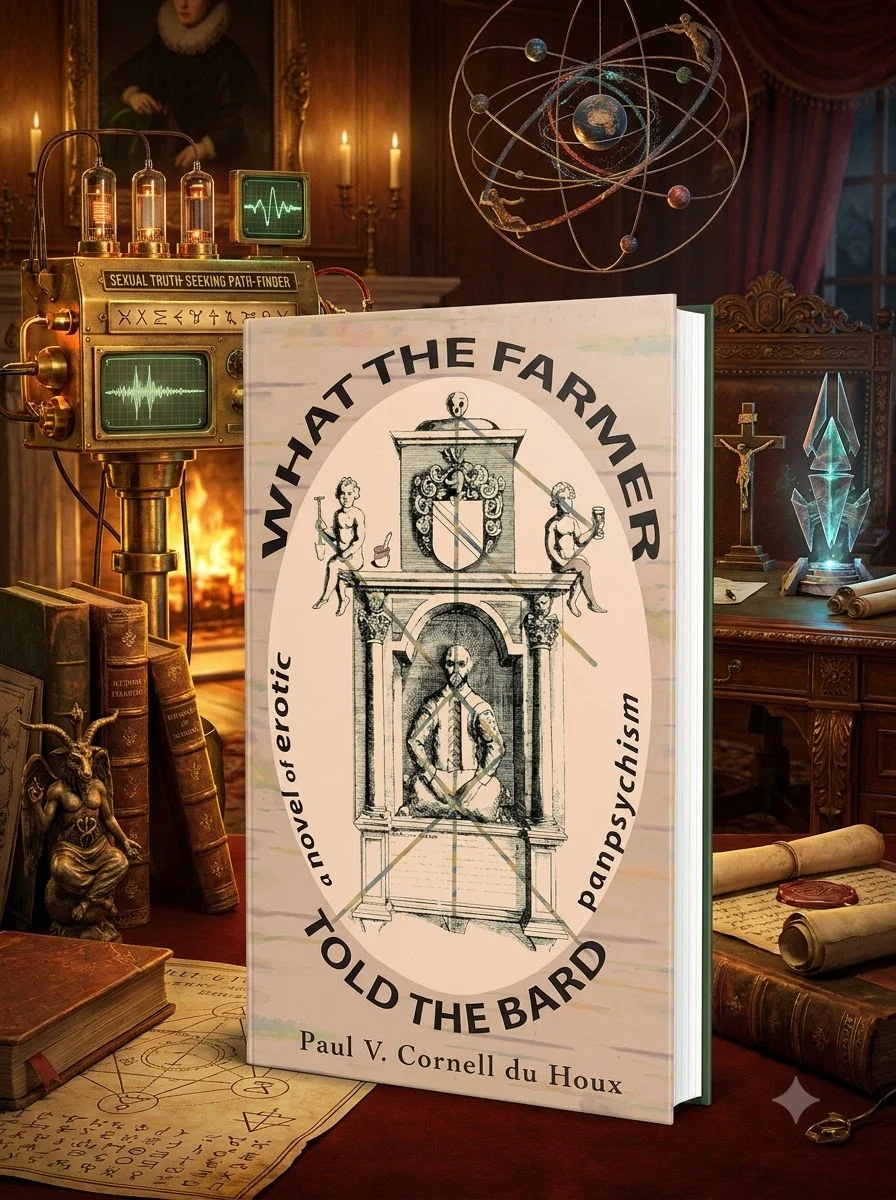

 89
89