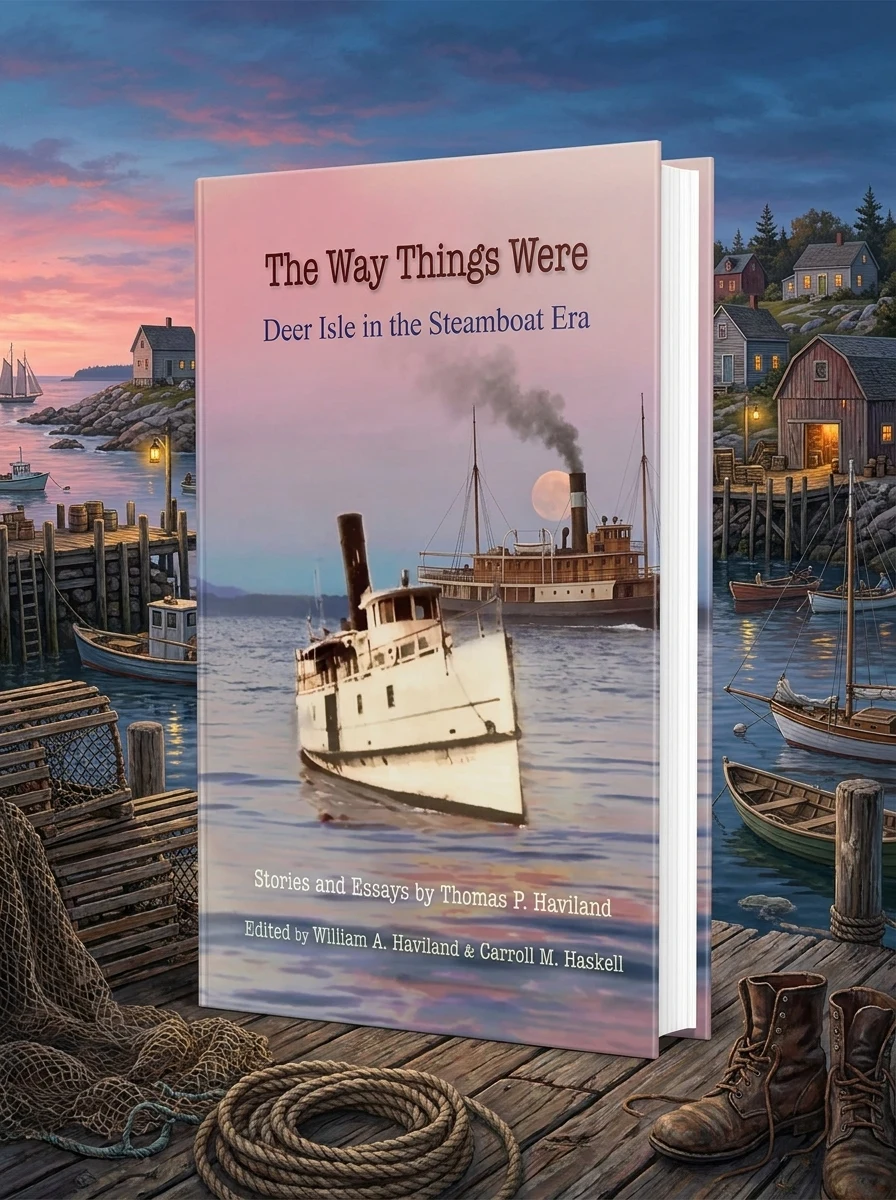
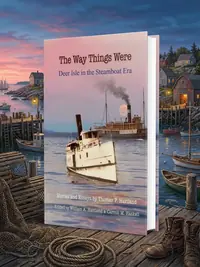

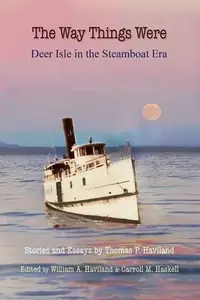
The Way Things Were: Deer Isle in the Steamboat Era
Stock reported in the catalog; fulfillment is confirmed with your request.
A haunting, steam-driven chronicle of island life lost to time and tide.
Haviland resurrects the atmospheric world of Deer Isle, Maine, during its century-long dependence on steamboat connectivity. Through intimate vignettes and sharp essays, he captures the rhythm of small-family farming and the rugged seafaring culture that defined the community. This is not a dry historical record, but a living memory of the people, the sea, and the specific melancholy of an island severed from the mainland by water and years.
This work belongs to the tradition of regional American memoir and local history, specifically focusing on the maritime heritage of Maine’s coastal communities during the industrial steamboat era.


📝 Description: The Way Things Were: Deer Isle in the Steamboat Era
💎 Expert review
📖 Why choose it
Why this book is worth reading
Readers who cherish atmospheric narratives about communities defined by their relationship with the sea will find profound comfort in this text. It is ideal for those who appreciate the melancholy beauty of places severed from the mainland, both geographically and temporally. If you enjoy intimate vignettes that capture the rhythm of small-family farming and rugged seafaring cultures, this book offers a living memory rather than a dry record. It serves anyone longing for a haunting chronicle of island life lost to time, providing a deep sense of place and the specific solitude inherent in maritime isolation.
⭐ Reader reviews
Reader rating
Needed this for my research. It rewards patience more than any book I've bought this year. Glad I finally picked this up.
Long-time student of the esoteric here. The historical context alone makes it worth the price. My only regret is not ordering it sooner.
As someone who reads a lot in this field, I can be picky. The language takes some getting used to, but it becomes part of the charm. Some sections stopped me cold in the best way. The font runs small in the appendices. Happy enough with the purchase.
Ordered this after seeing it referenced in another book I was studying. The text itself is dense but rewarding — you get out what you put in. Solid binding, decent paper — holds up to heavy use. Would buy from this store again.
Bought this as a gift for my sister and ended up ordering a second copy for myself. It rewards patience more than any book I've bought this year. I'd have loved an index, but that's on the original text. Still worth having on the shelf.
This edition finally does the material justice. It reads better in small doses — a chapter at a time with notes. Some chapters demand a slow, careful read, and that's exactly the point. A keeper.
This title succeeds as a vibrant resurrection of Deer Isle’s steamboat-era soul, prioritizing emotional truth over strict historiography. However, readers seeking dense academic analysis, rigid chronological dates, or broad national political context will likely find it too narrow and impressionistic. It is not for those who demand objective distance; this text demands immersion in its specific, localized melancholy. While the prose captures the ruggedness of the culture effectively, it may frustrate historians looking for hard data. It is best suited for those willing to accept a subjective, memory-based portrait of island existence.
❓ Frequently asked questions
📖 Who should read this
Readers fascinated by Maine’s maritime history, those interested in the sociology of isolated communities, and anyone seeking a poignant, literary reflection on how transportation shapes cultural identity.
🎯 Key themes and symbolism
Steamboat Connectivity
The narrative explores how the steamship schedule dictated the social and economic heartbeat of the island, creating a fragile bridge between isolation and the wider world.
Maritime Heritage
Haviland delves into the deep-seated culture of sailors and fishermen, portraying their resilience and the dangerous, beautiful relationship between the residents and the Atlantic Ocean.
Vanishing Island Life
The text serves as a eulogy for a disappearing way of life, documenting the small family farms and communal bonds that were eroded by the passage of time.
💬 Quotes from the book
“The island did not end at the water; it began there.”
“We lived by the whistle of the boat.”
📜 Historical context
📚 Glossary
- Deer Isle
- Steamboat Era
- Seafaring Tradition
📔 Questions to reflect on
- How does your community’s primary mode of transport shape its social bonds?
- What traditions in your family are tied to the water or the land?
- How does isolation influence the way a community remembers its own history?
🏛 Books from this publisher Polar Bear & Company
All books from this publisher →

 82
82



You might also like
See more →

 89
89