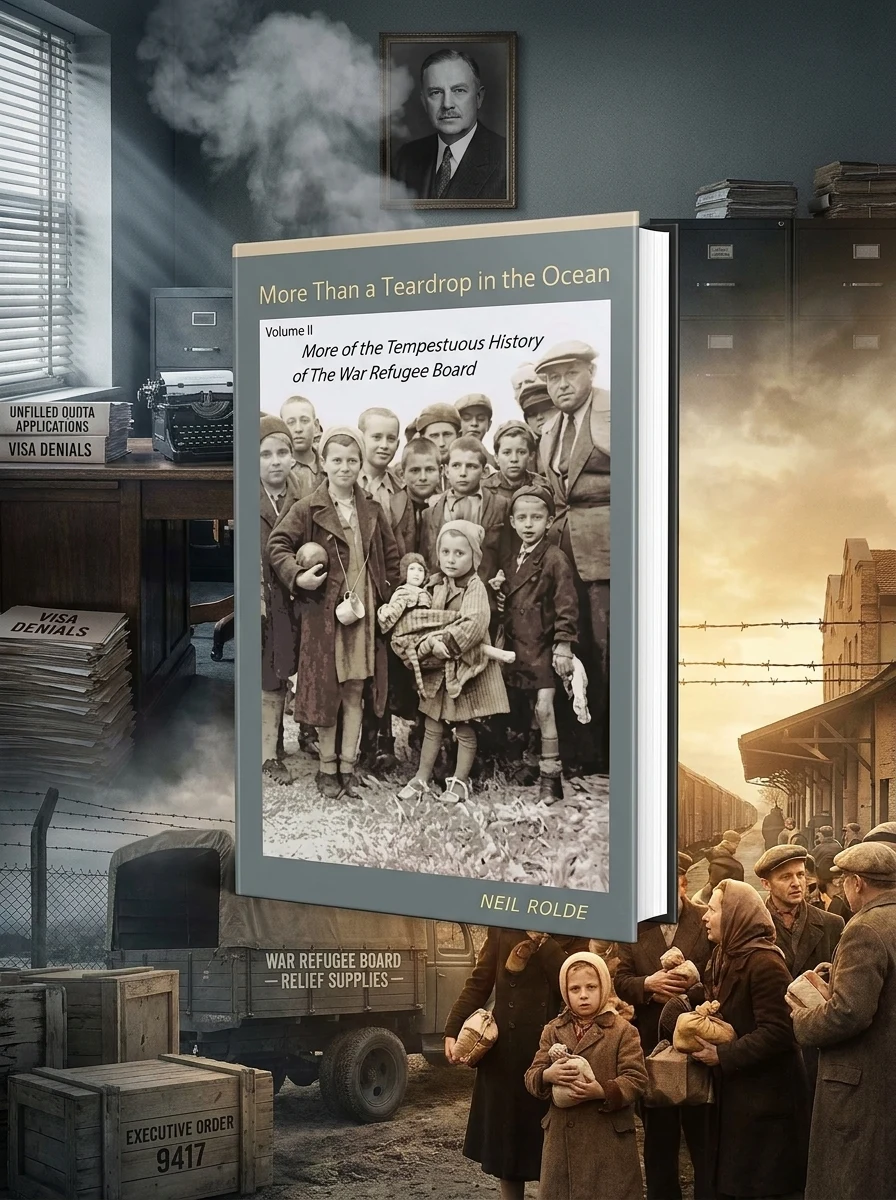
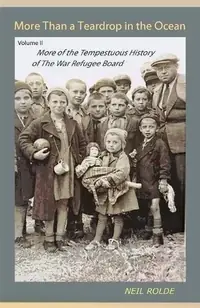
More Than a Teardrop in the Ocean: Vol. II, More of the Tempestuous History of the War Refugee Board
Rolde, NeilStock reported in the catalog; fulfillment is confirmed with your request.
Uncover the bureaucratic betrayal and heroic rescue behind the War Refugee Board's hidden WWII legacy.
Neil Rolde’s sequel delves deeper into the War Refugee Board’s complex narrative, moving beyond the initial exposure of Breckinridge Long’s failures. This volume chronicles the intertwined journeys of perseverance and escape, tracing paths from occupied Europe through North Africa, the United States, and the Middle East. Rolde highlights the dramatic shift from bureaucratic obstruction to active salvation, documenting how a small group managed to save approximately two hundred thousand lives against overwhelming odds. It is a detailed, two-part saga that honors the resilience of those who fled persecution and the officials who, albeit late, acted to preserve them.
This work sits at the intersection of historical documentation and esoteric resilience studies, examining how spiritual fortitude manifests within bureaucratic frameworks during times of existential crisis. It bridges the gap between dry archival history and the mystical narrative of human endurance against systemic oppression.


📝 Description: More Than a Teardrop in the Ocean: Vol. II, More of the Tempestuous History of the War Refugee Board
💎 Expert review
📖 Why choose it
Why this book is worth reading
Readers deeply interested in the hidden mechanisms of WWII diplomacy and the intricate dance between bureaucratic failure and heroic intervention will find this sequel profoundly rewarding. Neil Rolde offers a vital expansion on the initial exposure of obstruction, detailing how perseverance transcended borders from occupied Europe to the Middle East. It is essential for those who appreciate narratives where small groups defy overwhelming odds to preserve life. The book honors both the resilience of refugees and the late-acting officials, providing a nuanced perspective on salvation amidst persecution that goes beyond simple hero worship to explore complex moral landscapes.
⭐ Reader reviews
Reader rating
First purchase from this shop. Some chapters demand a slow, careful read, and that's exactly the point. Still worth having on the shelf.
This exceeded my expectations. It connects ideas I'd only seen treated separately elsewhere. Solid binding, decent paper — holds up to heavy use.
Perfect companion for my morning study sessions. The language takes some getting used to, but it becomes part of the charm. Plenty of passages worth underlining; my copy is already full of margin notes. My only regret is not ordering it sooner.
While Rolde provides a compelling account of the War Refugee Board’s shift from obstruction to salvation, this volume may not suit readers seeking a straightforward military chronicle or those who prefer unvarnished political triumphalism. The focus on bureaucratic intricacies and the specific geography of escape might feel slow to those wanting immediate action. However, for those willing to engage with the nuanced journey of approximately two hundred thousand lives saved, the text offers a rich, respectful tribute to resilience. It is best approached as a detailed saga of perseverance rather than a rapid-fire historical thriller.
❓ Frequently asked questions
📖 Who should read this
Readers interested in WWII diplomatic history, Jewish studies, and moral accountability within government institutions. Ideal for those seeking nuanced accounts of humanitarian efforts amidst global conflict.
🎯 Key themes and symbolism
Bureaucratic resistance
Humanitarian rescue
Geopolitical escape routes
💬 Quotes from the book
“The War Refugee Board's feat of saving some 200,000 targeted innocents... is surely worthy of respect.”
“The saga of the Board is a story worthy of being told in detailed entirety.”
📜 Historical context
📚 Glossary
- War Refugee Board
- Breckinridge Long
- Executive Order 9417
📔 Questions to reflect on
- How do institutional inertia and moral urgency clash in times of crisis?
- What role did individual agency play in overcoming systemic barriers to rescue?
- How does the geography of escape routes reflect the political realities of the era?
✍️ More books by this author Rolde, Neil
All books by this author →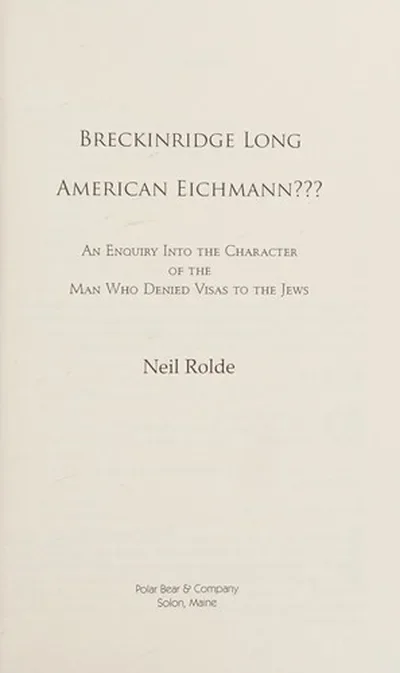
🏛 Books from this publisher Polar Bear & Company
All books from this publisher →

 82
82




You might also like
See more →




 89
89