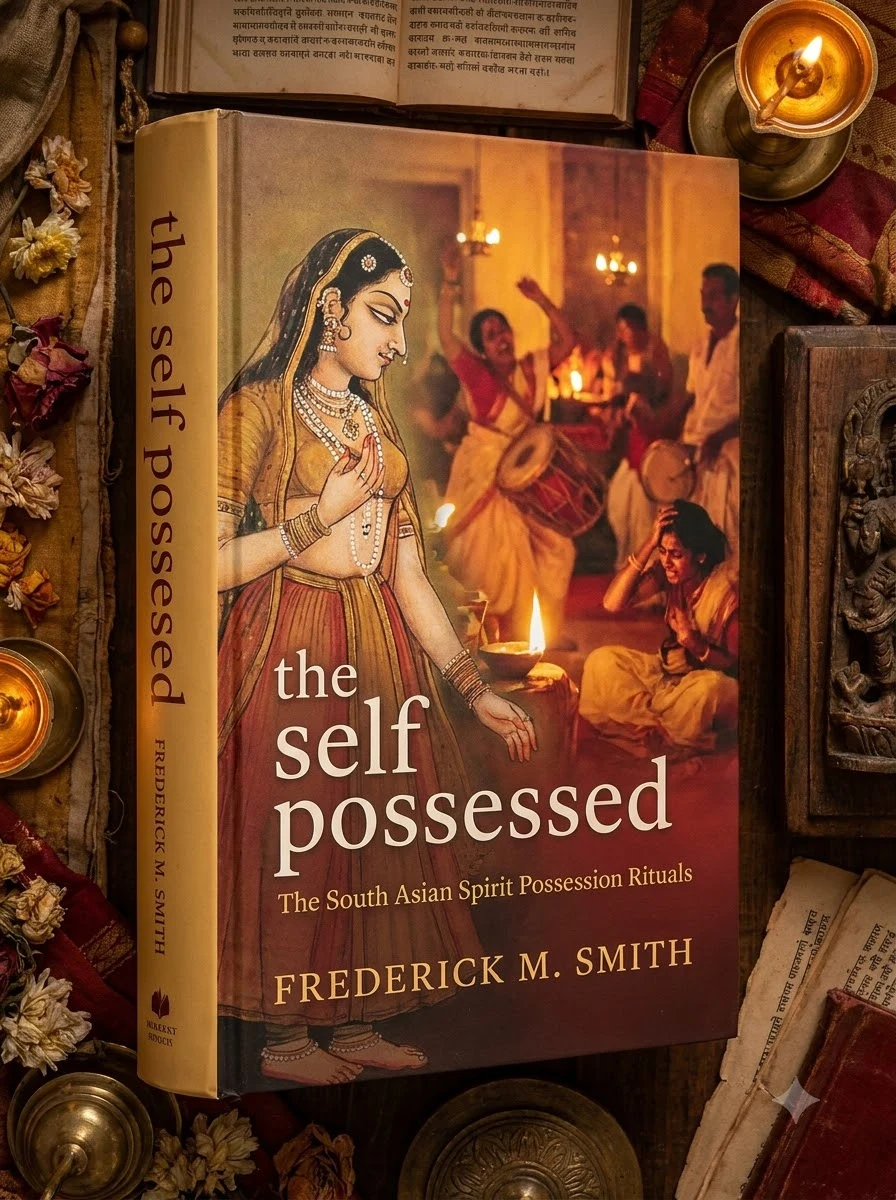
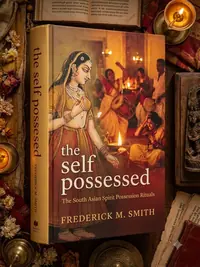
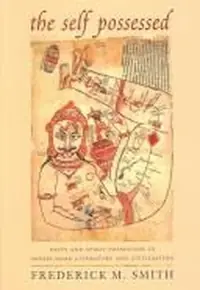
The Self Possessed: Deity and Spirit Possession in South Asian Literature and Civilization
Stock reported in the catalog; fulfillment is confirmed with your request.
Explore the sacred art of divine possession in South Asia, where spirits bring wisdom, not just wrath.
Frederick Smith redefines possession not as pathology but as a revered spiritual conduit. Drawing from millennia of texts, he distinguishes ecstatic, beneficial possession from malevolent infestation. This work challenges Western biases, showing how oracular trance has historically granted authority and insight in Hindu and Buddhist traditions. It is a vital correction to centuries of misunderstanding.
This scholarly work situates itself within the rich tapestry of South Asian literary and civilizational history, specifically examining Hindu and Buddhist traditions. It addresses long-standing Western misconceptions by grounding its analysis in millennia of indigenous texts rather than modern psychological frameworks.


📝 Description: The Self Possessed: Deity and Spirit Possession in South Asian Literature and Civilization
💎 Expert review
📖 Why choose it
Why this book is worth reading
Readers fascinated by the intersection of theology, anthropology, and literary history will find this volume indispensable. It offers a profound corrective to Western biases that often pathologize spiritual experiences. Those interested in understanding how oracular trance has historically granted authority and insight within Hindu and Buddhist contexts will gain a deeper appreciation for these practices. The book is ideal for scholars and serious enthusiasts who wish to move beyond simplistic notions of malevolent infestation to recognize the revered, beneficial role of spirits as conduits for wisdom in South Asian civilization.
⭐ Reader reviews
Reader rating
A friend in my study group recommended this one. The language takes some getting used to, but it becomes part of the charm. The ideas are old but land with surprising force today. One of my better finds this year.
Grabbed this during a weekend order. It rewards patience more than any book I've bought this year. The text itself is dense but rewarding — you get out what you put in. Happy enough with the purchase.
Long-time student of the esoteric here. It's become a regular reference in my practice. It reads better in small doses — a chapter at a time with notes. A few pages arrived with light corner wear, though nothing serious.
Not my usual area but wanted to branch out. Challenging in places, but never needlessly obscure. The symbolism is layered and generous to patient readers. Highly recommend to serious students.
My book club chose this last month. It's become a regular reference in my practice. Some chapters demand a slow, careful read, and that's exactly the point. Recommended with reservations.
Frederick Smith delivers a rigorous academic redefinition of possession, challenging entrenched Western biases with compelling textual evidence. This book is essential for specialists in religious studies and South Asian history who seek to understand the nuanced distinction between ecstatic possession and malevolent infestation. However, it is not suited for casual readers seeking practical guides on spirit work or those expecting narrative storytelling. The dense scholarly tone may alienate general audiences looking for accessible esoteric advice, making it strictly a resource for those committed to deep, critical inquiry into historical spiritual frameworks.
❓ Frequently asked questions
📖 Who should read this
Scholars of Indology, anthropologists, and practitioners of Tantric or devotional paths seeking to understand the theological legitimacy of spirit mediumship beyond exotic or pathological interpretations.
🎯 Key themes and symbolism
Sacred Ecstasy vs Malady
Smith rigorously separates beneficial trance states from illness. He shows how ancient cultures viewed positive possession as a gift of divine knowledge, contrasting it sharply with the modern medicalization of spiritual experiences as mere psychological disorders.
Literary Archaeology of Spirit
The author mines Vedic scriptures, epics, and ethnographies to trace the evolution of possession narratives. This deep textual analysis reveals how literary forms preserved the legitimacy of spirit mediums against rising rationalist and colonial critiques over centuries.
Cross-Cultural Theological Divergence
The text highlights how South Asian traditions embrace possession as holy, while Western frameworks often demonize it. This comparison exposes the cultural specificity of religious experience and questions the universal applicability of Western psychiatric models to Asian spirituality.
💬 Quotes from the book
“Positive oracular or ecstatic possession is the most common form of spiritual expression in India.”
“Spirit possession has been widely practiced... occupying a position of respect in early and recent Hinduism.”
📜 Historical context
📚 Glossary
- Diachronic Study
- Oracular Possession
- Indic Literature
📔 Questions to reflect on
- How does your culture distinguish between spiritual inspiration and mental illness?
- When have you felt 'other' voices influencing your decisions? Was it viewed as sacred or pathological?
- What modern rituals mimic the structure of ancient spirit possession without the theological framework?
🏛 Books from this publisher Columbia University Press
All books from this publisher →
 79
79
You might also like
See more →
 91
91