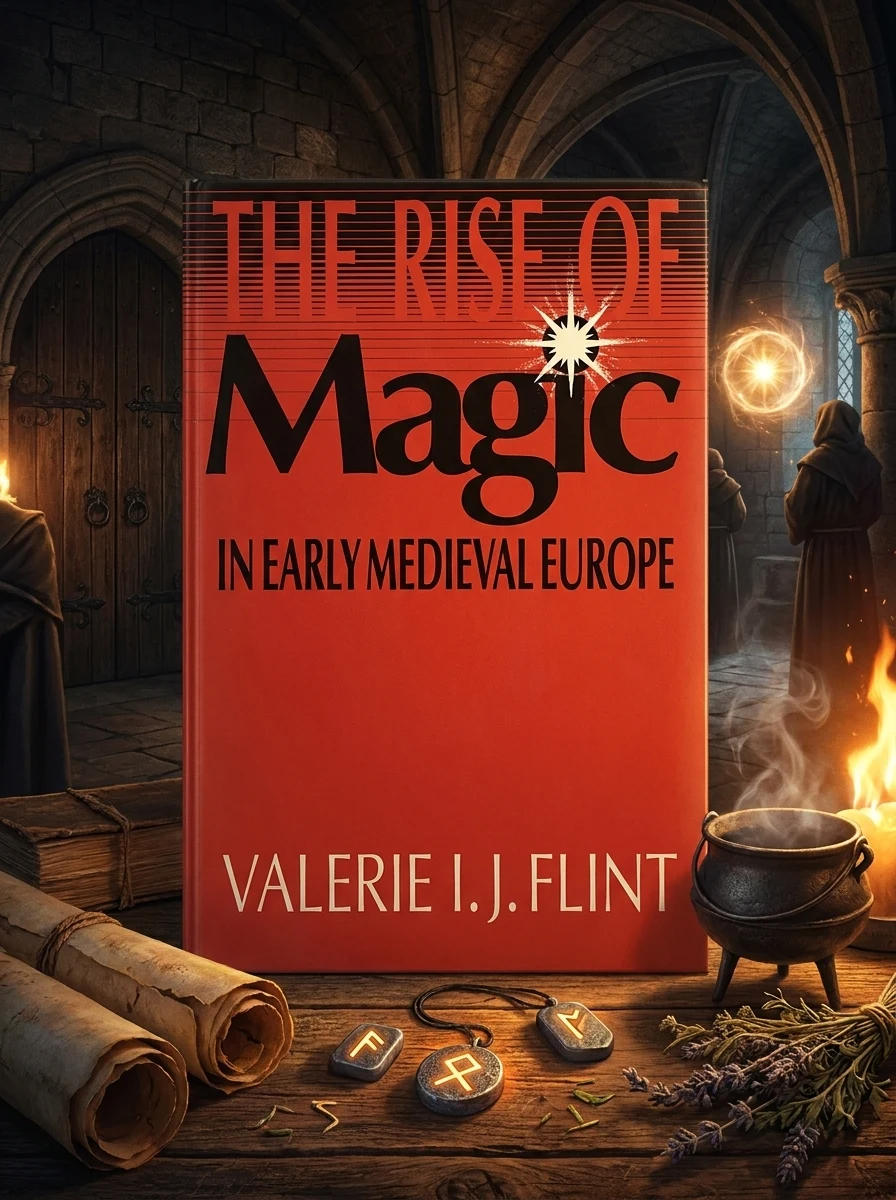
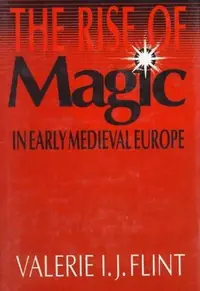
The Rise of Magic in Early Medieval Europe
Stock reported in the catalog; fulfillment is confirmed with your request.
Unearth the hidden enchantments seamlessly woven into early medieval European life.
Valerie Flint's seminal work challenges traditional views of magic in early medieval Europe, repositioning it not as a fringe, illicit practice but as an integral, sometimes even sanctioned, aspect of societal function and belief. She meticulously uncovers how various forms of magical thinking and practice were interwoven with the daily lives, religious structures, and political landscapes of the era. This study reveals a complex tapestry where spiritual beliefs, folk traditions, and nascent scientific inquiry often intersected, offering a nuanced understanding of how people engaged with unseen forces and sought influence over their world.
This scholarly volume situates magical practice within the complex religious and political fabric of early medieval Europe, challenging modern dichotomies between superstition and orthodoxy.


📝 Description: The Rise of Magic in Early Medieval Europe
💎 Expert review
📖 Why choose it
Why this book is worth reading
Scholars, historians of religion, and serious enthusiasts of Western esotericism will find this text indispensable for its rigorous dismantling of the myth that magic was merely a fringe or illicit activity during the early medieval period. Valerie Flint offers a vital corrective to traditional historiography, revealing how magical thinking was deeply embedded in societal functions, religious structures, and political landscapes. Readers seeking to understand the nuanced intersection of spiritual beliefs, folk traditions, and nascent scientific inquiry will gain a profound appreciation for how people of that era engaged with unseen forces. It is an essential resource for anyone wishing to grasp the authentic historical context of occult practices before they became fully systematized in later centuries.
⭐ Reader reviews
Reader rating
Flint’s seminal study is a dense, academic triumph that demands patience and prior knowledge of medieval history. While it successfully repositions magic as an integral aspect of societal function rather than a fringe phenomenon, its scholarly tone may alienate casual readers or those seeking practical grimoires. It does not suit anyone looking for accessible pop-history or actionable ceremonial techniques. The work is best appreciated by those willing to navigate complex archival evidence and theoretical frameworks. Readers expecting a narrative adventure or simple explanations of spells will likely find the rigorous analysis dry, but it remains a critical reference for understanding the historical reality of early medieval spiritual life.
❓ Frequently asked questions
📖 Who should read this
If you're seeking to dismantle simplistic notions of medieval superstition and uncover the sophisticated interplay of belief, society, and the unseen, this book is essential. It offers a profound re-evaluation for anyone fascinated by the true nature of historical magic.
🎯 Key themes and symbolism
Magic as Social Integration
Flint argues compellingly that magical practices were not merely suppressed superstitions but often played a recognized, functional role within early medieval communities. This includes examining how magical beliefs informed healing, protection, and even social cohesion, demonstrating a far more nuanced acceptance than often portrayed in historical narratives.
Redefining Medieval Magic
This book fundamentally redefines what constitutes "magic" in the early medieval context, moving beyond simplistic notions of witchcraft. It explores a spectrum of practices, from charms and divinations to ritualistic interventions, illustrating how these were perceived and utilized by people from all social strata, often blurring lines with religious piety.
Church and Folk Practices
Flint delves into the often-complex relationship between the burgeoning Christian Church and pre-existing folk magical traditions. She illustrates how the Church sometimes absorbed or adapted these practices, or, conversely, how it struggled to contain or demonize them, revealing a dynamic interplay rather than a simple eradication.
💬 Quotes from the book
“The line between pious supplication and magical manipulation often proved surprisingly permeable in the lived experience of the early medieval Christian.”
“To dismiss these practices as mere superstition is to overlook their profound social utility and the sophisticated cosmology they represented for their practitioners.”
📜 Historical context
📚 Glossary
- Sympathetic Magic
- Divination
- Grimoire
📔 Questions to reflect on
- How might our modern understanding of "magic" prevent us from accurately interpreting historical spiritual practices?
- Consider a contemporary belief or practice that sits at the blurred edge between science, religion, and the 'unexplained.' How does it compare to medieval magic?
- If magic was indeed integrated into early medieval society, what does this suggest about the fundamental human need to influence or understand the unseen?
🏛 Books from this publisher Princeton University Press
All books from this publisher →
 87
87





You might also like
See more →
 91
91
 91
91