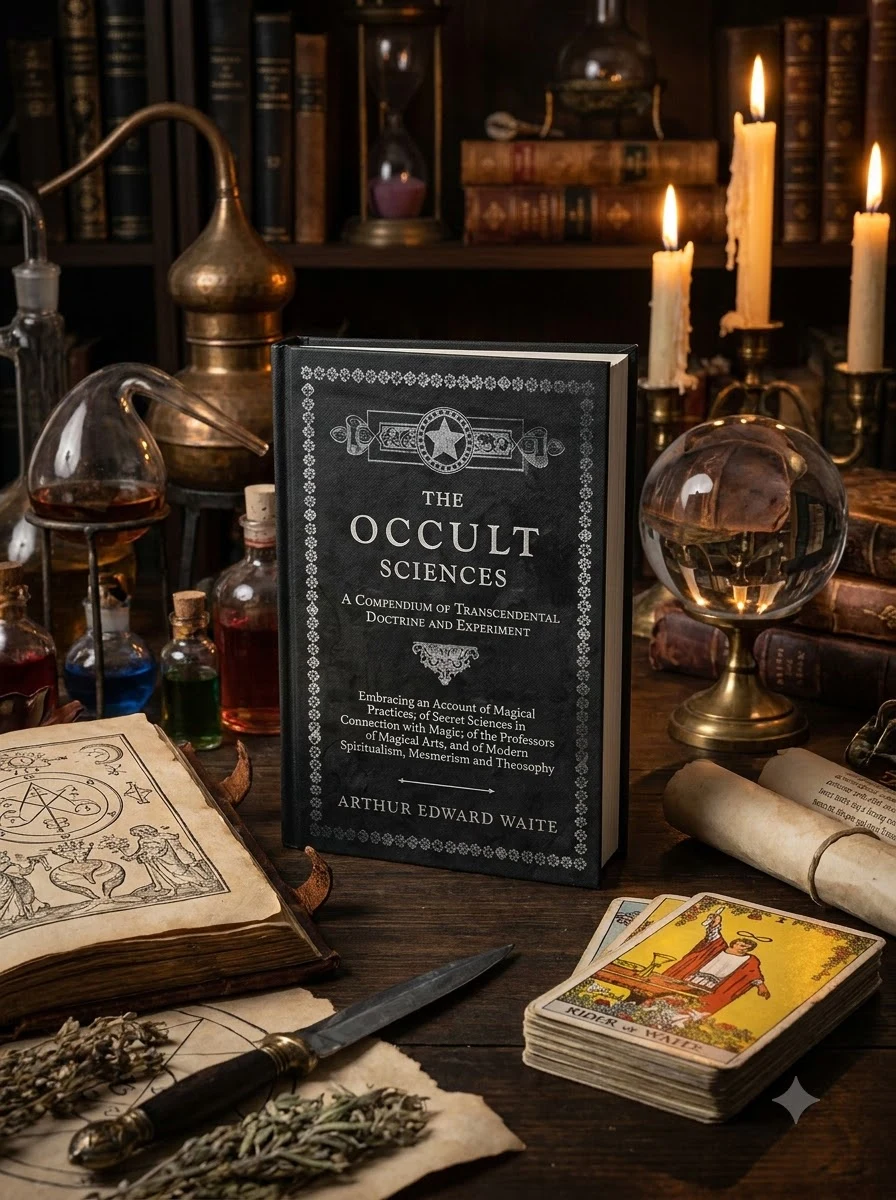
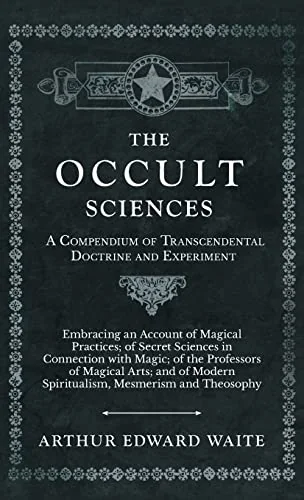
The Occult Sciences - A Compendium of Transcendental Doctrine and Experiment
✍️ Waite, Arthur EdwardThis foundational work by A. E. Waite offers an expansive survey of the occult landscape, delving into a myriad of transcendental practices and doctrines. From the intricacies of ceremonial magic and the subtle energies of mesmerism to the philosophical depths of theosophy and Kabbalah, Waite meticulously categorizes and explains diverse mystical traditions. Published in 1923, it serves as a scholarly yet accessible compendium, providing a panoramic view of subjects like spiritualism, necromancy, alchemy, and crystal-gazing, all filtered through the discerning eye of a renowned esoteric scholar and Tarot co-creator.


📝 Description: The Occult Sciences - A Compendium of Transcendental Doctrine and Experiment
📑 What's inside
- 1.Introduction
- 2. Part I Magical Practices
- 3. Part II Secret Sciences in Connection with Magic
- 4. Part III Professors of Magical Art
- 5. Part IV Modern Phenomena
💎 Expert review
📖 Why choose it
Why this book is worth reading
This compendium is an essential resource for serious students of the occult who seek a structured overview of transcendental doctrine rather than mere anecdote. Readers interested in the historical development of Western esotericism will find immense value in Waite’s meticulous categorization of practices ranging from alchemy to crystal-gazing. It serves as a master key for those wishing to understand the underlying philosophical currents that connect disparate mystical traditions. By filtering these subjects through the discerning eye of a renowned scholar, the text provides clarity where other works may offer only confusion. It is particularly beneficial for Tarot enthusiasts and Kabbalists looking to contextualize their specific interests within the broader landscape of esoteric wisdom, offering a panoramic view that enriches one’s practical and theoretical understanding of the hidden arts.
⭐ Reader reviews
Reader rating
Waite delivers a scholarly yet accessible survey that remains relevant for its systematic approach to obscure subjects. However, this work is not suited for casual readers seeking quick thrills or simple magical tricks; it demands patience and intellectual engagement with dense philosophical material. Those expecting practical spell-casting instructions will likely be disappointed by the focus on doctrine and history. The text assumes a certain familiarity with esoteric terminology, which may alienate complete beginners. Nevertheless, for the dedicated occultist willing to navigate its intricate categorizations, it offers unparalleled insight into the interconnectedness of spiritualism, necromancy, and alchemy, making it a vital reference for serious study rather than light entertainment.
❓ Frequently asked questions
📖 Who should read this
If you are a serious student seeking a comprehensive, intellectually rigorous overview of occult traditions from a master scholar, this compendium is indispensable. It's for those who appreciate historical context and philosophical depth over superficial 'how-to' guides.
🎯 Key themes and symbolism
Esoteric Practices
Waite meticulously chronicles various magical arts, including the historical lineage and theoretical underpinnings of necromancy and alchemy. He dissects ceremonial practices and their symbolic significance, moving beyond mere superstition to explore their perceived efficacy and place within occult traditions. This section acts as a critical primer on practical esoteric disciplines.
Mystical Philosophy
The book deeply explores the intellectual and spiritual frameworks of systems like Theosophy and Kabbalah. Waite illuminates how these traditions offer pathways to understanding the divine and the hidden structure of the universe, moving beyond simple belief into complex philosophical constructs that underpin many esoteric currents. He presents these as profound systems of thought.
Psychic Phenomena
Waite provides a critical examination of phenomena such as spiritualism, mesmerism, and crystal-gazing. He investigates their historical prevalence, their proponents, and the theories attempting to explain them. Rather than a simple endorsement, his approach is an intellectual inquiry into these elusive experiences and their place within the broader transcendental spectrum.
📜 Historical context
📚 Glossary
- Mesmerism
- Theosophy
- Necromancy
📔 Questions to reflect on
- How do Waite's classifications of 'occult sciences' resonate with modern understandings of spirituality and consciousness?
- Reflect on the interplay between intellect and intuition in esoteric study as presented by Waite, particularly in his treatment of 'transcendental doctrine and experiment.'
- Consider how the historical context of 1923 might have shaped Waite's perspective on these subjects, and how his views might differ today.