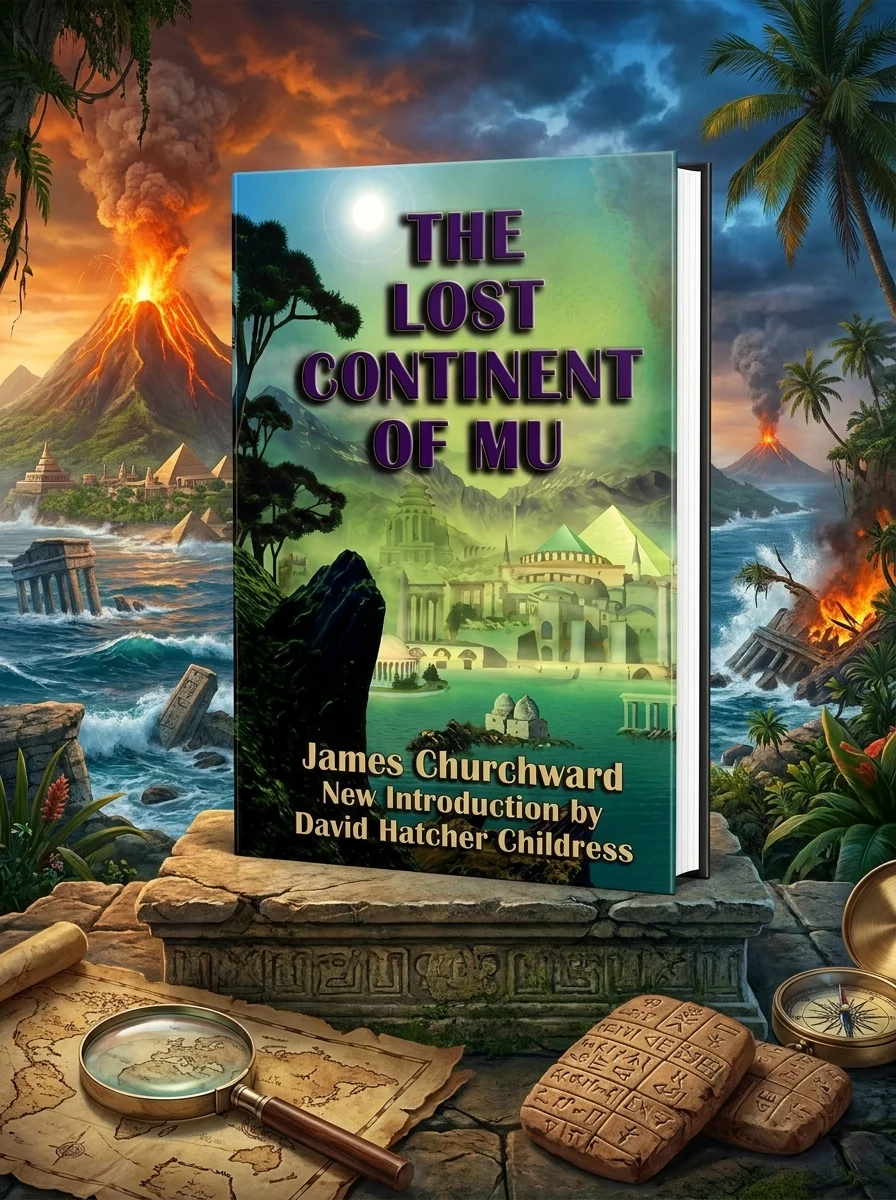
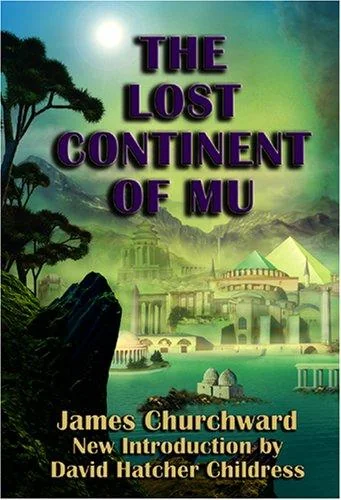
The Lost Continent of Mu
James Churchward presents his classic 1931 theory on a lost sunken Pacific continent.
This 336-page paperback work outlines the story of James Churchward's search for a vanished Pacific civilization. Drawing on travel accounts, geological history, and buried cities in Mexico, Churchward argues that human life originated on a vast landmass that sank under fifty million square miles of water. The edition features an introduction by David Hatcher Childress alongside original chapters on ancient records, North American origins, and solar empires.
First published in 1931, this work belongs to early twentieth-century British occult writing and ancient mystery theories. It presents mid-period alternative historical perspectives written after the author retired from engineering and inventing to investigate questions raised during earlier Pacific travels.


📝 Description: The Lost Continent of Mu
💎 Expert review
📖 Why choose it
Why this book is worth reading
Readers fascinated by the mysteries of the Pacific and the origins of human civilization will find this book deeply engaging. James Churchward invites you to explore an enigmatic saga that challenges conventional historical timelines, offering a compelling vision of humanity's ancient past. If you enjoy travel narratives blended with archaeological interpretations, this seminal work provides a unique perspective on how advanced cultures might have influenced subsequent global societies. It is perfect for those who appreciate speculative theories and the idea of a forgotten era where Mu served as the cradle of civilization before its cataclysmic submersion.
⭐ Reader reviews
Reader rating
Churchward’s text offers a vivid reconstruction of a vanished land, weaving together travel accounts and speculative theories to suggest profound global influences. However, this book does not suit readers seeking peer-reviewed archaeological data or strict adherence to mainstream historical timelines. It is best appreciated as an imaginative exploration rather than scientific fact. Those who prefer rigid academic rigor may find the reliance on personal search and interpretation frustrating. Yet, for those open to alternative histories, it remains a fascinating, if controversial, contribution to our understanding of ancient myths and potential lost eras.
❓ Frequently asked questions
📖 Who should read this
If you're drawn to the allure of hidden histories, lost civilizations, and audacious challenges to conventional archaeology, this book is essential. Delve into a world where ancient myths hold surprising truths and the Pacific once cradled humanity's earliest, most magnificent empire.
🎯 Key themes and symbolism
The Vanished Continent
Churchward's central thesis posits the existence of Mu, a vast landmass and the primordial wellspring of human culture. He delves into its advanced society, technological prowess, and spiritual wisdom, presenting it as the fount from which all later civilizations drew inspiration, challenging orthodox views of human history and development.
Cataclysmic Destruction
The narrative vividly details Mu's tragic end, attributing its disappearance to immense volcanic activity and geological instability. This cataclysm reshaped the planet, submerging an entire civilization and leaving behind only fragmented memories and subtle imprints on subsequent cultures across the globe.
Global Cultural Roots
The author proposes that Mu served as the mother culture for numerous ancient societies, including those in Mexico and North America. He explores alleged connections, suggesting that symbols, myths, and architectural styles found worldwide are echoes of Mu's foundational influence, providing a controversial reinterpretation of historical diffusion.
📜 Historical context
📚 Glossary
- Mu
- Naacal
- Cataclysm
📔 Questions to reflect on
- How might our understanding of human progress and civilization be different if a continent like Mu were proven to exist as described?
- What role do ancient myths and legends play in shaping our search for historical truth, and how much credence should we give them?
- If geological cataclysms have erased entire civilizations, what does that imply about the impermanence of our own achievements?