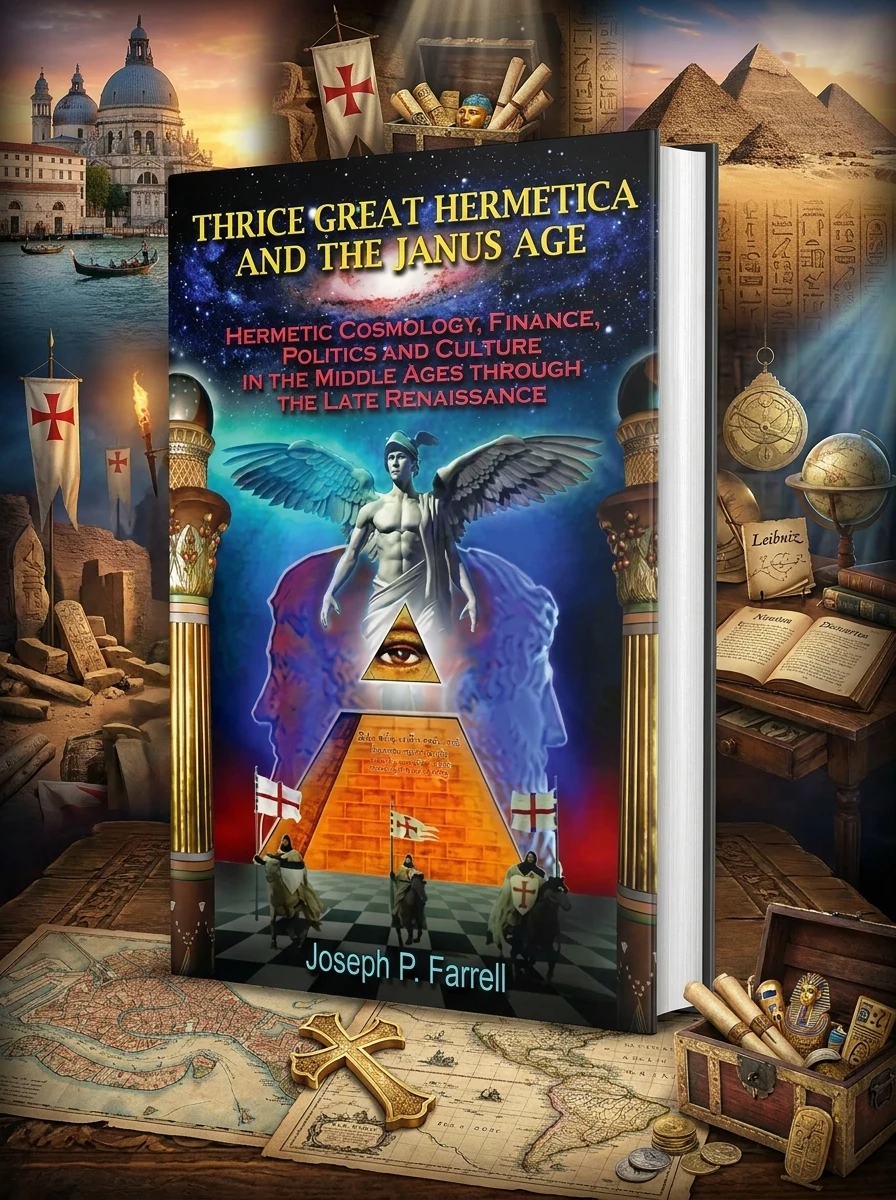
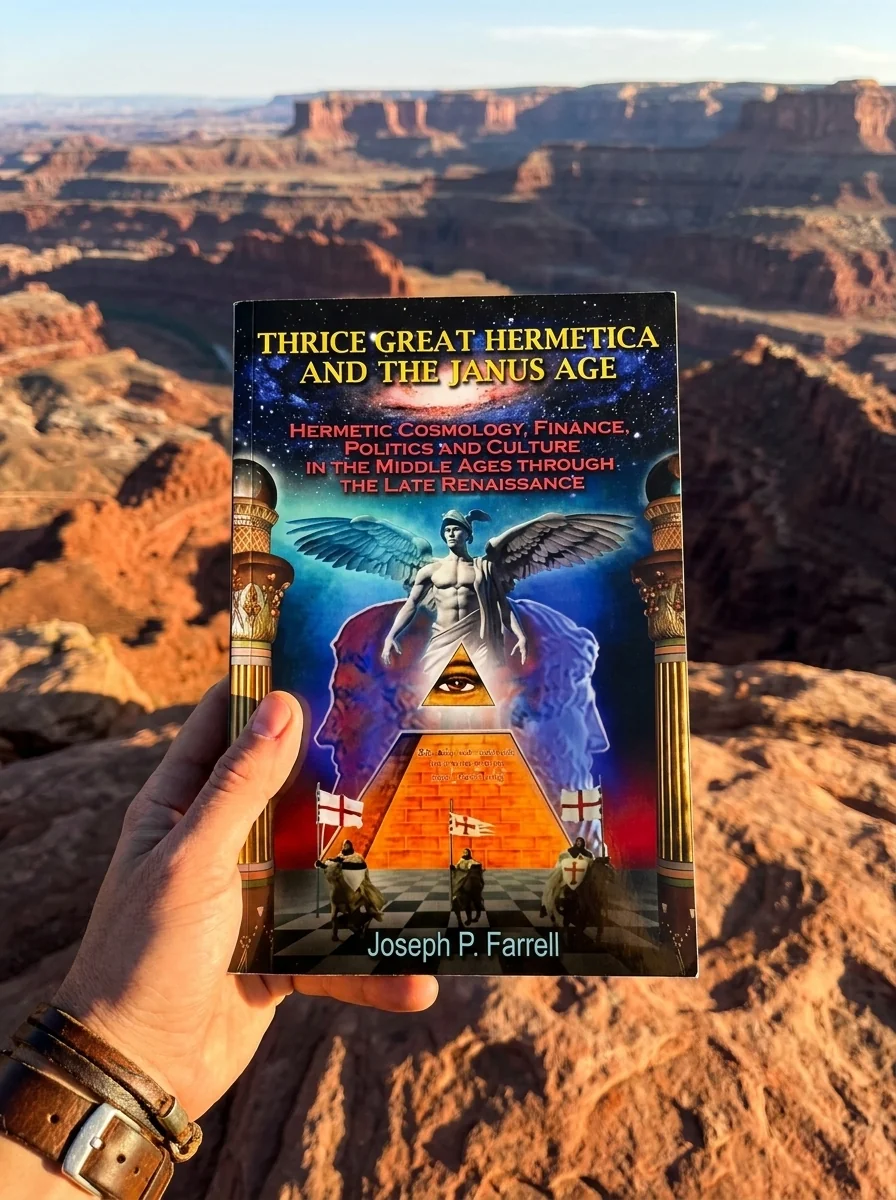
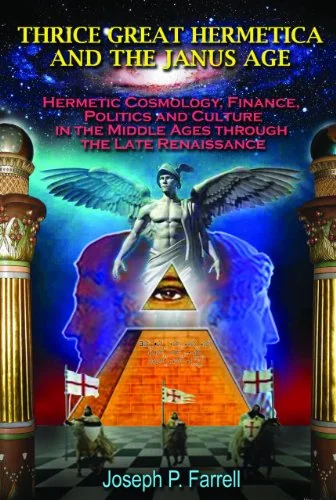
Thrice Great Hermetica and the Janus Age: Hermetic Cosmology, Finance, Politics and Culture in the Middle Ages Through the Late Renaissance
✍️ Farrell, Joseph PJoseph P. Farrell meticulously unearths the covert threads binding disparate historical epochs and figures. This compelling volume delves into the profound, often obscured, influence of Hermetic doctrine, charting its trajectory from antiquity through the Middle Ages and into the Renaissance. Discover the surprising nexus between Venetian power, the Knights Templar, global finance, and the Fourth Crusade, all under the shadow of esoteric knowledge. Farrell illuminates how these seemingly unrelated elements, alongside figures like Newton and Shakespeare, coalesce around a hidden Hermetic worldview, reshaping our understanding of civilization's true narrative.


📝 Description: Thrice Great Hermetica and the Janus Age: Hermetic Cosmology, Finance, Politics and Culture in the Middle Ages Through the Late Renaissance
📑 What's inside
- Acknowledgements
- Preface
- Part 1. Hermetic, Or Occulted, History
- 1. Skeletons (or Was That Just Heads?) in the Closet: The Hermetic and Occult Aspects of the Knights Templar
- A. The Templar Cover Story and Its Implications and Incongruities
- 1. The Templar Timeline
- 2. A Necessary Catalogue of the Implications and Significance of the Templars
- 3. The Cover Story and Anomalies
- B. The Bizarre List of Charges Against the Templars
- 1. King Philippe le Bel's Letter to his Seneschals and Bailiffs, and Its Accusations
- 2. A Reconsideration of the Charges
- 2. Genealogies and Metaphors: A Speculation on the Bloodline Hypothesis and the Tablets of Destinies
- A. The Rex Deus Version of the Bloodline Hypothesis
- 1. Michael and the Rex Deus Hypothesis
- 2. Hopkin's, Wallace-Murphy's, and Simmans' Caveat
- 3. Michael, Rex Deus, and the Temple Schools
- B. The Topological Metaphor of the Medium, Genealogies, and the Mythos of Divine Right
- 1. Rex Deus and the Discovery of the Pyramid Texts
- 2. The Topological Metaphor of the Medium, the Cosmic War, and Genealogy
- a. Mesopotamian Myth: A Primordial Trinity of Anu (Father Sky), Antu (Mother Sky), and Ki (Mother Earth)
- b. A Review of the Genealogical Version of the Metaphor in the Vedic Tradition and the Mayan Popol Vuh
- c. The Mesopotamian Father-Mother Sky, and Abzu-Tiamat: The Abyss
- 3. The Genealogical Version of the Metaphor: The Divine Right of Kings and Ancient Technological Activation
- 3. Hermetic Knowledge and Hidden Voyages: Templar and Venetian Exploitation of Hidden Knowledge?
- A. Venice and the Templars
- 1. Revisiting the Fourth Crusade (1202-1204 CE)
- 2. Yet Another Veneto-Tempkr Undertaking: Secret Knowledge, Hidden Cartographic Traditions, Hidden Voyages, The Zenos, The Sinclairs, and the Templars
- a. The Narrative Itself and Prior Voyages to North America
- 1. Fishermen's Voyages
- 2. The Zenos, Pyramids, and the Council of Ten
- 3. The Zeno Narrative Itself
- a. Governors and Council Members
- b. A Voyage of Exploration? Or Trade? A Personal Whim? Or Hidden Agenda?
- c. The Initial Encounter With Prince Henry Sinclair, and a Map Rotten With Age
- d. The Zenos, Prince Henry, and the Voyage Westward
- e. To North America
- b. The Map-Narrative Blunders and Corroborations
- 1. Roman Shipwrecks and Coins in the New World, and Constantinople
- 2. Egyptian Artefacts in the New World
- 3. The Knutson Expedition
- 4. The Church Corroboration: Bishoprics in Greenland Before Columbus
- 5. North American Corroborations: The Newport Tower and the Westford, Massachusetts Knight
- 6. The Zeno Manuscript's Unusual Nomenclature, and the Reference to the Volcano
- B. Some Significant Odds and Ends: the Zeno Manuscript's Publication in Elizabethan England, Its Delay in Publication in Venice, and the Sinclair-Templar Connection
- A. The Templars and the Languedoc
- 1. The Shepherd's Tale: Lucifer's Diadem, Stones of Power, the Lapsis Exillis, The Golden Fleece, and the Philosopher's Stone
- 2. Solomon's Treasure, and Byzantium
- 3. The Albigensian Crusade According to Rahn
- a. The Causus Belli: The Cathar Version of the Metaphor
- b. Rahn's Description of the Crusade
- B. The Templars, the Languedoc, the Cathars, and the Treasure Legends
- 1. The Languedoc and the Templars
- 2. The Templars and North America
- 3. The Bezu Counterfeiting Episode: A Strange Case of Good Money Driving Out Bad, and Four Possible Scenarios
- a. The Counterfeiting Episode Itself
- b. The Dagobert Family and the Mines That Didn't Mine
- c. And the Strange Case of French Master Classicist Painter, Nicholas Poussin
- d. The Four Possible Scenarios
- 4. Pope Sylvester II And the Crusades: A Covert Quest for Hidden and Lost Knowledge?
- C. Aftermaths: Strange Loose Ends
Showing the first 60 entries.
💎 Expert review
📖 Why choose it
Why this book is worth reading
Readers fascinated by the hidden architecture of history will find this book a compelling revelation. Joseph P. Farrell offers a rigorous exploration of how Hermetic doctrine subtly influenced global finance, politics, and culture from antiquity through the late Renaissance. If you are intrigued by the covert connections between Venetian power, the Knights Templar, and figures like Newton and Shakespeare, this text provides a unique lens on civilization's narrative. It is ideal for those seeking to understand the esoteric undercurrents that shaped modern society. Farrell’s meticulous unearthing of these threads invites deep contemplation on the interplay between spiritual knowledge and worldly power structures. This book rewards the dedicated reader with a profound, albeit complex, reinterpretation of historical causality through an occult perspective.
⭐ Reader reviews
Reader rating
Farrell presents a dense, argumentative synthesis of Hermetic cosmology and historical events, claiming direct links between esoteric doctrine and major political shifts like the Fourth Crusade. While intellectually stimulating for those already versed in Western esotericism, it may frustrate readers seeking straightforward historical accounts or academic neutrality. The book’s speculative nature and its assertion of a unified 'Hermetic worldview' across disparate epochs might feel overly deterministic to skeptics. It is not suited for casual readers preferring accessible narratives or historians demanding conventional evidentiary standards. However, for enthusiasts of alternative history and occult studies, it offers a provocative, if controversial, perspective on the hidden forces driving cultural evolution from ancient Egypt to the Renaissance.
❓ Frequently asked questions
📖 Who should read this
If you're drawn to uncovering the hidden forces behind history's grand narratives, or if you suspect that mainstream accounts only scratch the surface, this book is for you. Prepare to have your understanding of medieval and Renaissance Europe profoundly re-evaluated through an esoteric lens.
🎯 Key themes and symbolism
Hermeticism's Enduring Influence
This book meticulously traces how ancient Hermetic principles weren't just intellectual curiosities but active forces, subtly guiding political machinations, financial innovations, and cultural shifts from the era of Jesus to the Enlightenment. It reveals how this esoteric philosophy permeated the minds of pivotal historical figures and institutions, shaping the very fabric of Western civilization.
Venice's Occult Web
Farrell exposes the shadowy role of Venice, not merely as a mercantile powerhouse, but as a crucial nexus for international finance and esoteric knowledge, often intertwined with the enigmatic Knights Templar. He uncovers its cunning hand in events like the Fourth Crusade and its little-known explorations, suggesting a deeper, more calculated agenda rooted in hidden doctrines.
Unmasking Hidden History
Beyond conventional narratives, this work challenges readers to see history as a tapestry woven with deliberate concealment and esoteric undercurrents. It connects seemingly disparate events—from Shakespearean plays to early scientific quests—to a unifying, secret tradition, prompting a radical re-evaluation of established historical timelines and the true architects of global change.
📜 Historical context
📚 Glossary
- Hermeticism
- Knights Templar
- Janus Age
📔 Questions to reflect on
- Consider how a belief in a "hidden history" might change your perception of current events or contemporary power structures.
- If Hermetic principles subtly guided historical figures, what modern philosophies or esoteric ideas might be shaping our world in ways we don't yet fully perceive?
- Reflect on the idea of a "Janus Age." How do historical periods simultaneously look to the past and anticipate the future, and what role do hidden traditions play in this duality?