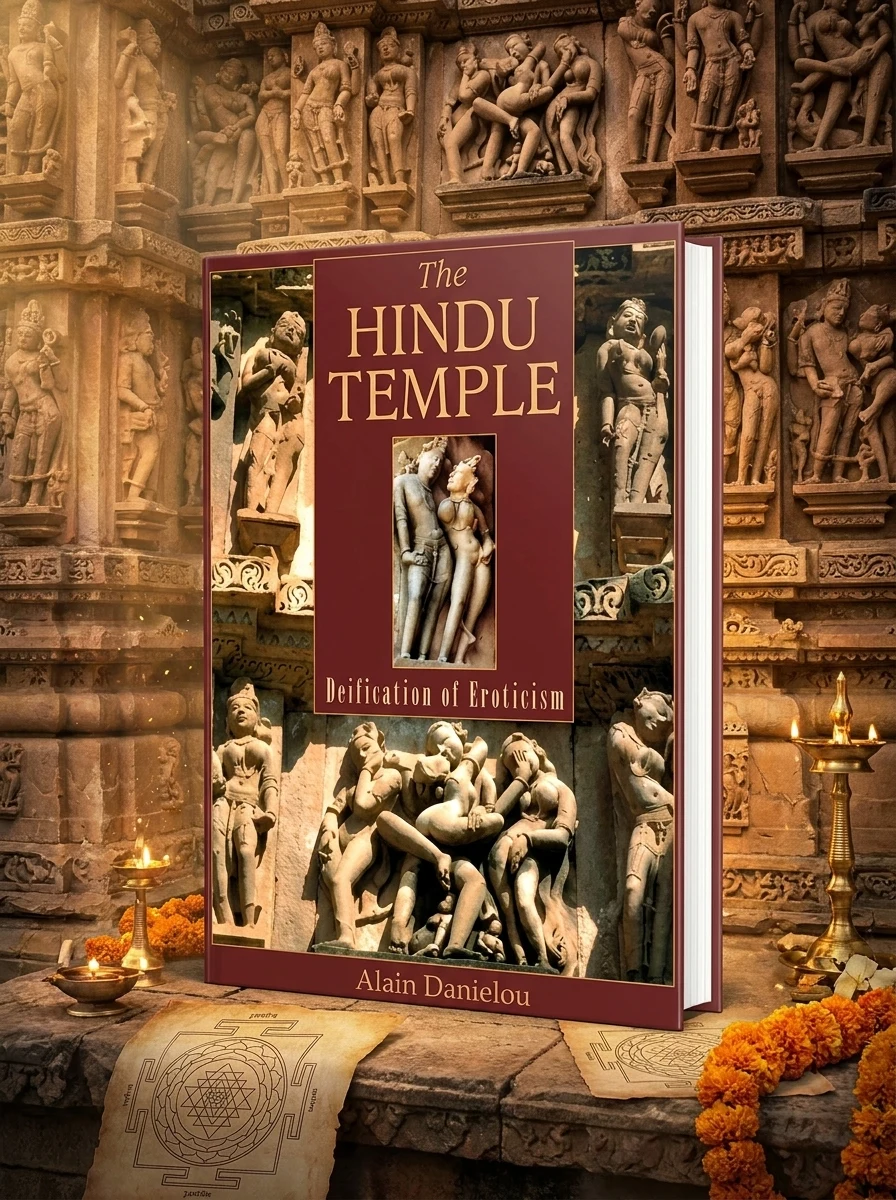
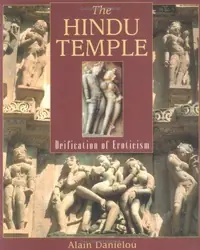
The Hindu Temple: Deification of Eroticism (Us)
Daniélou, AlainThis edition can be ordered. No arrival date is confirmed.
Sacred architecture unveils divine eroticism, transforming stone into cosmic revelation.
Delve into Alain Danielou's seminal work exploring the profound eroticism woven into the fabric of Hindu temple design. This meticulously researched volume reveals how ancient Indian architectural principles mandated the inclusion of explicit imagery, not for mere titillation, but as essential magical diagrams and instructional tools. Through stunning photography, Danielou demonstrates how the union of opposites, symbolized by sexual acts, reflects the ultimate creative principle and embodies divine bliss, making the temple a potent mirror of the cosmos.
This work sits firmly within the tradition of esoteric philosophy and comparative religion, specifically exploring the intersection of sacred geometry and tantric aesthetics in Hinduism.


📝 Description: The Hindu Temple: Deification of Eroticism (Us)
💎 Expert review
📖 Why choose it
Why this book is worth reading
Readers fascinated by the hidden spiritual mechanics behind sacred art will find this volume indispensable. It offers a profound perspective shift, revealing how explicit eroticism in Hindu temples serves as a vital magical diagram for cosmic understanding rather than simple decoration. Those seeking to understand the theological underpinnings of divine union and creative energy will appreciate the meticulous research and stunning photography that illustrate these complex principles. It is ideal for scholars of religious iconography, architects interested in sacred space, and spiritual seekers who wish to grasp how physical forms can embody abstract divine bliss and universal harmony.
⭐ Reader reviews
Reader rating
Danielou provides a rigorous, visually rich exploration of tantric architecture, successfully arguing for the theological necessity of erotic imagery. However, readers seeking purely historical or archaeological accounts without philosophical interpretation may find the focus on 'divine eroticism' too abstract. It is not suited for those uncomfortable with explicit sexual symbolism in religious contexts, as the text treats these acts as essential instructional tools rather than mere art. The dense integration of metaphysical theory with architectural analysis demands a reader willing to engage with complex spiritual concepts, making it less accessible for casual tourists or those preferring straightforward historical narratives over esoteric interpretation.
❓ Frequently asked questions
📖 Who should read this
For seekers of esoteric knowledge, students of religious symbolism, or those fascinated by the intersection of spirituality and sexuality, this book offers an unparalleled journey into the profound meanings embedded within India's sacred architecture. Prepare to have your perceptions challenged and expanded.
🎯 Key themes and symbolism
Sacred Eroticism's Purpose
Danielou masterfully unpacks how erotic depictions on Hindu temples serve dual functions: they act as powerful magical yantras, imbuing the structure with divine energy, and simultaneously instruct devotees on the fundamental spiritual truth that the physical act of union mirrors cosmic creation.
Architectural Alchemy
The book explores how ancient treatises guided architects to strategically place these sensual sculptures. This deliberate arrangement transformed the temple into a living yantra, a sacred diagram that perfectly mirrored the divine order and cosmic processes, thereby making the structure fully efficacious.
Union as Divine Bliss
A central tenet revealed is that the sexual act, far from being profane, is the ultimate representation of the union of opposites. Danielou elucidates how this sacred conjunction is seen as the perfect image of the creative principle itself and a direct reflection of profound, transcendental joy.
💬 Quotes from the book
“A temple devoid of erotic expression is not merely incomplete; it is impotent, unable to manifest the sacred.”
“The ecstatic union of form and spirit, mirrored in the sexual act, is the very heartbeat of divine creation, made manifest in stone.”
📜 Historical context
📚 Glossary
- Yantras
- Maleficent
- Divine Bliss
📔 Questions to reflect on
- Consider how your cultural background influences your initial reaction to sacred erotic art. How might Danielou's perspective challenge or confirm your views?
- Reflect on the concept of "magical diagrams" (yantras) in architecture. Where else might similar principles apply in art or design that aims to evoke spiritual power?
- How does the idea of "union of opposites" as a creative principle resonate with other spiritual or philosophical traditions you know?
✍️ More books by this author Daniélou, Alain
All books by this author →
🏛 Books from this publisher Inner Traditions International
All books from this publisher →



You might also like
See more →
 91
91