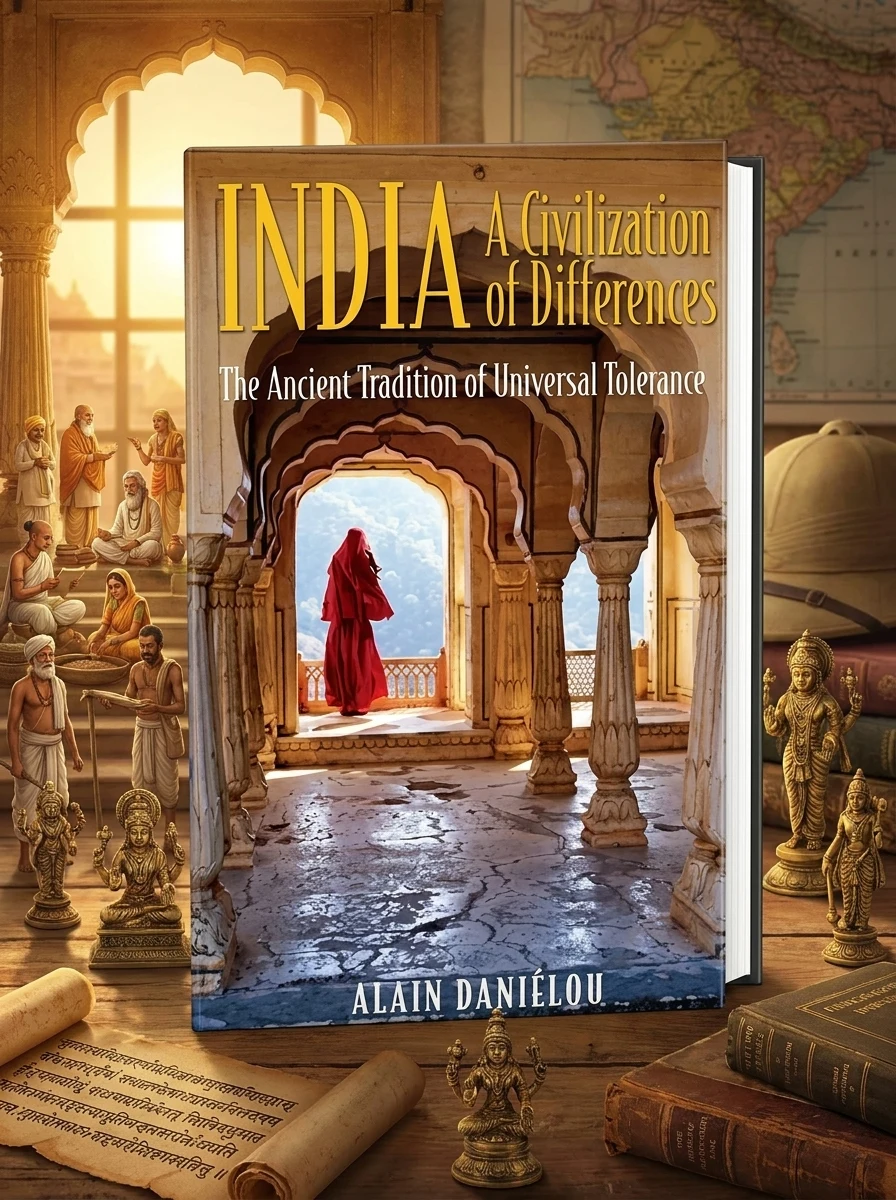
India: A Civilization of Differences: The Ancient Tradition of Universal Tolerance (Us)
Daniélou, Alain

This edition can be ordered. No arrival date is confirmed.
Uncover a radical reinterpretation of India's ancient caste system, challenging Western prejudice.
Alain Daniélou, a renowned scholar of Hinduism, presents a provocative collection of essays that boldly re-evaluates the traditional Indian social structure. This work challenges common Western perceptions of the caste system as inherently oppressive, instead positing it as an organic framework designed to harmonize societal differences and maximize individual potential. Daniélou argues that colonial powers distorted this ancient order to justify their own agendas, revealing a system rooted in functional ethics rather than discriminatory hierarchy. It’s an essential read for those seeking a deeper, unvarnished understanding of India's complex social fabric.
This work sits at the intersection of esoteric philosophy and post-colonial cultural critique, offering a scholarly defense of Hindu social structures against Western misinterpretation. It belongs to the tradition of comparative religion that seeks to reclaim indigenous narratives from colonial distortion.


📝 Description: India: A Civilization of Differences: The Ancient Tradition of Universal Tolerance (Us)
💎 Expert review
📖 Why choose it
Why this book is worth reading
Readers deeply interested in the philosophical underpinnings of Hinduism and those weary of Western-centric historical narratives will find this text liberating. Daniélou offers a necessary corrective to centuries of prejudice, inviting you to see the caste system not as oppression but as a harmonious social framework. It is ideal for seekers who wish to understand India’s complex social fabric through an authentic, functional lens rather than a discriminatory one. If you crave unvarnished truth about ancient traditions and wish to challenge your own preconceived notions of hierarchy and ethics, this book provides a profound, radical reinterpretation that honors the dignity of Indian civilization.
⭐ Reader reviews
Reader rating
Daniélou’s provocative essays demand intellectual rigor from the reader, making them unsuitable for those seeking light entertainment or simple confirmation of Western biases. Scholars looking for empirical sociological data may find the philosophical approach too abstract or defensive. However, for those willing to engage with a bold re-evaluation of social structures, the text is compelling. It risks alienating readers entrenched in colonial narratives but rewards open-minded seekers with a nuanced view of universal tolerance and functional ethics within ancient Indian society.
❓ Frequently asked questions
📖 Who should read this
For seekers of profound cultural understanding, this book offers a radical departure from conventional narratives. If you're ready to question deeply ingrained assumptions about Indian society and colonial history, and to explore an alternative framework for social organization, Daniélou's insights will illuminate and provoke.
🎯 Key themes and symbolism
Caste Reimagined: Natural Order
This book provocatively reframes the Hindu caste system, moving beyond its common perception as a rigid, oppressive hierarchy. Daniélou presents it as an ancient, natural organizational principle that celebrates diversity, where individuals fulfill specific functional roles to ensure societal harmony, rather than enforcing inherent inequality or prejudice.
Decolonizing Indian History
The author meticulously dissects how colonial powers fabricated negative stereotypes about Indian society, particularly concerning the caste system. Daniélou argues these distortions served to rationalize foreign dominion, urging readers to critically examine historical accounts and recognize the underlying biases that have shaped our understanding.
Ethics of Functional Roles
Daniélou explores the concept of "caste ethics," where an individual's spiritual and social effectiveness is intrinsically linked to their functional role within society. This perspective emphasizes achieving personal perfection within one's birth state, contributing to the collective continuity and embracing one's unique place in the broader social tapestry.
💬 Quotes from the book
“The Indian caste system is not a hierarchy with some who are privileged and others who are despised; it is a natural ordering, an organizing principle, of a society wherein differences are embraced rather than ignored.”
“In classical India social ethics are based on each individual's functional role in society. These ethics vary according to caste in order to maximize the individual's effectiveness in the social context.”
📜 Historical context
📚 Glossary
- Caste System
- Caste Ethics
- Colonial Stereotypes
📔 Questions to reflect on
- How do Western societal structures, past or present, implicitly or explicitly define individual roles, and how do these compare to the functional ethics Daniélou describes?
- Reflect on a time when your understanding of a non-Western culture was shaped by external narratives. How might Daniélou's critique of colonial stereotypes apply to that experience?
- Considering the idea of achieving 'perfection in the state to which one is born,' how does this concept resonate or clash with contemporary notions of individual agency and social mobility?
✍️ More books by this author Daniélou, Alain
All books by this author →


🏛 Books from this publisher Inner Traditions International
All books from this publisher →




You might also like
See more →