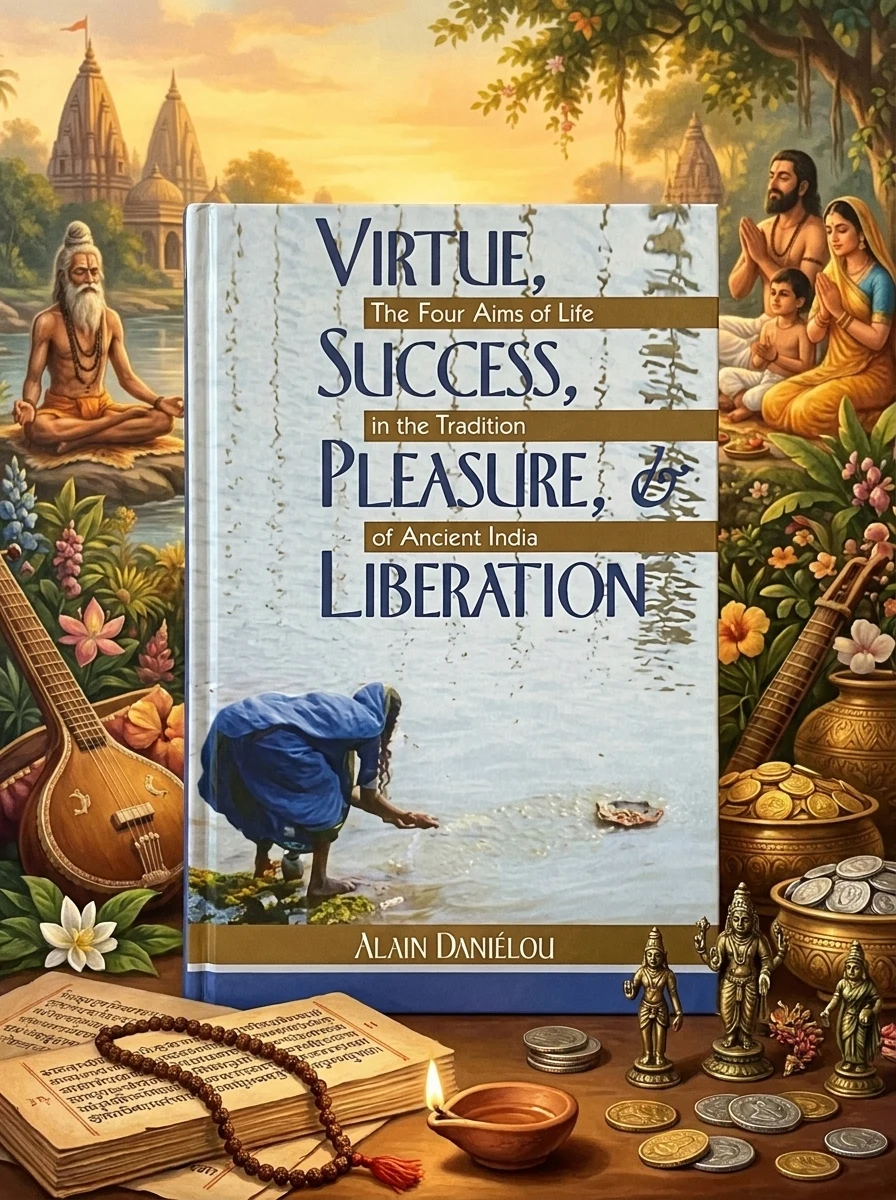
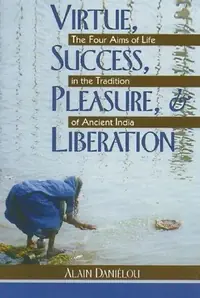
Virtue, Success, Pleasure, and Liberation: The Four Aims of Life in the Tradition of Ancient India (Original)
Daniélou, Alain

This edition can be ordered. No arrival date is confirmed.
Uncover the fourfold path of ancient India that harmonizes duty, wealth, passion, and spiritual release.
Alain Daniélou dissects the Vedic framework of existence, arguing that a balanced life requires the integration of Dharma, Artha, Kama, and Moksha. He contrasts this holistic worldview with modern Western egalitarianism, suggesting that the latter lacks the structural depth to sustain civilization. By examining the caste system not as oppression but as a functional social architecture, Daniélou explores how individual rights, sexual ethics, and martial duties were historically synchronized. This work serves as a vital key to understanding the psychological and societal mechanics of one of humanity’s most enduring cultures, revealing how material success and spiritual liberation are not mutually exclusive but interdependent.
This work explores the foundational Vedic framework of ancient India, analyzing the traditional social and spiritual architecture that has sustained one of humanity's most enduring cultures. It situates itself within esoteric philosophy by examining the interplay between duty, wealth, passion, and liberation.


📝 Description: Virtue, Success, Pleasure, and Liberation: The Four Aims of Life in the Tradition of Ancient India (Original)
💎 Expert review
📖 Why choose it
Why this book is worth reading
Ideal for seekers of holistic wisdom, this book offers a profound lens through which to view the integration of material success and spiritual release. Readers interested in the structural mechanics of civilization will appreciate Daniélou’s argument that a balanced life requires harmonizing duty, wealth, passion, and liberation. It is particularly valuable for those critical of modern Western egalitarianism, providing a counter-narrative that emphasizes functional social architecture over abstract rights. By revealing how individual rights, sexual ethics, and martial duties were historically synchronized, this text empowers readers to understand the psychological depth of ancient Indian thought. It serves as an essential guide for anyone wishing to move beyond fragmented modern perspectives toward a more unified understanding of human existence and societal health.
⭐ Reader reviews
Reader rating
Daniélou presents a rigorous defense of ancient Indian social structures, reinterpreting the caste system not as oppression but as functional architecture. While intellectually stimulating for those interested in comparative religion and esoteric sociology, this work is not suited for modern egalitarians or those seeking progressive social theory. Readers expecting a simple self-help guide will find its dense philosophical arguments regarding duty and liberation demanding. The text’s candid defense of hierarchical structures may alienate readers uncomfortable with traditional martial duties or rigid social roles. However, for scholars of Vedic philosophy and those curious about the interdependence of material and spiritual aims, it remains a vital, if controversial, key to understanding the enduring mechanics of one of history's most complex civilizations.
❓ Frequently asked questions
📖 Who should read this
Readers interested in comparative religion, historians of Indian culture, and those questioning the limitations of modern Western social structures seeking deeper philosophical roots.
🎯 Key themes and symbolism
Dharma, Artha, Kama, Moksha
Caste as social function
Critique of modern egalitarianism
💬 Quotes from the book
“The four aims of life are not contradictory but complementary, forming a complete cycle of human experience.”
“Modern egalitarianism often ignores the necessary hierarchy that allows civilization to flourish.”
📜 Historical context
📚 Glossary
- Moksha
- Artha
- Varna
📔 Questions to reflect on
- How does your current life balance the pursuit of material success with spiritual growth?
- In what ways do you think social structures influence individual freedom?
- Can pleasure and virtue coexist without conflict in your personal philosophy?
✍️ More books by this author Daniélou, Alain
All books by this author →
🏛 Books from this publisher Inner Traditions International
All books from this publisher →



You might also like
See more →