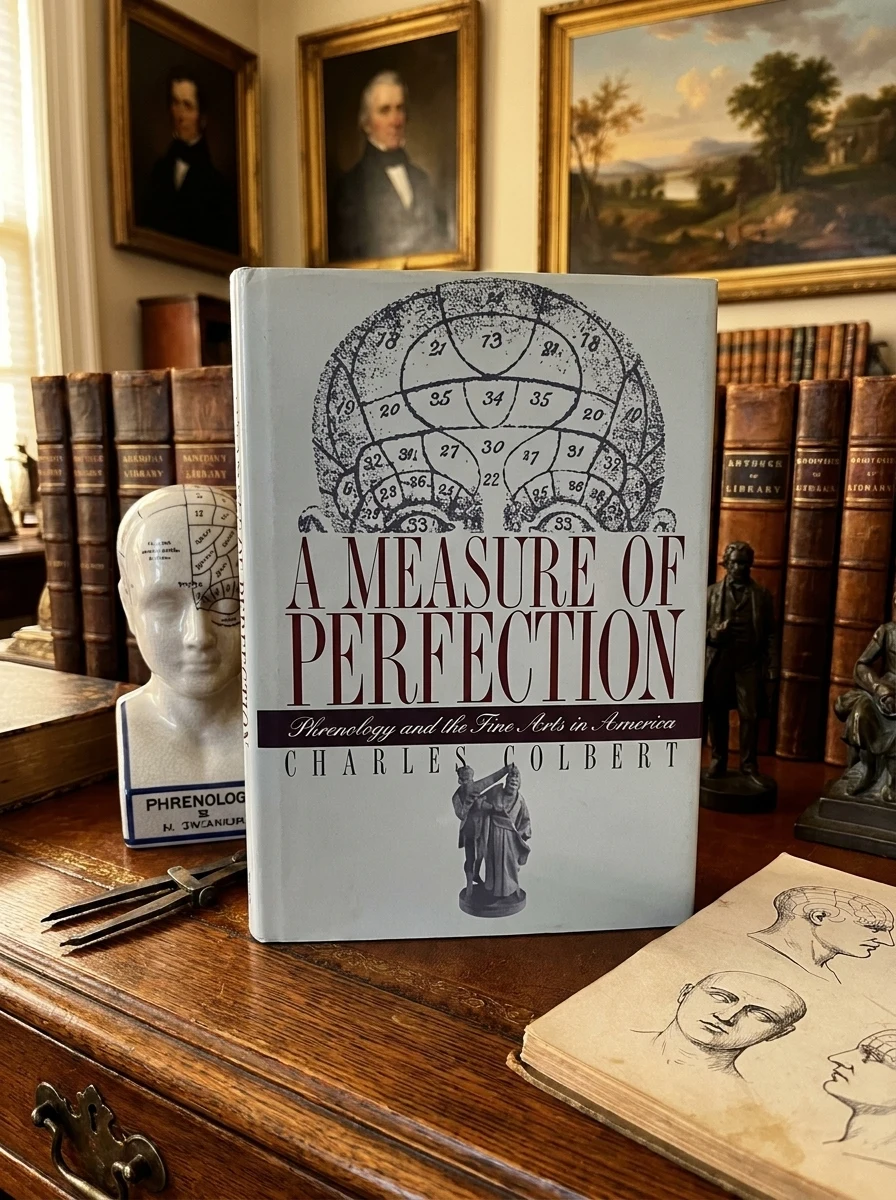
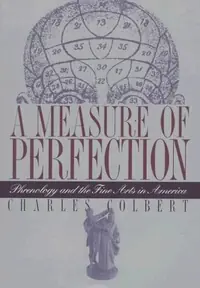
A Measure of Perfection: Phrenology and the Fine Arts in America Colbert, Charles
Stock reported in the catalog; fulfillment is confirmed with your request.
Explore phrenology's forgotten influence on American art and identity.
Charles Colbert challenges the dismissal of phrenology as mere quackery, arguing for its profound cultural impact in antebellum America. This insightful work demonstrates how the pseudo-science significantly shaped artistic developments, providing a framework for understanding human perfection and character. Colbert meticulously traces connections between phrenological tenets and the prevailing ideals of Jacksonian democracy, revealing how it permeated the intellectual landscape. The book examines the responses of prominent American Renaissance figures, including artists like Hiram Powers and Thomas Cole, illustrating how many embraced phrenology to elevate their craft and imbue the human form with deeper meaning.
This scholarly work situates phrenology within the intellectual and artistic landscape of antebellum America, specifically examining its intersection with Jacksonian democracy and the American Renaissance. It challenges modern dismissals of the field by highlighting its role in shaping contemporary ideals of human perfection and character.


📝 Description: A Measure of Perfection: Phrenology and the Fine Arts in America Colbert, Charles
💎 Expert review
📖 Why choose it
Why this book is worth reading
This book offers a compelling reevaluation for readers who appreciate nuanced cultural history and the complex interplay between science, art, and society. It is ideal for those willing to look past the stigma of pseudoscience to understand how phrenology provided a profound framework for understanding human character during a pivotal era. Colbert’s meticulous tracing of connections between phrenological tenets and artistic development reveals how prominent figures like Hiram Powers and Thomas Cole embraced these ideas to elevate their craft. If you are fascinated by how forgotten intellectual movements shape national identity and aesthetic ideals, this insightful work provides a necessary perspective on the pursuit of perfection in American art.
⭐ Reader reviews
Reader rating
Colbert’s study is a rigorous academic intervention that successfully rescues phrenology from the dustbin of mere quackery, revealing its significant influence on antebellum art and identity. The analysis of figures like Thomas Cole offers fresh insights into the American Renaissance, demonstrating how pseudo-scientific frameworks informed creative expression. However, this text is not suited for casual readers seeking accessible pop-history or those expecting a straightforward debunking of phrenology’s scientific validity. It demands patience from those uninterested in dense cultural theory or the specific minutiae of Jacksonian democracy. Readers looking for light entertainment will find it dry, but scholars and serious history enthusiasts will value its detailed documentation of this unique historical convergence.
❓ Frequently asked questions
📖 Who should read this
If you're fascinated by the intersections of art history, forgotten sciences, and American cultural development, this book is for you. Scholars and enthusiasts of 19th-century American society, art, and intellectual history will find Colbert's arguments both rigorous and illuminating.
🎯 Key themes and symbolism
Phrenology's Cultural Rehabilitation
Colbert meticulously re-evaluates phrenology, moving beyond its modern scientific discrediting to uncover its profound, yet often overlooked, role as a cultural phenomenon in 19th-century America. He positions it not as a simple pseudoscience, but as a widely popular intellectual current that shaped public discourse and individual aspirations across society.
Artistic Expression and Phrenology
This book illuminates how American artists, including iconic figures like Hiram Powers and William Sidney Mount, consciously integrated phrenological principles into their creative output. It demonstrates how phrenology offered a systematic approach to depicting character, moral development, and ideal forms, thereby enhancing the perceived importance and interpretive depth of their artistic endeavors.
American Ideals and Phrenological Tenets
Colbert compellingly links the core principles of phrenology to the evolving cultural ideals of Jacksonian democracy. The book reveals how concepts of self-improvement, individual perfectibility, and character assessment, central to phrenology, resonated deeply with the era's democratic aspirations and shaped perceptions of societal progress and personal virtue.
💬 Quotes from the book
“The omnipresent discourse of phrenology offered artists a structured vocabulary to articulate human potential and societal progress.”
“Far from a fringe belief, phrenology permeated the cultural landscape, influencing even those who publicly dismissed its scientific claims.”
📜 Historical context
📚 Glossary
- Phrenology
- Antebellum America
- Jacksonian Democracy
📔 Questions to reflect on
- How might a prevailing, but now discredited, belief system in your own time subtly influence contemporary art or cultural narratives?
- Consider an artwork you know well. How might its interpretation change if you considered it through the lens of a historical, unconventional belief system?
- Reflect on the 'quest for perfection' in art and society during the 19th century. What parallels or divergences do you see with modern ideals of human improvement?
🏛 Books from this publisher University of North Carolina Press
All books from this publisher →
You might also like
See more →
 91
91
 91
91
 91
91


 91
91