US shipping Secure card payment Occult and esoteric books

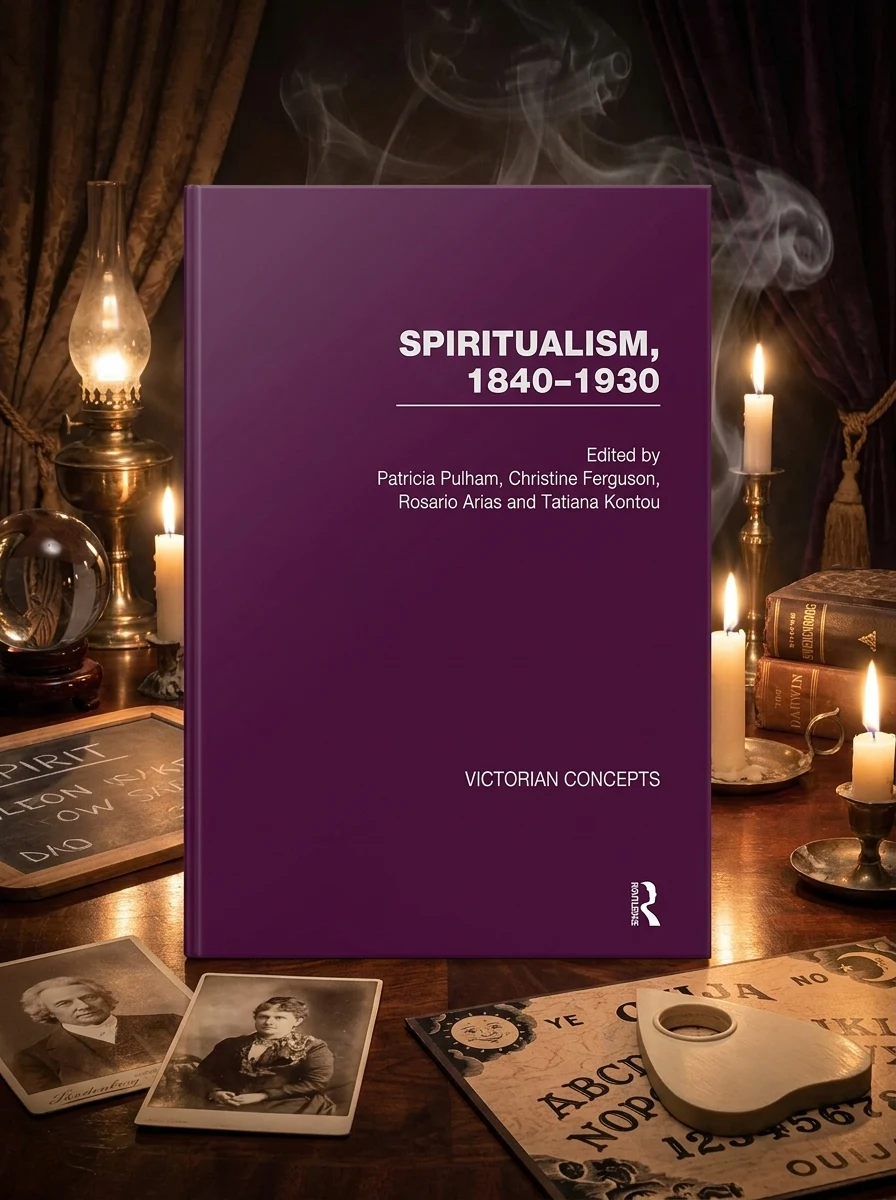
Spiritualism, 1840-1930 - Set Pulham, Patricia

Pulham, Patricia; , Ferguson, Christine; , Arias, Rosario; , Kontou, Tatiana
Reader rating
4.7
(1 reviews) 17 sold
Availability to be confirmed

This edition can be ordered. No arrival date is confirmed.

📚 ABOUT THE BOOK

Unearth the hidden currents of spiritual communication across the ages.

This compelling volume delves into the fascinating journey of modern spiritualism from its emergence in the 1840s through to 1930. It chronicles how a belief in communication with the deceased evolved into a significant religious movement, devoid of rigid doctrines yet profoundly impactful. The book meticulously examines its widespread public interest, academic scrutiny, and its unique position in a rapidly changing world. It explores the philosophical underpinnings, the cultural anxieties it addressed, and its enduring legacy, inviting readers to understand this captivating historical phenomenon.

Key themes
Cultural and Social Impact Philosophical Underpinnings & Skepticism
Historical context

This work situates itself within the historical study of modern spiritualism, exploring its evolution from the 1840s through 1930 as a significant religious movement that emerged amidst rapid societal change and cultural anxiety.


Difficulty
●●● Demanding
Fans will love it
Christine Ferguson · Tatiana Kontou · Rosario Arias
🕊️ Spiritualism
🏛 Routledge 📅 2013 📖 2496 pages 📔 Hardcover 📐 Hardcover ISBN: 9780415683067
Fun fact
Pulham's "Spiritualism, 1840-1930" is a meticulously researched and engaging account, perfectly suited for those seeking an academic yet accessible journey into this captivating historical movement. It excels at contextualizing spiritualism within the broader cultural anxieties and intellectual currents of its era. Readers looking for personal anecdotes of spiritual encounters might be disappointed, as its strength lies in its scholarly analysis. This volume firmly establishes itself as a definitive resource for understanding spiritualism's complex legacy and enduring fascination.

📝 Description: Spiritualism, 1840-1930 - Set Pulham, Patricia

SPECIAL INTRODUCTORY PRICE! (Valid until three months after publication.) Since its advent in the 1840s, modern spiritualism has been a topic of popular interest and critical scrutiny. Spiritualism gained increasing prominence in the second half of the nineteenth century, and developed as a religious movement with no defining creeds or formal doctrines, beyond the belief that the dead survived in spirit form and could communicate with the living. Scholars have noted its philosophical origins in the writings of Emmanuel Swedenborg; considered its rise against the backdrop of Darwin's theory of evolution and the accompanying crisis in faith; examined the fascination of celebrated believers such as Elizabeth Barrett Browning, William James, and Arthur Conan Doyle; explored its potential in the context of gender and sexuality; charted its investigation by the Society for Psychical Research; and identified key periods that mark a rise in spiritualist activity. The history of spiritualist belief and practice has been the subject of extensive debate (see, for example, Routledge's eight-volume collection, The Rise of Victorian Spiritualism (2001) (978-0-415-23640-9), edited by Bob Gilbert). Similarly, considerable research has been devoted to the question of Spiritualism and gender (explored in the Routledge/Edition Synapse two-volume collection, Women, Spiritualism, and Madness (2003) (978-0-415-27633-7), edited by Bridget Bennett, Helen Nicholson, and Roy Porter). Complementing those earlier collections, this new four-volume set demonstrates spiritualism's hugely significant--but hitherto often neglected--contemporary engagement with questions of race, eugenics, and the body, and with anti-spiritualist critique. Moreover, as spiritualism is commonly identified as a predominantly Victorian--and western--phenomenon, little has been done better to understand spiritualism in its global and temporal contexts. Furthermore, while numerous studies of spiritualism in canonical Victorian literature exist, the movement's own rich literary output and its relationship with the non-spiritualist gothic remain underexplored. Indeed, despite the explosion of scholarly interest in modern spiritualism across a wide range of disciplines, almost none of the movement's key philosophical, literary, political, and medical texts are currently in print. The learned editors of this collection have remedied these imbalances and Spiritualism, 1840-1930 offers access to a wide range of materials from an important period in spiritualism's history, including previously unpublished material relating to Arthur Conan Doyle's investment in spiritualism and transcriptions of the Henri Louis Rey séances in New Orleans (the only entirely African-American nineteenth-century spiritualist circle whose records have been preserved). The collection focuses on key topics and situates inaccessible primary sources alongside better-known works to posit their importance in the development of spiritualism as a social, cultural, and transatlantic phenomenon. Making readily available materials which are currently very difficult for scholars, researchers, and students across the globe to locate and use, Spiritualism, 1840-1930 is a veritable treasure-trove. The gathered materials are reproduced in facsimile, giving users a strong sense of immediacy to texts and permitting citation to the original pagination. Each volume is also supplemented by a substantial introduction, newly written by the editors, which contextualizes the material and steers readers towards significant secondary sources. And with a full index and a detailed appendix providing data on the provenance of the gathered works, the collection is destined to be welcomed as a vital research and reference resource.

💎 Expert review

💎
Esoterica Books editorial team
Occult literature desk
This text provides a comprehensive analysis of spiritualism's rise, detailing its lack of rigid doctrines and its position in a shifting cultural landscape. While it offers valuable context on public interest and academic scrutiny, it may not suit readers seeking practical guides to mediumship or those looking for personal anecdotes rather than historical analysis. The focus on philosophical underpinnings and cultural anxieties makes it dense for casual browsers. However, for those willing to engage with its scholarly approach, it delivers a clear picture of how this movement addressed contemporary fears. It is less suitable for skeptics expecting debunking, as it treats the phenomenon with serious historical regard.
✓ EDITOR'S REVIEW

📖 Why choose it

📖

Why this book is worth reading

Readers interested in the intersection of religion, history, and sociology will find this volume indispensable. It offers a meticulous examination of how belief in communication with the deceased evolved into a profound cultural phenomenon devoid of rigid doctrine yet impactful in its reach. Those curious about the philosophical underpinnings of spiritualism and the specific anxieties it addressed in a rapidly changing world will gain deep insight. It is ideal for scholars and enthusiasts seeking to understand this captivating historical event not just as curiosity, but as a serious movement that commanded widespread public interest and academic scrutiny during its peak era.

⭐ Reader reviews

The starting rating comes from the team Esoterica Books —
⭐ Esoterica editorial review Editorial rating 4.7/5
★★★★
For anyone captivated by the history of esoteric beliefs, the intersection of religion and science, or the social dynamics of 19th and early 20th-century culture, this book offers a rigorous and engaging exploration. It's an essential read for students and enthusiasts alike.

Reader rating

4.7
Based on 1 reviews
5
0
4
1
3
0
2
0
1
0
E
Esoterica Books editorial team

This text provides a comprehensive analysis of spiritualism's rise, detailing its lack of rigid doctrines and its position in a shifting cultural landscape. While it offers valuable context on public interest and academic scrutiny, it may not suit readers seeking practical guides to mediumship or those looking for personal anecdotes rather than historical analysis. The focus on philosophical underpinnings and cultural anxieties makes it dense for casual browsers. However, for those willing to engage with its scholarly approach, it delivers a clear picture of how this movement addressed contemporary fears. It is less suitable for skeptics expecting debunking, as it treats the phenomenon with serious historical regard.

❓ Frequently asked questions

This volume provides a scholarly, comprehensive historical overview and critical examination of spiritualism, exploring its societal impact and intellectual context rather than endorsing or refuting its claims.
Yes, the book discusses prominent figures like Elizabeth Barrett Browning, William James, and Arthur Conan Doyle, and touches upon critical developments such as investigations by the Society for Psychical Research.

📖 Who should read this

For anyone captivated by the history of esoteric beliefs, the intersection of religion and science, or the social dynamics of 19th and early 20th-century culture, this book offers a rigorous and engaging exploration. It's an essential read for students and enthusiasts alike.

🎯 Key themes and symbolism

Cultural and Social Impact

The book explores spiritualism's profound influence on broader society, particularly in the context of gender roles and evolving sexual norms. It considers how the movement offered a unique space for individuals to explore new identities and challenge conventions, alongside its engagement with scientific inquiry and the intellectual climate of its era, including responses to Darwinian thought.

Philosophical Underpinnings & Skepticism

This volume delves into the intellectual lineage of spiritualism, tracing its roots to thinkers like Swedenborg. It also addresses the critical scrutiny it faced, including investigations by organizations such as the Society for Psychical Research. The book examines how spiritualism navigated the "crisis in faith" brought about by scientific advancements, attracting both fervent adherents and skeptical observers.

💬 Quotes from the book

“This work traces spiritualism's evolution as a religious movement without fixed creeds, centered on the belief in spirit survival and communication with the living.”

“The book considers spiritualism's philosophical roots, its rise amidst Darwinian challenges to faith, and its broad appeal to figures from the literary and scientific communities.”

📜 Historical context

Modern spiritualism emerged in the mid-19th century, a period marked by significant scientific advancement and social upheaval. Against the backdrop of Darwin's evolutionary theories challenging traditional faith, and drawing philosophical inspiration from figures like Swedenborg, spiritualism offered a new framework for understanding life, death, and human purpose. It provided solace and wonder in an era of rapid change, giving voice to a widespread yearning for connection beyond the veil.

📚 Glossary

Spiritualism
Mediumship
Psychical Research

📔 Questions to reflect on

  1. How might a belief system like spiritualism offer solace or challenge established norms in times of scientific or societal upheaval?
  2. Consider the role of "celebrated believers" in legitimizing or popularizing a fringe movement. How does their involvement shape public perception?
  3. If you were alive during the height of spiritualism, what aspects would you find most compelling or most skeptical, and why?

🏛 Books from this publisher Routledge

All books from this publisher →

You might also like

See more →