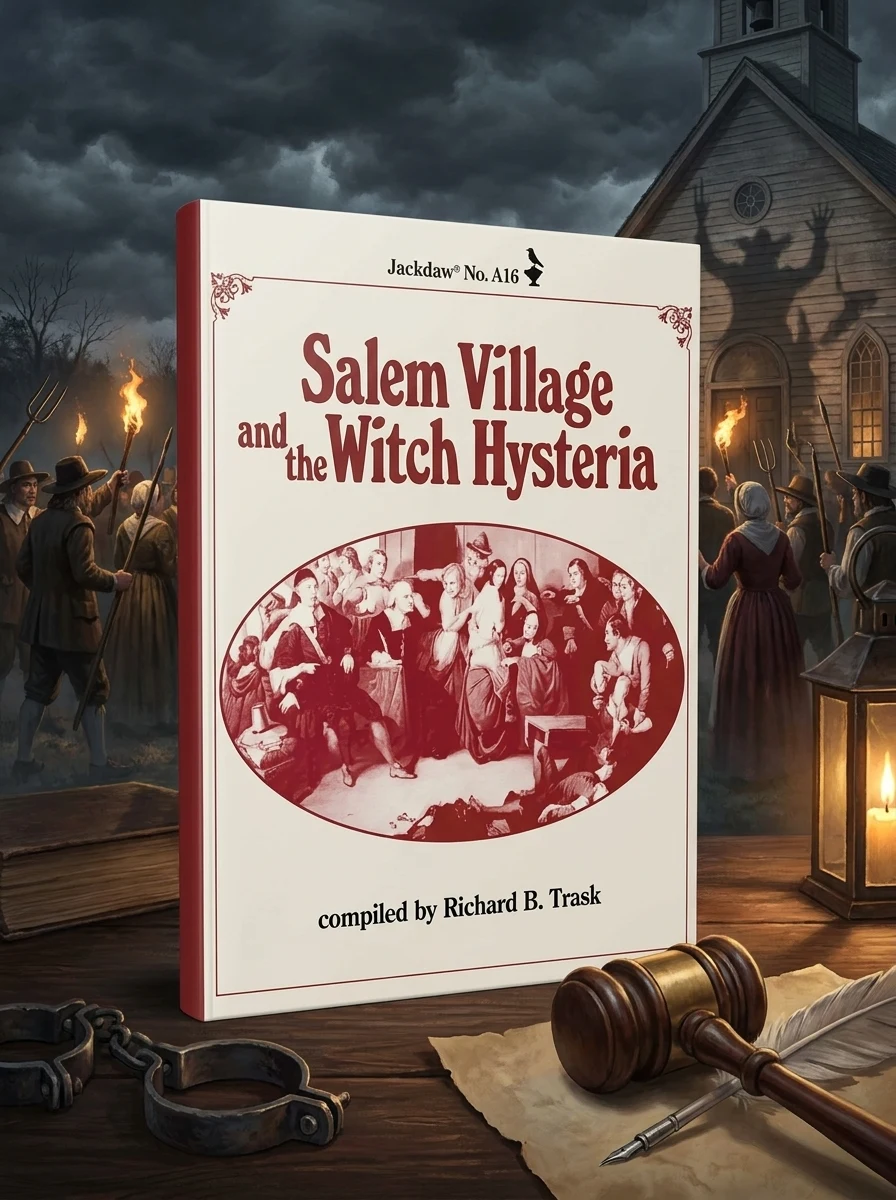
Salem Village Witch Hysteria
This edition can be ordered. No arrival date is confirmed.
Unmask the chilling origins of America's most infamous witch hunt, a stark warning against mass delusion.
Richard B. Trask meticulously unpacks the calamitous events of 1692 in Salem Village, dissecting the religious fervor, social tensions, and personal rivalries that ignited an unparalleled wave of accusations. This essential work moves beyond mere recounting, delving into the psychological and communal dynamics that allowed fear and suspicion to spiral into a deadly legal crisis. It illuminates the human frailties and societal pressures that led a community to condemn its own, offering profound lessons on the fragility of justice and the power of collective hysteria.
This work sits firmly within the tradition of historical occult studies, examining the intersection of religious fervor and legal crisis in colonial America. It serves as a critical analysis of mass delusion and societal pressures rather than a theological treatise on witchcraft itself.


📝 Description: Salem Village Witch Hysteria
💎 Expert review
📖 Why choose it
Why this book is worth reading
This book is an essential read for anyone seeking to understand the psychological underpinnings of collective hysteria and the fragility of justice. Readers who are fascinated by the complex interplay of religious fervor, social tensions, and personal rivalries will find profound value in Trask’s meticulous unpacking of these calamitous events. It offers more than just a historical recounting; it provides a stark warning against the dangers of suspicion and fear spiraling into deadly legal crises. Those interested in human frailties and the societal pressures that lead communities to condemn their own members will gain significant insight. Ultimately, this work illuminates how a community can turn against itself, offering timeless lessons on the power of mass delusion and the critical importance of maintaining rationality amidst chaos.
⭐ Reader reviews
Reader rating
Trask delivers a compelling dissection of the Salem Village events, focusing sharply on psychological and communal dynamics rather than mere narrative. While it excels at illuminating the societal pressures and religious fervor that fueled the accusations, it may not suit readers seeking supernatural explanations or theological debates about witchcraft. Those looking for a straightforward chronological timeline might find the focus on social tensions too abstract. However, for those interested in the human element of legal crises and mass delusion, this is a robust study. It avoids sensationalism, offering instead a sobering look at how fear overrides justice. It is best appreciated by readers willing to engage with complex social analysis rather than simple historical fact-listing.
❓ Frequently asked questions
📖 Who should read this
For those captivated by American colonial history, the psychology of group behavior, or the profound lessons derived from historical injustice, this book is indispensable. It offers a clear, unvarnished look at a pivotal moment, urging readers to reflect on societal vulnerabilities.
🎯 Key themes and symbolism
Igniting Mass Hysteria
Trask explores how a confluence of anxieties—religious dogma, frontier dangers, and interpersonal disputes—created fertile ground for the Salem accusations. He meticulously traces the progression from initial complaints to widespread panic, showing how fear became contagious and self-perpetuating within the tight-knit Puritan community, ultimately leading to tragic outcomes for the accused.
The Perils of Accusation
This volume deeply examines the devastating impact of spectral evidence and unsubstantiated claims on individuals and the justice system. It highlights how quickly due process eroded under public pressure, illustrating the chilling ease with which reputations were shattered and lives lost when a community became convinced of an invisible enemy among them, driven by fear rather than fact.
Enduring Historical Echoes
Beyond the specific events, Trask connects the Salem tragedy to broader historical patterns of scapegoating and collective irrationality. The book serves as a potent reminder of humanity's capacity for cruelty under duress and the critical importance of discerning truth from rumor, offering timeless insights into the dangers of unchecked authority and the vulnerability of reason.
💬 Quotes from the book
“The very fabric of communal trust, woven over generations, began to unravel with each whispered accusation, each terrified confession, until the town itself became a crucible of its own making.”
“In the desperate search for an unseen enemy, the tangible became suspect, and the intangible, terrifyingly real, dictating the fates of the innocent.”
📜 Historical context
📚 Glossary
- Spectral Evidence
- Puritanism
- Mass Hysteria
📔 Questions to reflect on
- Considering the 'spectral evidence' used in Salem, what modern-day parallels can you identify where belief or perception, rather than concrete proof, drives public condemnation?
- How might a community, faced with pervasive fear or uncertainty today, guard against succumbing to similar patterns of mass hysteria or scapegoating?
- Reflect on a time when you witnessed or participated in groupthink. What factors contributed to its influence, and how might one resist such pressures?
You might also like
See more →

 91
91