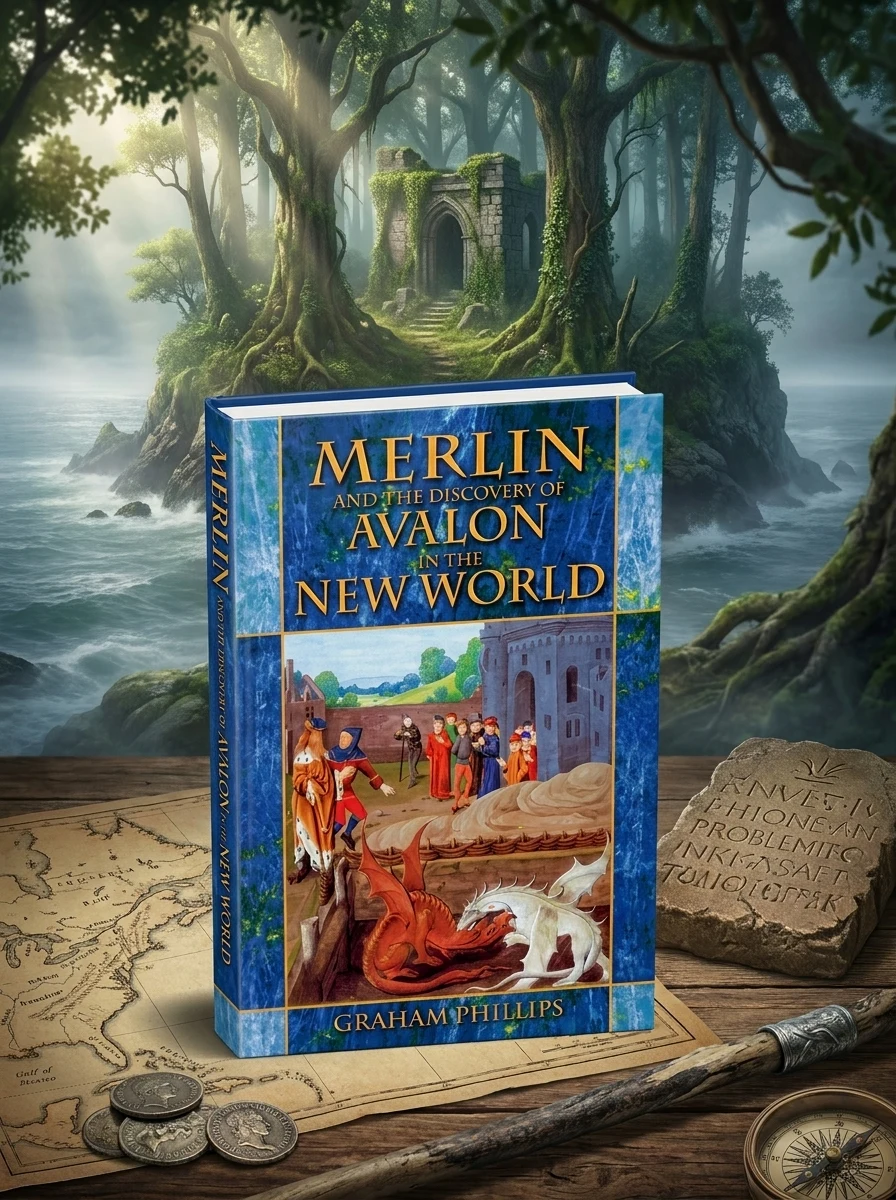
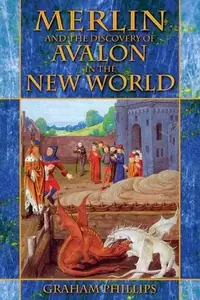
Merlin and the Discovery of Avalon in the New World
Phillips, Graham

This edition can be ordered. No arrival date is confirmed.
Merlin was real, a Roman consul's son who fled to America, not Britain.
Graham Phillips challenges centuries of Arthurian legend by asserting that Merlin was a historical Roman figure rather than a mythical wizard. Through extensive research, the author posits that the last Roman ruler of Britain survived the fall of the empire and embarked on a westward voyage. This journey, Phillips argues, corresponds to the mythic passage to Avalon, which he identifies as a location in the New World. The book blends historical critique with speculative geography to redefine the origins of Celtic mysticism.
This work sits at the intersection of alternative history and esoteric speculation, challenging established Arthurian lore through a lens of transatlantic migration theory.


📝 Description: Merlin and the Discovery of Avalon in the New World
💎 Expert review
📖 Why choose it
Why this book is worth reading
Readers fascinated by the convergence of Roman history, Celtic mysticism, and speculative geography will find this title particularly engaging. Graham Phillips offers a bold reinterpretation of the Merlin legend, proposing that the mythical wizard was actually a historical Roman figure who fled to the New World. This perspective provides a refreshing, albeit controversial, twist on Arthurian tales for those weary of traditional fantasy narratives. It appeals to individuals who enjoy rigorous historical critique blended with imaginative geographic theories. If you are intrigued by the idea of Avalon being located in America rather than Britain, this book serves as a compelling entry point into discussions about the origins of Celtic mysticism and the potential survival of Roman influence in the West.
⭐ Reader reviews
Reader rating
Long-time student of the esoteric here. The symbolism is layered and generous to patient readers. I appreciated how the argument builds steadily from first principles. Great value for what you get.
I keep coming back to this one. The material is presented clearly and the structure makes it easy to revisit key passages. It connects ideas I'd only seen treated separately elsewhere. It assumes more background than a beginner might have.
Long-time student of the esoteric here. The material is presented clearly and the structure makes it easy to revisit key passages. Glad I finally picked this up.
Long-time student of the esoteric here. Some chapters demand a slow, careful read, and that's exactly the point. Deserves a place on any esoteric bookshelf.
Ordered this after seeing it referenced in another book I was studying. A text you study rather than simply read. Definitely recommend.
Bought this as a gift for my sister and ended up ordering a second copy for myself. Challenging in places, but never needlessly obscure. I'd have loved an index, but that's on the original text. Good, with the caveats above.
Grabbed this during a weekend order. I appreciated how the argument builds steadily from first principles. I'd have loved an index, but that's on the original text.
Phillips presents a provocative thesis that demands attention from enthusiasts of alternative history. By reimagining Merlin as a Roman consul’s son who crossed the Atlantic, he dismantles centuries of accepted Arthurian mythos. However, this approach may alienate readers seeking rigorous academic historiography or those deeply attached to traditional literary interpretations of the legends. The blend of historical critique with speculative geography is engaging but lacks the scholarly weight some might expect. It is best suited for open-minded explorers of esoteric history rather than strict adherents to conventional Arthurian studies. Those looking for factual certainty may find the speculative nature frustrating, while fans of imaginative reconstructions will appreciate the daring narrative shift.
❓ Frequently asked questions
📖 Who should read this
Readers fascinated by alternative histories and Celtic lore who question traditional Arthurian narratives. If you enjoy speculative non-fiction that bridges archaeology, mythology, and transatlantic exploration, this radical reinterpretation will captivate your curiosity.
🎯 Key themes and symbolism
Historical Myth-Busting
Transatlantic Celtic Connection
Roman Britain Legacy
💬 Quotes from the book
“The places described in Merlin's voyage would only have been seen by someone who had journeyed to the New World.”
“Merlin was the son of a Roman consul who became the last of the Romans to rule Britain.”
📜 Historical context
📚 Glossary
- Avalon
- Roman Consul
- Camelot
📔 Questions to reflect on
- How does redefining Merlin as a historical political figure change your perception of the Arthurian legend?
- What parallels do you see between ancient Celtic migration myths and modern theories of transatlantic contact?
- In what ways might geography shape the development of spiritual or mystical traditions?
✍️ More books by this author Phillips, Graham
All books by this author →
🏛 Books from this publisher Bear & Company
All books from this publisher →
You might also like
See more →