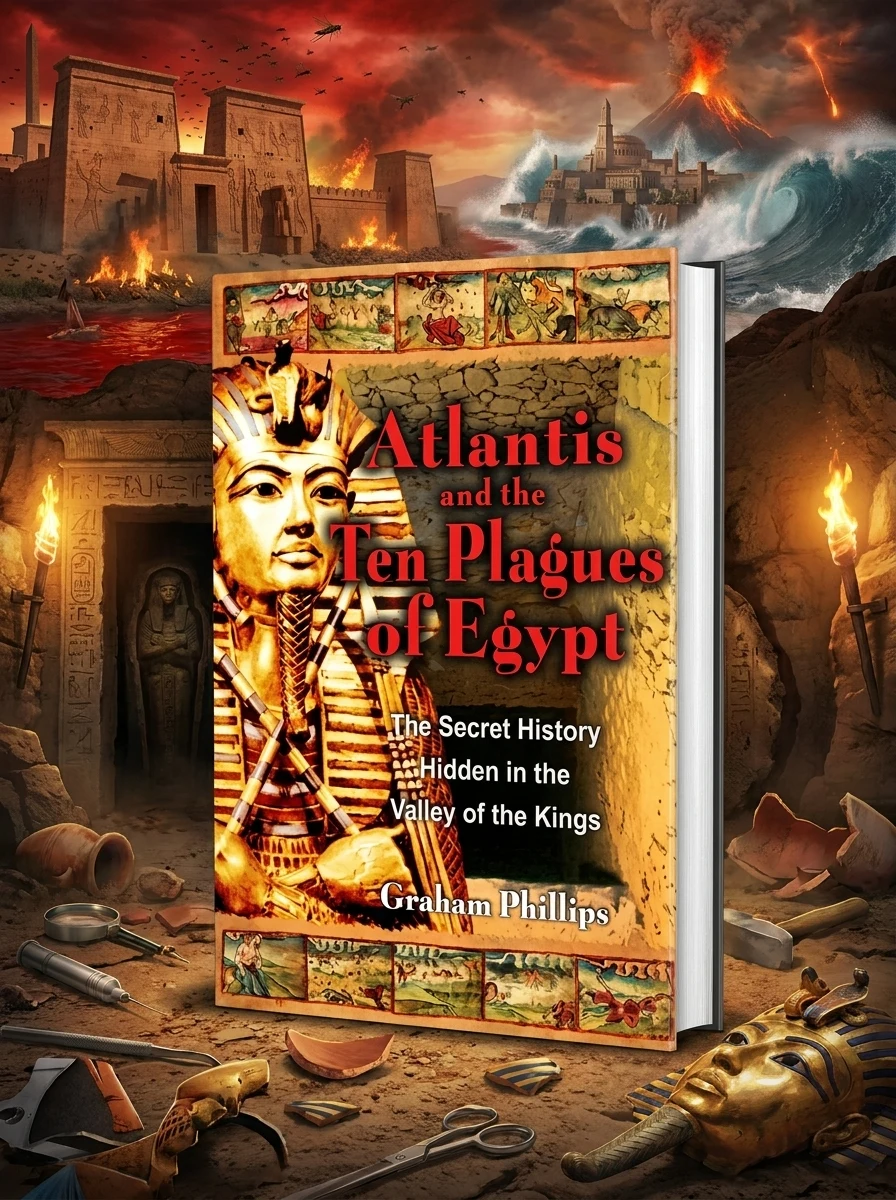
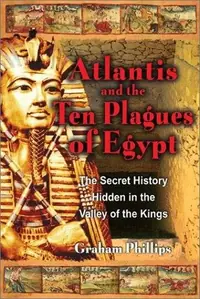
The Atlantis and the Ten Plagues of Egypt: The Secret History Hidden in the Valley of the Kings (Edition, U.S. of Act of God)
Phillips, Graham

This edition can be ordered. No arrival date is confirmed.
A desecrated tomb in Egypt holds the secret to Atlantis and the true identity of a pharaoh's mask.
Phillips challenges established Egyptology by analyzing Tomb 55 in the Valley of the Kings, arguing its design was meant to imprison rather than protect. He posits that the famous golden mask actually belongs to Smenkhkare, Tutankhamun’s elder brother, who was blamed for the biblical plagues. By combining forensic analysis of the tomb with polar ice cap data, the author reconstructs a narrative where ancient Egyptian history aligns with the catastrophic events of the Exodus, offering a radical reinterpretation of both myth and archaeology.
This work sits firmly within the esoteric and alternative history traditions, specifically intersecting with spiritualism and revisionist Egyptology. It challenges mainstream archaeological consensus by weaving together myth, ancient texts, and speculative forensic analysis.


📝 Description: The Atlantis and the Ten Plagues of Egypt: The Secret History Hidden in the Valley of the Kings (Edition, U.S. of Act of God)
💎 Expert review
📖 Why choose it
Why this book is worth reading
Readers fascinated by the intersection of ancient mystery and speculative archaeology will find this book a compelling, albeit radical, exploration. Graham Phillips invites you to look past established Egyptological narratives and consider a hidden history where Atlantis and the Exodus are inextricably linked. If you enjoy theories that challenge conventional wisdom through forensic reinterpretation of tombs and ice cap data, this text offers a daring alternative perspective on Tutankhamun’s era. It is ideal for those who appreciate bold hypotheses that connect disparate historical events into a single, catastrophic narrative, offering a fresh lens through which to view the Valley of the Kings and its enigmatic inhabitants.
⭐ Reader reviews
Reader rating
Came across this title in a footnote and had to track it down. The historical context alone makes it worth the price. Some chapters demand a slow, careful read, and that's exactly the point. Well worth it.
Finally got around to ordering this. The print is clean and easy on the eyes for long sessions. Shipping was quick too.
I collect works on this subject and this is a worthy addition. Some chapters demand a slow, careful read, and that's exactly the point. It connects ideas I'd only seen treated separately elsewhere. A few pages arrived with light corner wear, though nothing serious. Good, with the caveats above.
Took a chance on this and glad I did. Some chapters demand a slow, careful read, and that's exactly the point. The typesetting is comfortable for study, with good margins for notes. Highly recommend to serious students.
Exactly what I was looking for. You can tell why this work has endured. Some sections stopped me cold in the best way. Some archaic spellings slow things down. Solid, if not essential.
First purchase from this shop. The print is clean and easy on the eyes for long sessions. Some chapters demand a slow, careful read, and that's exactly the point. My only quibble is the cover feels thinner than expected. Recommended with reservations.
Phillips presents a provocative thesis that demands attention from enthusiasts of alternative history but may frustrate academic readers seeking rigorous peer-reviewed evidence. The argument relies heavily on connecting polar ice cap data with tomb design, creating a narrative that is engaging if accepted but lacks traditional scholarly grounding. It does not suit those who prefer established Egyptological frameworks or are skeptical of linking biblical plagues directly to specific pharaonic identities. However, for readers open to radical reinterpretations of myth and archaeology, it provides a stimulating, albeit controversial, view of ancient history that prioritizes narrative cohesion over conventional consensus.
❓ Frequently asked questions
📖 Who should read this
Readers fascinated by fringe archaeology, those who question mainstream historical narratives, and seekers exploring the intersection of biblical accounts with ancient Egyptian mystery and hidden history.
🎯 Key themes and symbolism
Alternative Egyptology
Atlantis Connection
Historical Forensics
💬 Quotes from the book
“Tomb 55 was not built to keep intruders out, but to trap something inside.”
“The mask is not Tutankhamun, but the face of the brother who unleashed the plagues.”
📜 Historical context
📚 Glossary
- Tomb 55
- Smenkhkare
- Act of God
📔 Questions to reflect on
- How does the concept of 'imprisonment' change your view of sacred spaces?
- What might be lost if we accept that historical disasters were intentionally recorded as warnings?
- How do you distinguish between forensic evidence and narrative interpretation in ancient history?
✍️ More books by this author Phillips, Graham
All books by this author →
🏛 Books from this publisher Bear & Company
All books from this publisher →
You might also like
See more →