US shipping Secure card payment Occult and esoteric books

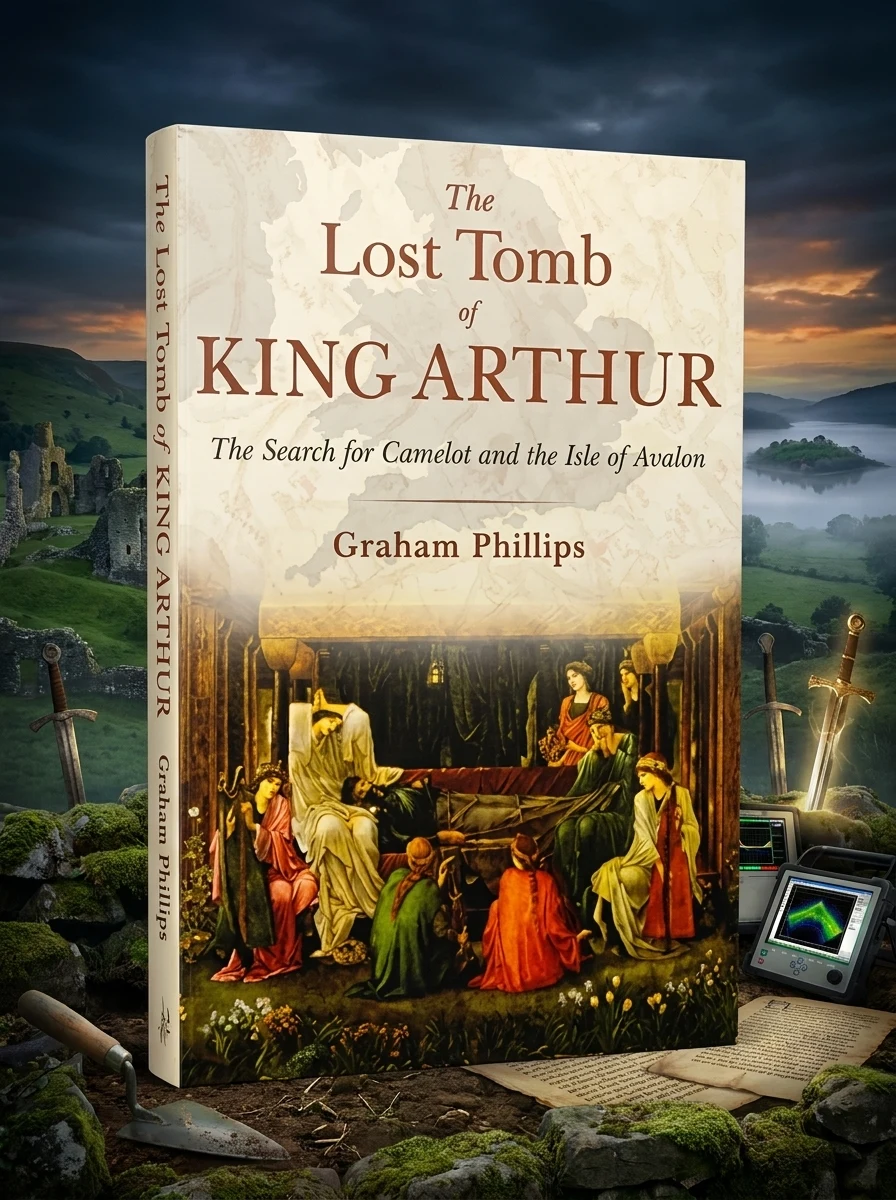
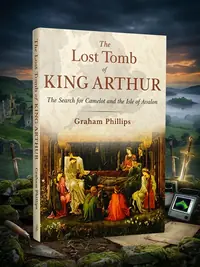
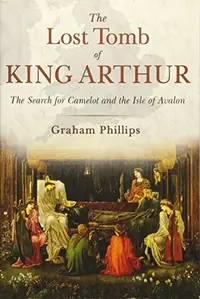
The Lost Tomb of King Arthur: The Search for Camelot and the Isle of Avalon

Phillips, Graham
Reader rating
4.5
(1 reviews) 60 sold
In stock

Stock reported in the catalog; fulfillment is confirmed with your request.

📚 ABOUT THE BOOK

Unearth the true identity of King Arthur, revealing his legendary reign not as myth, but history.

Graham Phillips embarks on a compelling investigative journey, meticulously sifting through historical records and applying modern scientific techniques to dismantle centuries of myth surrounding King Arthur. This work posits that the fabled monarch was a very real leader, not a mere legend, and endeavors to precisely locate his final resting place, the legendary Camelot, and even the famed sword Excalibur. It’s a quest to ground the supernatural tales in tangible, historical reality, presenting a unified vision of a British hero who defied invasion around 500 AD.

Key themes
The Authentic Arthur Geophysical Archaeology Debunking Myth
Historical context

This work sits firmly within the tradition of alternative history and archaeological investigation, challenging established medieval scholarship by applying modern scientific methods to legendary figures. It bridges the gap between occult fascination with Arthurian myth and rigorous historical inquiry into post-Roman Britain.


Difficulty
●● Moderate
Fans will love it
Simon Jenkins · Barry Cunliffe · The Holy Blood and the Holy Grail
🕯️ Occult Philosophy
🏛 Bear & Company 📅 2016 📖 304 pages 📔 Paperback 📐 Paperback ISBN: 9781591431817
Fun fact
Phillips delivers a meticulously researched and genuinely captivating re-evaluation of the Arthurian mythos. Readers seeking a definitive historical account, blending literary analysis with modern archaeological techniques, will find this immensely satisfying. Those expecting purely esoteric or fantastical narratives, however, might be disappointed by its grounded, evidence-driven approach. It stands as a significant contribution to the historical Arthur debate, offering a fresh, tangible perspective that challenges centuries of scholarly assumptions and popular imagination.

📝 Description: The Lost Tomb of King Arthur: The Search for Camelot and the Isle of Avalon

One man's journey to uncover the final resting place of the historical King Arthur - Pinpoints the exact locations of Arthur's tomb, the ruins of Camelot, and the sword Excalibur using literary research and the latest geophysics equipment - Examines previously unknown ancient manuscripts preserved in the vaults of the British Library--including one written within the living memory of Arthur's time - Reveals the mythic king as the real-life leader Owain Ddantgwyn, who united the British to repel invasion from Germany around 500 AD One of the most enigmatic figures in world history, King Arthur has been the subject of many fantastical tales over the past 1500 years, leading many scholars to regard him and his fabled city of Camelot simply as myth. But, as Graham Phillips shows through a wealth of literary and scientific evidence, King Arthur was a real man, Camelot a real place, and the legendary Excalibur a real sword--and Phillips has located them all. Phillips examines the earliest stories of Arthur as well as previously unknown ancient manuscripts preserved in the vaults of the British Library in London, such as the work of the 9th-century monk Nennius, to pinpoint the exact locations of Arthur's tomb, the ruins of Camelot, and the sword Excalibur. He reveals the mythic king as the real-life leader Owain Ddantgwyn, who united the British to repel invasion from Germany around 500 AD. Moving his quest from library vaults to the real sites of Arthur's life, the author confirms his research through a Dark Age monument, hidden away in the mountains of western Britain, that bears an inscription about a powerful warlord who went by the battle title "Arthur." He visits archaeological excavations at the ruins of Viroconium, near Wroxeter in Shropshire, clearly identifying the ancient city as Camelot, the fortified capital of Arthur's Britain. Working with specialist divers and marine archaeologists, he surveys the depths of an ancient lake in the English countryside to reveal the resting place of Excalibur. Enlisting a team of scientists and sophisticated geophysics equipment, he uncovers the lost grave of the historical King Arthur, buried with his shield, just as told in legend. The culmination of 25 years of research, including new translations of primary source material, this book provides the necessary evidence to allow King Arthur to finally be accepted as the authentic British king he was.

💎 Expert review

💎
Esoterica Books editorial team
Occult literature desk
Phillips presents a bold thesis that demands attention, though it may alienate traditionalists. This book is not suitable for readers seeking purely romantic Arthurian literature or those who adhere strictly to conventional academic consensus without interest in revisionist theories. It requires an open mind willing to accept that scientific techniques might dismantle centuries of accepted myth. While the investigative approach is engaging, the conclusion that Arthur was a real leader defying invasion around 500 AD will likely frustrate those who prefer the story remain firmly in the realm of fantasy and allegory rather than historical fact.
✓ EDITOR'S REVIEW

📖 Why choose it

📖

Why this book is worth reading

Readers who have long felt that the Arthurian legends contain kernels of forgotten truth will find immense satisfaction in this investigative journey. Graham Phillips offers a compelling alternative to the purely mythical narrative, appealing to those who crave tangible connections to the past. If you enjoy detective stories set in history, where the clues are buried in records and landscapes rather than crime scenes, this book provides a unified vision of a British hero. It is perfect for skeptics who want evidence, not just folklore, and for enthusiasts eager to see how modern science can reshape our understanding of Camelot and Excalibur's true origins.

⭐ Reader reviews

The starting rating comes from the team Esoterica Books —
⭐ Esoterica editorial review Editorial rating 4.6/5
★★★★
If you're captivated by ancient mysteries, the intersection of history and legend, and the quest for real figures behind enduring myths, this book is for you. Delve into a meticulous investigation that seeks to redefine one of Britain's most iconic heroes.

Reader rating

4.5
Based on 1 reviews
5
0
4
1
3
0
2
0
1
0
E
Esoterica Books editorial team

Phillips presents a bold thesis that demands attention, though it may alienate traditionalists. This book is not suitable for readers seeking purely romantic Arthurian literature or those who adhere strictly to conventional academic consensus without interest in revisionist theories. It requires an open mind willing to accept that scientific techniques might dismantle centuries of accepted myth. While the investigative approach is engaging, the conclusion that Arthur was a real leader defying invasion around 500 AD will likely frustrate those who prefer the story remain firmly in the realm of fantasy and allegory rather than historical fact.

❓ Frequently asked questions

Yes, Phillips presents extensive research to argue that King Arthur was a historical British leader, identifying him as Owain Ddantgwyn, who lived around 500 AD and united the Britons against invaders.
The author introduces previously unexamined ancient manuscripts from the British Library and utilizes modern geophysical equipment to propose the exact locations of Arthur's tomb, Camelot, and the sword Excalibur.

📖 Who should read this

If you're captivated by ancient mysteries, the intersection of history and legend, and the quest for real figures behind enduring myths, this book is for you. Delve into a meticulous investigation that seeks to redefine one of Britain's most iconic heroes.

🎯 Key themes and symbolism

The Authentic Arthur

Phillips explores how ancient texts, including previously unexamined British Library manuscripts from Arthur's own era, are used to identify him not as a mythical king, but as a historical figure named Owain Ddantgwyn. This re-evaluation grounds the legend in verifiable early medieval British leadership, offering a tangible identity to the enigmatic figure.

Geophysical Archaeology

The book details Phillips’ innovative application of contemporary geophysical equipment alongside literary clues to pinpoint the precise geographical sites associated with Arthurian legend. This includes the proposed ruins of Camelot, the location of Excalibur, and Arthur's tomb, transforming speculative sites into potential archaeological targets, blending science with ancient lore.

Debunking Myth

This work challenges the long-held academic view that King Arthur and his court were entirely fictional constructs. The book systematically presents evidence to argue for a historical underpinning, suggesting that while tales grew fantastical, a genuine leader united Britain against Germanic invaders around 500 AD, inspiring the enduring legend, rather than being solely a creation of it.

💬 Quotes from the book

“The persistent echoes of Arthur's legend demand more than dismissal; they compel us to search for the tangible man behind the myth, a quest requiring both scholarly rigor and an open mind.”

“By cross-referencing early Welsh chronicles with meticulous geological surveys, we can begin to peel back the layers of folklore and reveal the very ground upon which British history was forged.”

📜 Historical context

The search for a historical King Arthur is a long-standing tradition within British history and folklore studies, often clashing with purely mythological interpretations. This book enters the fray by leveraging both newly discovered early manuscripts and modern scientific methods, placing it firmly within the contemporary movement to ground legendary figures in archaeological and textual evidence, rather than dismissing them outright.

📚 Glossary

Camelot
Excalibur
Owain Ddantgwyn

📔 Questions to reflect on

  1. How does the idea of a historical King Arthur, rather than a purely mythical one, change your perception of the Arthurian legends and their significance?
  2. Considering the blend of ancient texts and modern geophysics, what are the strengths and weaknesses of such an interdisciplinary approach to historical mysteries?
  3. If Arthur's tomb and Camelot were definitively found, what societal or cultural impact do you think such a discovery would have in modern Britain and beyond?

✍️ More books by this author Phillips, Graham

All books by this author →
🏛 Books from this publisher Bear & Company

All books from this publisher →
You might also like

See more →