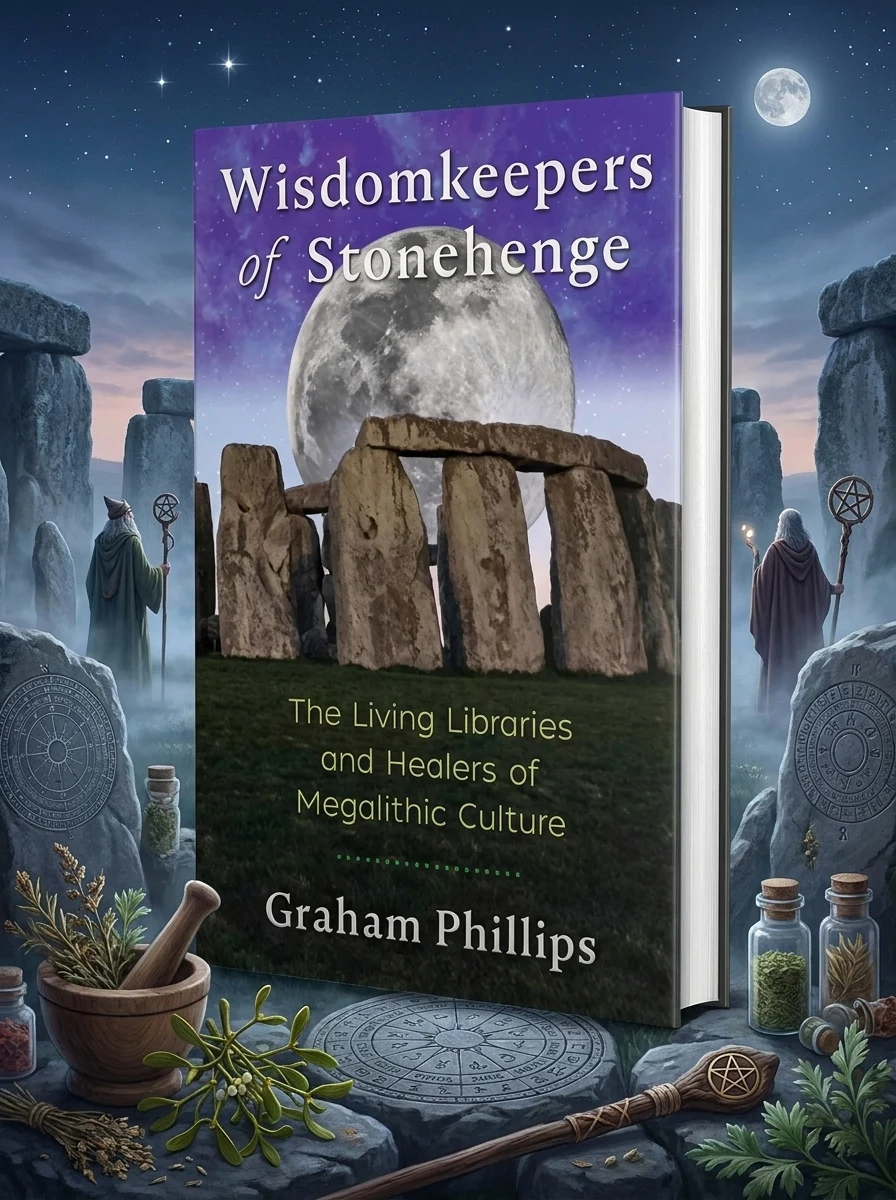
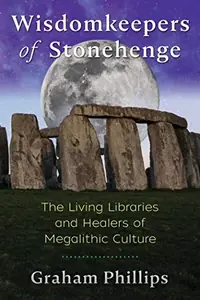
Wisdomkeepers of Stonehenge: The Living Libraries and Healers of Megalithic Culture
Phillips, Graham

This edition can be ordered. No arrival date is confirmed.
Uncover Stonehenge's secret: a cosmic pharmacy and a library of ancient wisdom.
Graham Phillips unveils a groundbreaking reinterpretation of Stonehenge and Britain's megalithic sites. He argues these monumental stone circles were far more than ceremonial structures; they functioned as sophisticated astronomical observatories, vital for cultivating specific botanicals. More profoundly, Phillips posits they were ancient healing sanctuaries and "living libraries" where an elite priesthood, predecessors to the Druids, meticulously preserved generations of medical knowledge through advanced mnemonic techniques. Drawing on recent archaeological finds and overlooked historical texts, this work presents a compelling vision of a cohesive, health-focused ancient society.
This work situates itself within the tradition of alternative archaeology and esoteric history, reinterpreting megalithic sites through the lens of ancient healing practices and oral wisdom traditions. It bridges the gap between archaeological observation and the occult philosophy of 'living libraries,' appealing to those interested in the spiritual dimensions of prehistoric Britain.


📝 Description: Wisdomkeepers of Stonehenge: The Living Libraries and Healers of Megalithic Culture
💎 Expert review
📖 Why choose it
Why this book is worth reading
Readers fascinated by the intersection of astronomy, botany, and ancient spirituality will find profound value in this book. It offers a fresh perspective on Stonehenge not merely as a monument, but as a functional sanctuary for healing and knowledge preservation. Those who enjoy speculative historical narratives that challenge conventional archaeological consensus will appreciate Phillips’ detailed arguments regarding mnemonic techniques and elite priesthoods. If you are intrigued by the idea of megalithic sites serving as cosmic pharmacies or living libraries, this text provides a compelling, cohesive vision of an ancient society focused on health and wisdom. It is ideal for seekers looking to understand the deeper, esoteric purposes behind Britain’s stone circles.
⭐ Reader reviews
Reader rating
Phillips presents a bold thesis that may resonate with enthusiasts of alternative history but will likely frustrate strict academic archaeologists. The book excels in weaving together botanical cultivation and astronomical observation into a narrative of healing sanctuaries, offering an engaging, if unorthodox, view of megalithic culture. However, readers seeking rigorous, peer-reviewed scientific evidence or traditional historical accounts may find the reliance on overlooked texts and speculative interpretations insufficient. It is best suited for those open to esoteric reinterpretations rather than those demanding conventional empirical proof, making it a niche but captivating read for the spiritually curious.
❓ Frequently asked questions
📖 Who should read this
If you're captivated by ancient enigmas, hidden wisdom, or the esoteric functions of sacred sites, this exploration is for you. Delve into a radical new perspective on Stonehenge and the profound medical and spiritual knowledge enshrined within British megalithic culture.
🎯 Key themes and symbolism
Stonehenge's True Purpose
Phillips challenges conventional views, proposing Stonehenge and similar sites were intricate celestial calendars. These astronomical tools were crucial for precisely timing the cultivation and harvesting of plants, transforming these megalithic structures into essential components of a vast, ancient botanical pharmacy.
Ancient Healing Sanctuaries
The book explores the concept of stone circles as dedicated centers for healing and well-being. Beyond their astronomical functions, these sites served as sacred spaces where natural medicines were prepared and administered, central to the health and spiritual life of prehistoric communities across Britain and Ireland.
Preserving Ancient Wisdom
Phillips investigates how the megalithic builders, and later the Druids, employed astonishing memory techniques to safeguard invaluable medical and astronomical knowledge. This oral tradition, passed down through generations, allowed complex information to endure for millennia without written records, forming a "living library."
💬 Quotes from the book
“The stones themselves, aligned with cosmic precision, whispered secrets of the harvest, guiding hands that gathered potent herbs beneath the gaze of ancient gods.”
“Far from a silent monument, Stonehenge was a vibrant, living library, its knowledge etched not in parchment, but in the minds of its keepers, passed through generations with mnemonic artistry.”
📜 Historical context
📚 Glossary
- Megalithic Culture
- Astronomical Calendar
- Druids
📔 Questions to reflect on
- How might our understanding of "medicine" and "healing" change if we viewed ancient structures like Stonehenge as primary healthcare centers?
- Consider the power of oral tradition. What are the advantages and disadvantages of preserving vital knowledge without written records, as the megalithic priests might have done?
- If stone circles were indeed astronomical calendars for botanical cultivation, what does this imply about the scientific and ecological sophistication of prehistoric societies?
✍️ More books by this author Phillips, Graham
All books by this author →
🏛 Books from this publisher Bear & Company
All books from this publisher →
You might also like
See more →