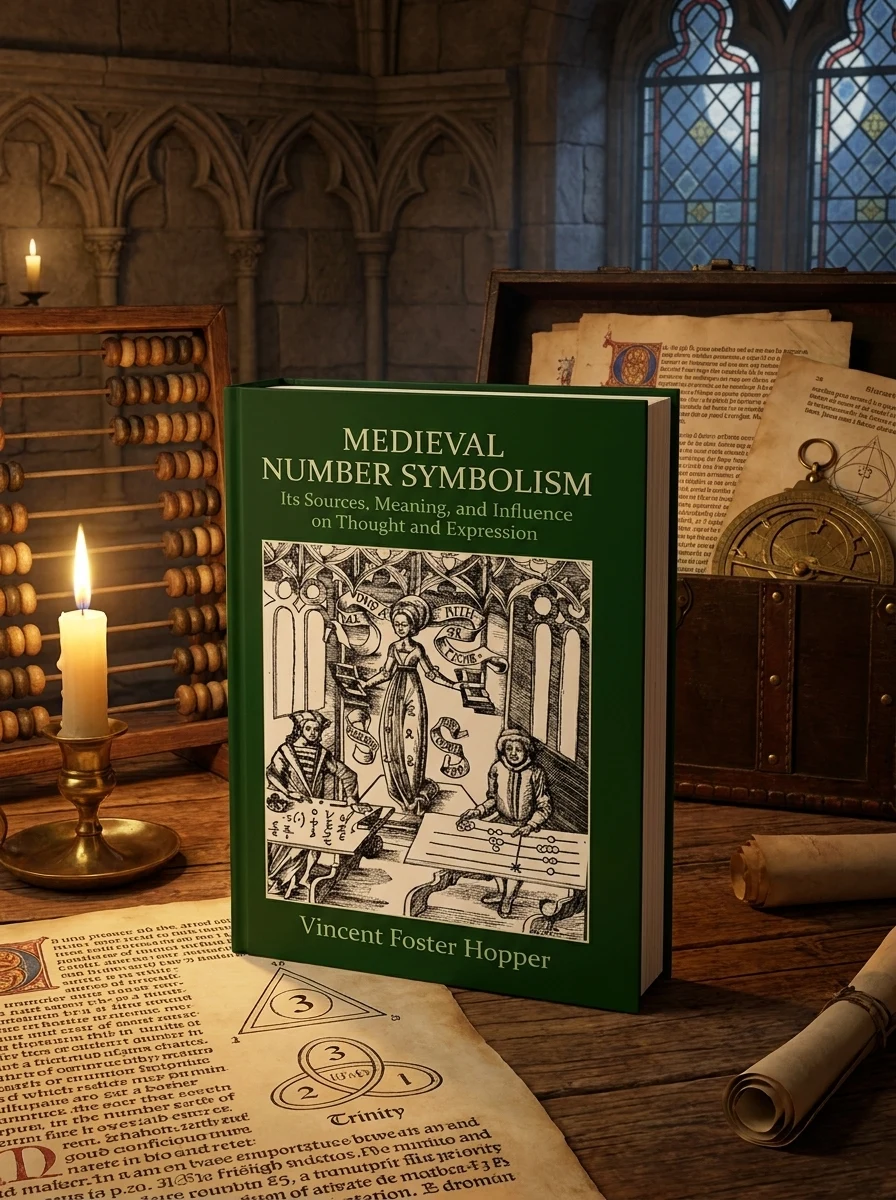
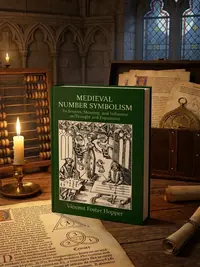
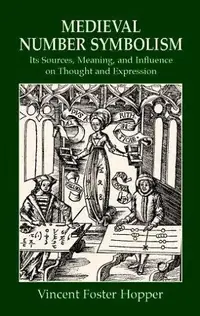
Medieval Number Symbolism: Its Sources, Meaning, and Influence on Thought and Expression Hopper, Vincent Foster
Stock reported in the catalog; fulfillment is confirmed with your request.
Uncover the hidden language of numbers, where every digit whispered divine truths and ancient wisdom.
Journey back to an era when numbers transcended mere calculation, serving as profound cosmic realities. Vincent Hopper's seminal work meticulously uncovers how medieval thinkers, including figures like Dante, perceived digits not as abstract tools but as living symbols imbued with spiritual resonance and historical memory. This classic text illuminates the deep cultural embedding of number symbolism, revealing how concepts like the sacred three, echoing the Holy Trinity, imbued everyday occurrences with immense significance. It traces these profound associations from ancient astrological insights and Pythagorean philosophy to fundamental human attempts at categorization, offering a unique window into a lost worldview.
This text belongs to the tradition of esoteric philosophy and medieval studies, exploring the intersection of mathematics, spirituality, and cosmology in pre-modern thought.


📝 Description: Medieval Number Symbolism: Its Sources, Meaning, and Influence on Thought and Expression Hopper, Vincent Foster
💎 Expert review
📖 Why choose it
Why this book is worth reading
Readers deeply interested in the hidden architectures of historical thought will find immense value here. If you have ever wondered how medieval intellectuals perceived reality beyond surface appearances, this book offers a vital key. It is ideal for scholars and enthusiasts of Dante who wish to understand the spiritual weight he placed on numerical structures. By tracing the lineage from Pythagorean philosophy to astrological insights, it reveals how digits served as living symbols rather than mere tools. Those seeking to comprehend the cosmic resonance embedded in ancient wisdom will gain a profound appreciation for how numbers once dictated cultural categorization and divine truth. It is a necessary bridge between abstract mathematics and the spiritual imagination of a bygone era.
⭐ Reader reviews
Reader rating
Hopper’s work stands as a meticulous excavation of a lost worldview where calculation and divinity were intertwined. While it offers unparalleled depth for those studying medieval symbolism or the philosophical roots of number mysticism, it may feel dense to casual readers seeking light entertainment or simple arithmetic history. Those uninterested in the spiritual implications of geometry or the theological underpinnings of Dante’s universe might find the relentless focus on esoteric associations tedious. It is not a guide for practical numerology but a scholarly exploration of historical consciousness. However, for the dedicated student of occult philosophy, it remains an indispensable and illuminating resource.
❓ Frequently asked questions
📖 Who should read this
If you're captivated by the hidden meanings in art, literature, or theology, or curious about the historical evolution of consciousness, this book offers a profound exploration. It's for anyone seeking to understand how ancient numerical patterns shaped the very fabric of medieval European thought and expression.
🎯 Key themes and symbolism
Numbers as Fundamental Realities
This book argues that medieval consciousness viewed numbers as inherent truths and living entities, rather than just mathematical constructs. They were seen as foundational elements of creation, pulsating with intrinsic meaning and historical echoes, profoundly shaping intellectual and artistic expression of the era.
Pervasive Medieval Symbolism
The text delves into how deeply numerical symbolism permeated medieval society. It explores how these associations were not peripheral but central to understanding art, literature, theology, and even daily life, influencing interpretation and expression across various cultural domains.
Sources of Numerical Meaning
Hopper meticulously traces the diverse origins of medieval number symbolism. From basic human observation and categorization to the sophisticated astrological traditions of Babylon and the profound philosophical insights of Pythagorean thought, the book reveals the rich intellectual tapestry from which these meanings emerged.
💬 Quotes from the book
“For the medieval mind, a number was never merely a quantity; it was a vibrant echo of creation, a resonant chord in the cosmic symphony.”
“The sacred triadic structure, far from being a simple count, infused every instance of three with a profound depth, a spiritual gravity almost lost to our modern perception.”
📜 Historical context
📚 Glossary
- Pythagoreanism
- Divine Associations
- Medieval Connotations
📔 Questions to reflect on
- How might our modern world change if we viewed numbers as symbolic rather than just quantitative?
- Consider a number significant in your own culture. What are its historical or subconscious associations, and how do they compare to medieval interpretations?
- If numbers are "fundamental realities," what does that imply about the underlying structure of the universe?
📖 From the series “Dover Occult”
All books in the series →
 90
90
🏛 Books from this publisher Dover Publications
All books from this publisher →




You might also like
See more →
 86
86
 82
82