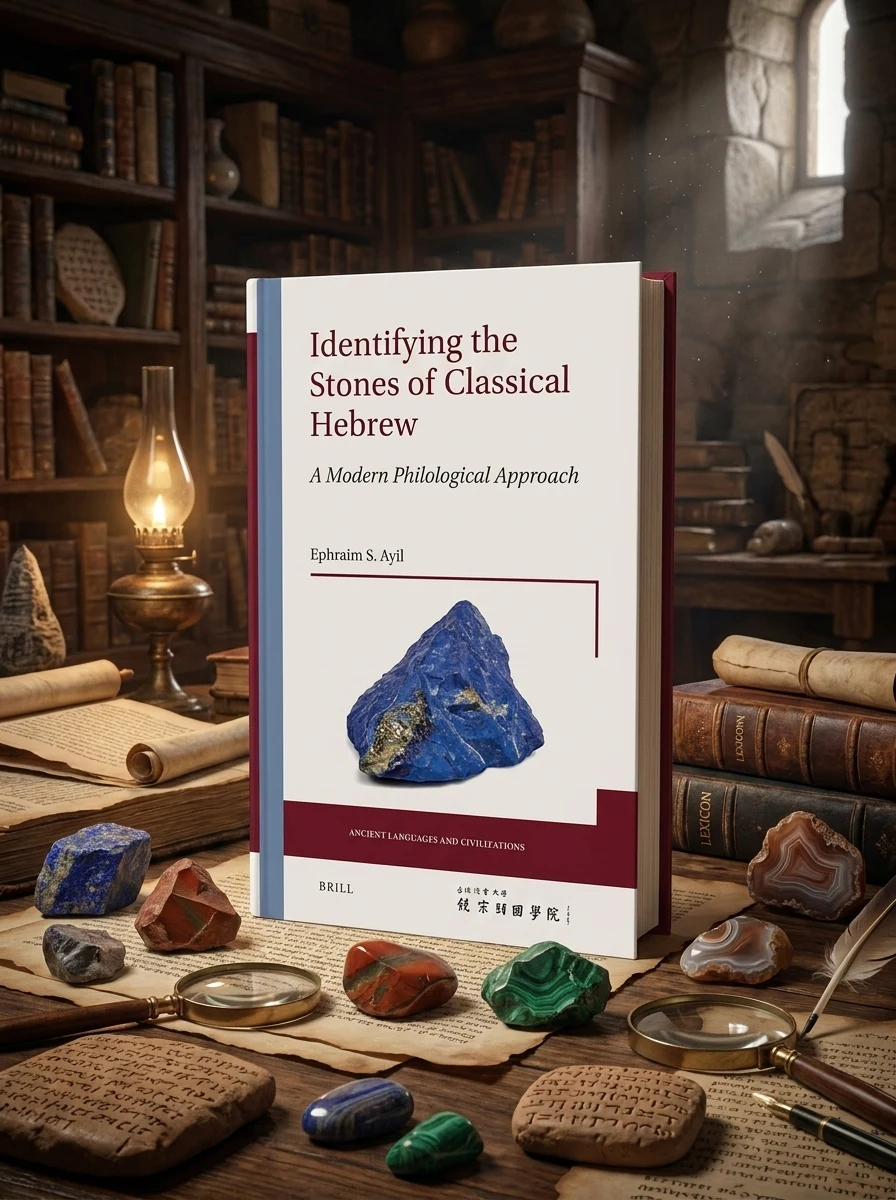
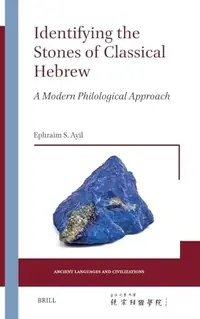
Identifying the Stones of Classical Hebrew: A Modern Philological Approach - Ingram Academic Ayil, Ephraim S


Stock reported in the catalog; fulfillment is confirmed with your request.
Unearth the true identity of sacred stones, challenging millennia of biblical misinterpretation.
Ephraim S. Ayil presents a groundbreaking re-evaluation of the stones mentioned in classical Hebrew texts. For centuries, scholars have relied on ancient translations like the Septuagint to identify these crucial elements. Ayil's work boldly rejects this long-standing methodology, proposing instead a rigorous, modern philological approach. This study meticulously dissects linguistic nuances and etymological roots, offering fresh insights into the symbolic and material reality of these biblical gems and minerals, moving beyond inherited assumptions to reveal their authentic nature.
This work sits at the intersection of academic philology and esoteric biblical studies, challenging traditional interpretations of sacred texts through modern linguistic analysis.


📝 Description: Identifying the Stones of Classical Hebrew: A Modern Philological Approach - Ingram Academic Ayil, Ephraim S
💎 Expert review
📖 Why choose it
Why this book is worth reading
This book is essential for the dedicated scholar or esoteric enthusiast who has grown weary of relying on ancient translations like the Septuagint for understanding Hebrew texts. Ayil offers a rigorous, modern philological approach that dismantles centuries of inherited assumptions about sacred stones. Readers seeking authentic insights into the symbolic and material reality of biblical gems will find immense value in this groundbreaking re-evaluation. It is perfect for those who crave intellectual depth and are willing to engage with complex linguistic nuances to uncover the true identity of these elements, moving beyond superficial interpretations to reveal their authentic nature through meticulous etymological dissection.
⭐ Reader reviews
Reader rating
Ayil’s study is a bold rejection of long-standing methodologies, offering fresh insights into biblical gems through rigorous philology. However, it does not suit casual readers or those seeking accessible spiritual guides; the text demands serious engagement with linguistic nuances and etymological roots. It is strictly for academics and dedicated esotericists prepared to challenge traditional scholarly consensus. Those expecting simple mystical revelations will be disappointed by the dry, analytical focus on material reality and historical translation errors. The work is intellectually demanding, requiring patience and a strong background in Hebrew studies to fully appreciate its contribution to redefining our understanding of sacred stones.
❓ Frequently asked questions
📖 Who should read this
If you're a serious student of biblical studies, ancient languages, or the esoteric significance of minerals, this book will profoundly reshape your understanding. Prepare to question long-held assumptions and embrace a rigorous, text-driven re-discovery.
🎯 Key themes and symbolism
Challenging Ancient Translations
This book directly confronts the entrenched practice of identifying biblical stones based solely on early Greek translations, particularly the Septuagint. It argues that these ancient interpretations, while historically significant, have inadvertently obscured the original Hebrew meanings, leading to centuries of misidentification and misunderstanding regarding these sacred objects within the biblical narrative.
Modern Philological Analysis
Ayil pioneers a sophisticated linguistic methodology, employing modern philological tools to meticulously analyze the Hebrew terms for stones. This approach focuses on etymology, semantic fields, and comparative linguistics, aiming to reconstruct the most accurate possible identification of each stone. It's a deep dive into the textual fabric to reveal hidden mineralogical truths.
Reidentifying Biblical Stones
Beyond critique, the core of this work is the systematic re-identification of various stones mentioned throughout the classical Hebrew scriptures. By shedding light on the true nature of these materials, the book offers profound implications for understanding ritual practices, symbolic meanings, and the material culture of the ancient world described in the Bible. It's a journey to reclaim lost knowledge.
💬 Quotes from the book
“The accumulated weight of centuries-old translations has, in many instances, obscured the true mineralogical and symbolic identity of the sacred stones, demanding a rigorous re-examination rooted solely in the Hebrew itself.”
“By meticulously tracing the semantic evolution and phonetic parallels of each Hebrew term, we do not merely identify a stone; we reclaim a fragment of ancient material culture and its inherent spiritual resonance.”
📜 Historical context
📚 Glossary
- Philology
- Septuagint
- Etymology
📔 Questions to reflect on
- Consider a biblical passage featuring stones. How might its interpretation shift if the traditional stone identification were proven incorrect?
- Reflect on how modern linguistic tools can unlock ancient mysteries. What other historical misinterpretations might be rectified through philological rigor?
- How does the re-identification of a sacred object impact its perceived spiritual or symbolic power? Explore the connection between material accuracy and esoteric understanding.
🏛 Books from this publisher Brill
All books from this publisher →
You might also like
See more →