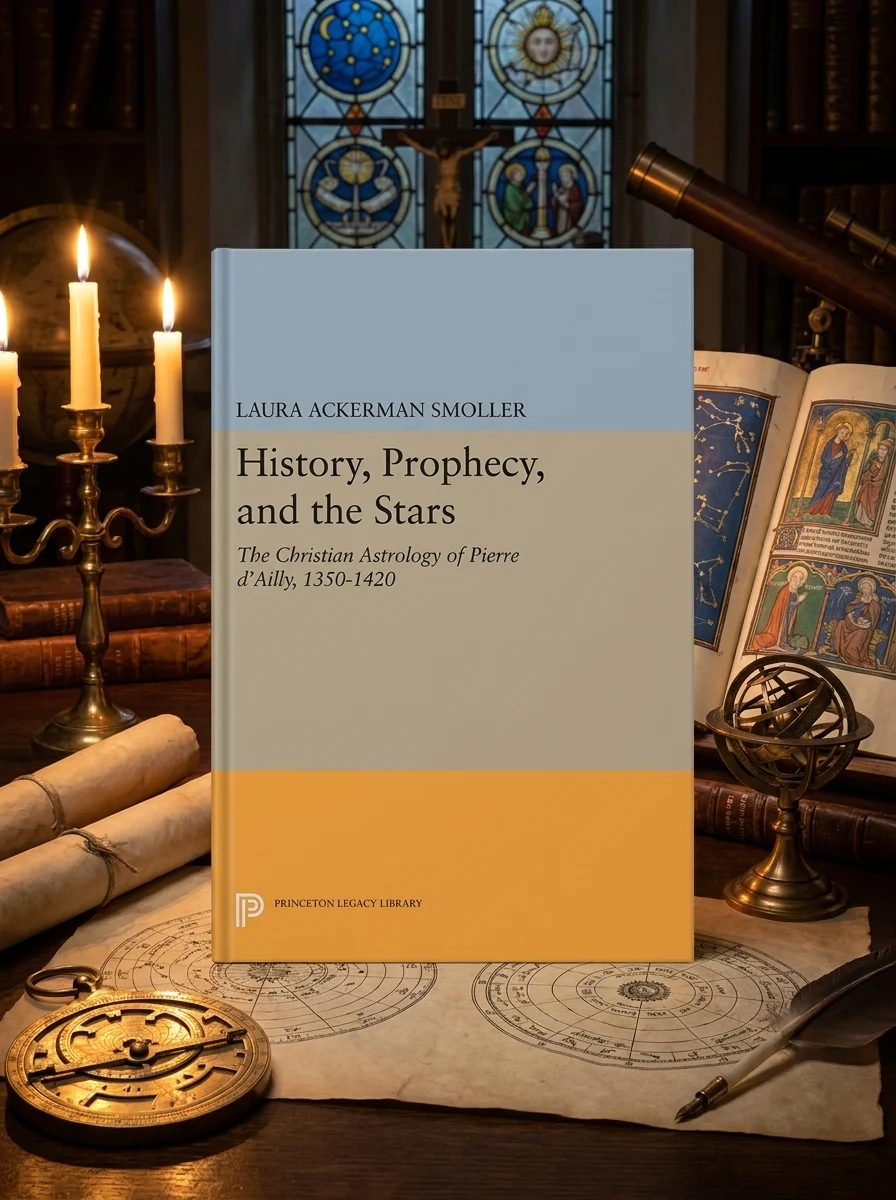
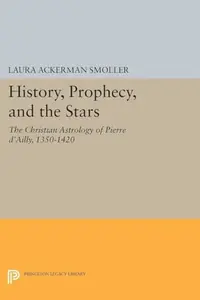
History, Prophecy, and the Stars: The Christian Astrology of Pierre d'Ailly, 1350-1420 - Ingram Academic Smoller, Laura Ackerman
Smoller, Laura AckermanStock reported in the catalog; fulfillment is confirmed with your request.
Stars, prophecy, and God: a cardinal's cosmic quest.
Laura Ackerman Smoller invites us to explore the profound intellectual world of Pierre d'Ailly, a prominent cardinal and scholar of the late Middle Ages. This illuminating work meticulously details d'Ailly's astrological and apocalyptic writings, which significantly influenced figures like Christopher Columbus. Smoller reveals how d'Ailly, despite the Church's skepticism, saw astrology not as mere fortune-telling, but as a scientific means to interpret historical events and divine prophecy. The book masterfully navigates the intricate relationship between celestial inquiry, scientific thought, and Christian theology, showcasing d'Ailly's efforts to reconcile astrological influence with complex theological doctrines like free will and God's omnipotence.
This work situates itself within the late Middle Ages, exploring the intersection of Christian theology, scientific inquiry, and astrological tradition during a period of significant intellectual transition. It highlights how scholars like Pierre d'Ailly navigated the complex relationship between celestial influence and divine doctrine.


📝 Description: History, Prophecy, and the Stars: The Christian Astrology of Pierre d'Ailly, 1350-1420 - Ingram Academic Smoller, Laura Ackerman
💎 Expert review
📖 Why choose it
Why this book is worth reading
Readers deeply interested in the historical roots of astrology and its theological implications will find this book essential. It offers a unique window into how a prominent cardinal reconciled celestial science with Christian faith, challenging modern misconceptions about medieval intellectualism. Those fascinated by the lives of influential historical figures who bridged the gap between religion and early science will appreciate the detailed examination of d'Ailly's apocalyptic writings. This text is particularly valuable for understanding the intellectual foundations that influenced later explorers and thinkers, providing a nuanced perspective on how prophecy and stars were viewed as compatible tools for interpreting history and divine will in a pre-modern context.
⭐ Reader reviews
Reader rating
Smoller delivers a meticulous academic study that appeals primarily to specialists in medieval history, theology, and the history of science. While it offers invaluable insights into Pierre d'Ailly's complex thought process, readers seeking accessible popular history or practical astrological guidance will likely find this work too dense and scholarly. It is not suitable for those who view astrology merely as fortune-telling, as the text rigorously defends its status as a serious scientific and theological discipline of its time. The narrative requires patience and background knowledge in medieval intellectual traditions to fully appreciate the intricate arguments regarding free will and God's omnipotence presented throughout.
❓ Frequently asked questions
📖 Who should read this
For scholars of medieval intellectual history, the history of science, or anyone fascinated by the intricate dance between faith and astronomical inquiry, this book offers profound insights into a complex era. Dive deep into the mind of a pivotal figure who dared to connect the heavens with humanity's destiny.
🎯 Key themes and symbolism
Astrology & Christian Thought
Smoller meticulously demonstrates how d'Ailly, a high-ranking church official, integrated astrological inquiry into his Christian worldview. Far from outright rejection, his work represents a sophisticated attempt to understand celestial movements as a form of 'natural theology,' revealing God's grand design for history and humanity, rather than a forbidden magical practice.
Prophecy & Historical Interpretation
This book highlights d'Ailly's innovative use of astrology as a tool for interpreting historical events and forecasting future prophecies, especially regarding the End Times. His analysis of celestial conjunctions provided a framework for understanding past occurrences and predicting significant shifts, moving beyond individual horoscopes to a grand cosmic narrative.
Free Will vs. Divine Omnipotence
A central tension explored is d'Ailly's intellectual struggle to reconcile astrological influences with the theological concepts of human free will and God's absolute power. Smoller illustrates how d'Ailly delicately navigated this philosophical tightrope, arguing that while celestial bodies might indicate tendencies, they do not negate divine sovereignty or individual moral choice.
💬 Quotes from the book
“To discern God's unfolding plan for humanity, one must read not only sacred texts but also the celestial movements, for the stars are His silent, grand chronometers.”
“The heavens declare certain inclinations, yet the divine hand always holds sway, and the human soul retains its sacred choice. Our study is of tendencies, not ironclad decrees.”
📜 Historical context
📚 Glossary
- Pierre d'Ailly
- Great Schism
- Natural Theology
📔 Questions to reflect on
- How might viewing celestial events as 'natural theology' alter one's perception of spirituality and science today?
- Consider how periods of profound societal anxiety (like the Great Schism) might drive individuals to seek extraordinary explanations or predictions, whether celestial or otherwise.
- Reflect on the ongoing tension between any form of determinism (astrological, genetic, environmental) and the concept of free will in your own worldview. Where do you draw the line?
📖 From the series “Princeton Legacy Library”
All books in the series →
✍️ More books by this author Smoller, Laura Ackerman
All books by this author →🏛 Books from this publisher Princeton University Press
All books from this publisher →
 87
87



You might also like
See more →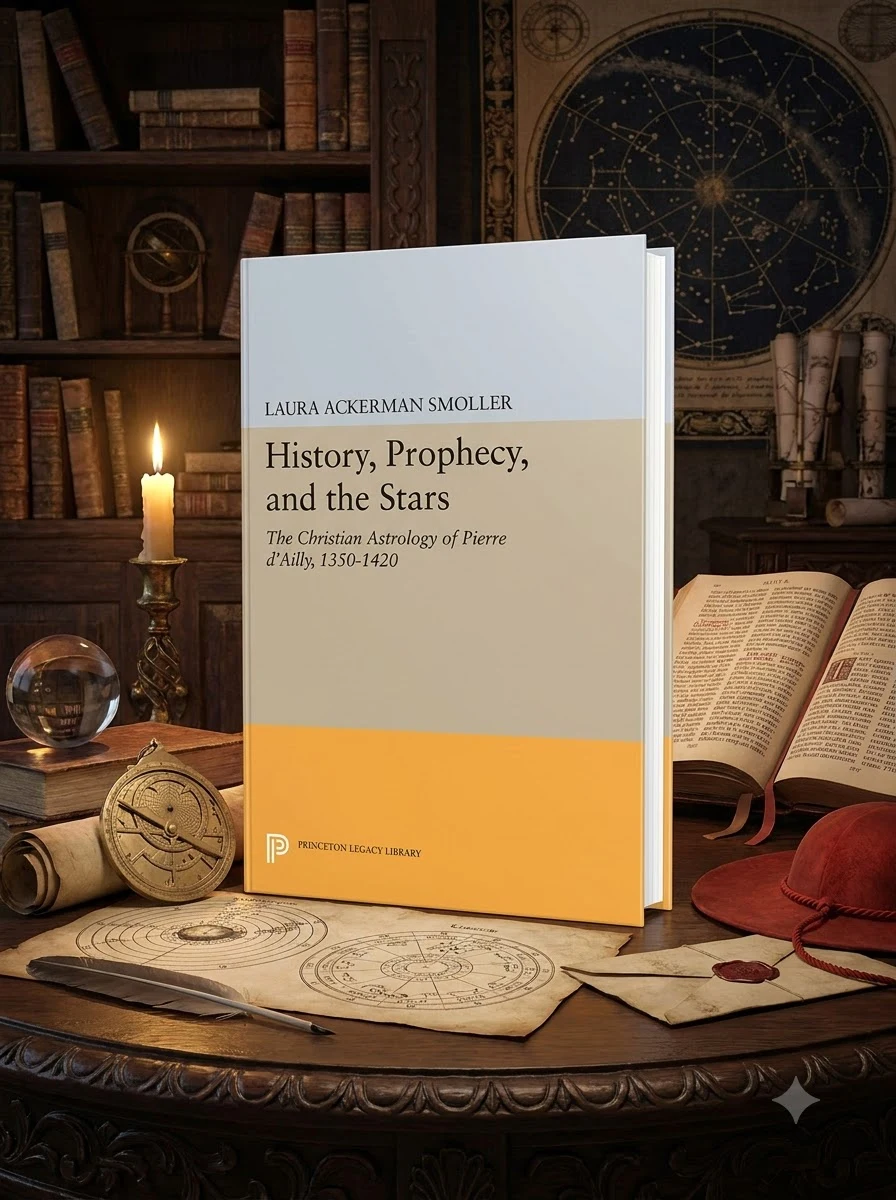
![The Instant Astrologer [With CD]](/img/the-instant-astrologer-with-cd-scene.webp) 91
91
 91
91
 91
91