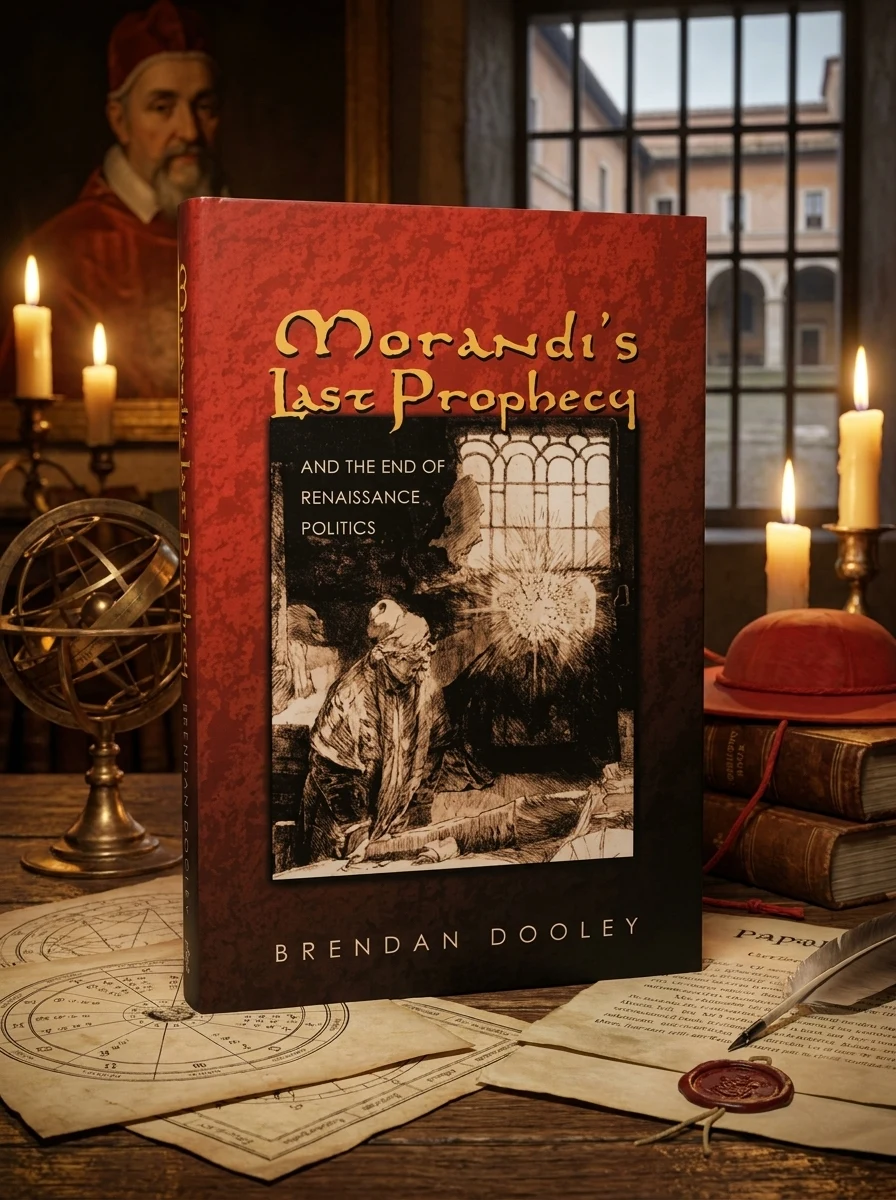
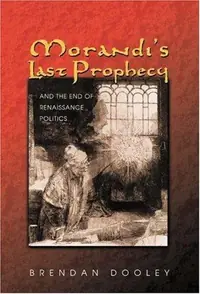
Morandi's Last Prophecy and the End of Renaissance Politics
Dooley, Brendan 81
81
 Editorial score
How we rate
Editorial score
How we rate
Stock reported in the catalog; fulfillment is confirmed with your request.
Uncover the scandalous prophecy that shook Rome and sealed an astrologer's grim fate.
Step into the tumultuous world of early 17th-century Rome, where the notorious astrologer Orazio Morandi dared to predict Pope Urban VIII's demise. This compelling account, enriched by fresh historical discoveries, charts Morandi's meteoric rise and tragic fall. It vividly portrays a society where esoteric knowledge wielded immense power, monastic life concealed libertine practices, and the foundations of intellectual thought were undergoing profound change. More than a biography, it's a window into the political and cultural ferment that ultimately set the stage for Galileo's own fateful confrontation with authority.
This work sits at the intersection of intellectual history and esoteric studies, exploring how astrological practices influenced political power structures in early modern Rome. It bridges the gap between biographical narrative and the broader cultural ferment that redefined knowledge during the transition to the scientific era.


📝 Description: Morandi's Last Prophecy and the End of Renaissance Politics
💎 Expert review
📖 Why choose it
Why this book is worth reading
Readers fascinated by the intricate dance between esoteric knowledge and political authority will find this book indispensable. It offers a vivid window into a society where monastic life concealed libertine practices and intellectual foundations were shifting dramatically. Those intrigued by the tragic fate of Orazio Morandi, who predicted Pope Urban VIII's demise, will appreciate the fresh historical discoveries that chart his rise and fall. The narrative serves as a crucial prelude to Galileo’s confrontation with authority, making it ideal for history buffs seeking depth beyond standard political narratives. It appeals to anyone wishing to understand how prophecy wielded immense power in early 17th-century Rome.
⭐ Reader reviews
Reader rating
Brendan Dooley delivers a compelling account of Orazio Morandi, enriching our understanding of early 17th-century Rome through fresh historical discoveries. The book vividly portrays the cultural ferment where esoteric knowledge shaped political outcomes. However, this is not a light read; it demands attention to complex historical contexts and the nuances of monastic and intellectual life. It may not suit readers seeking straightforward adventure or simple biographical timelines without deeper analysis. Those uninterested in the intersection of astrology, politics, and religious authority might find the dense exploration of societal changes tedious. Yet, for those willing to engage with the profound shifts in thought during this period, it offers a rich, scholarly perspective on a pivotal, scandalous moment in history.
❓ Frequently asked questions
📖 Who should read this
If you're fascinated by the intersection of occult history, political intrigue, and seismic cultural shifts, this book is essential. It offers a unique lens into the Renaissance, appealing to scholars and curious readers alike who seek to understand a world where prophecy held sway.
🎯 Key themes and symbolism
Astrology's Potent Sway
The book brilliantly illustrates how astrological predictions weren't mere superstition but powerful political tools in Renaissance Italy. Morandi's case exemplifies how the stars' perceived influence could destabilize power structures and ignite fierce disputes, revealing a deep societal belief in cosmic determinism that permeated all levels, from commoners to the highest echelons of the Church.
Renaissance Power & Peril
Explore the cutthroat political landscape of 17th-century Rome, where a papal prophecy could trigger a crisis of succession and challenge the authority of the Church's most powerful figures. This narrative uncovers the dangerous tightrope walk between intellectual freedom and political loyalty, showcasing how even seemingly academic pursuits could lead to fatal consequences for those who crossed the establishment.
Shifting Intellectual Tides
Delve into the profound cultural transformation gripping Europe, moving away from older mystical paradigms towards new scientific thought. Morandi's story, preceding Galileo's trial, serves as a crucial case study in this intellectual metamorphosis, highlighting the tension between traditional occult wisdom and emerging rationalism, and the perilous journey of those caught between two worlds.
💬 Quotes from the book
“In a city where the stars whispered secrets to power, a single prophecy could either crown a king or condemn a man to the deepest dungeon.”
“Behind the hallowed walls of Santa Prassede, the sacred and the profane danced a dangerous waltz, far from the watchful eyes of the Holy See.”
📜 Historical context
📚 Glossary
- Astrology
- Conclave
- Libertinism
📔 Questions to reflect on
- Consider how public belief in prophecy, like Morandi's, could shape political reality. What parallels, if any, do you see in contemporary society regarding belief systems and power?
- Morandi's trial highlights the tension between intellectual inquiry and religious/political authority. Where do you observe similar conflicts arising in history or today, and what are their consequences?
- If you lived in Morandi's time, how might your understanding of the cosmos and fate differ from your current perspective? How would that impact your choices?
✍️ More books by this author Dooley, Brendan
All books by this author →
🏛 Books from this publisher Princeton University Press
All books from this publisher → 87
87



You might also like
See more →
![The Instant Astrologer [With CD]](/img/the-instant-astrologer-with-cd-scene.webp) 91
91