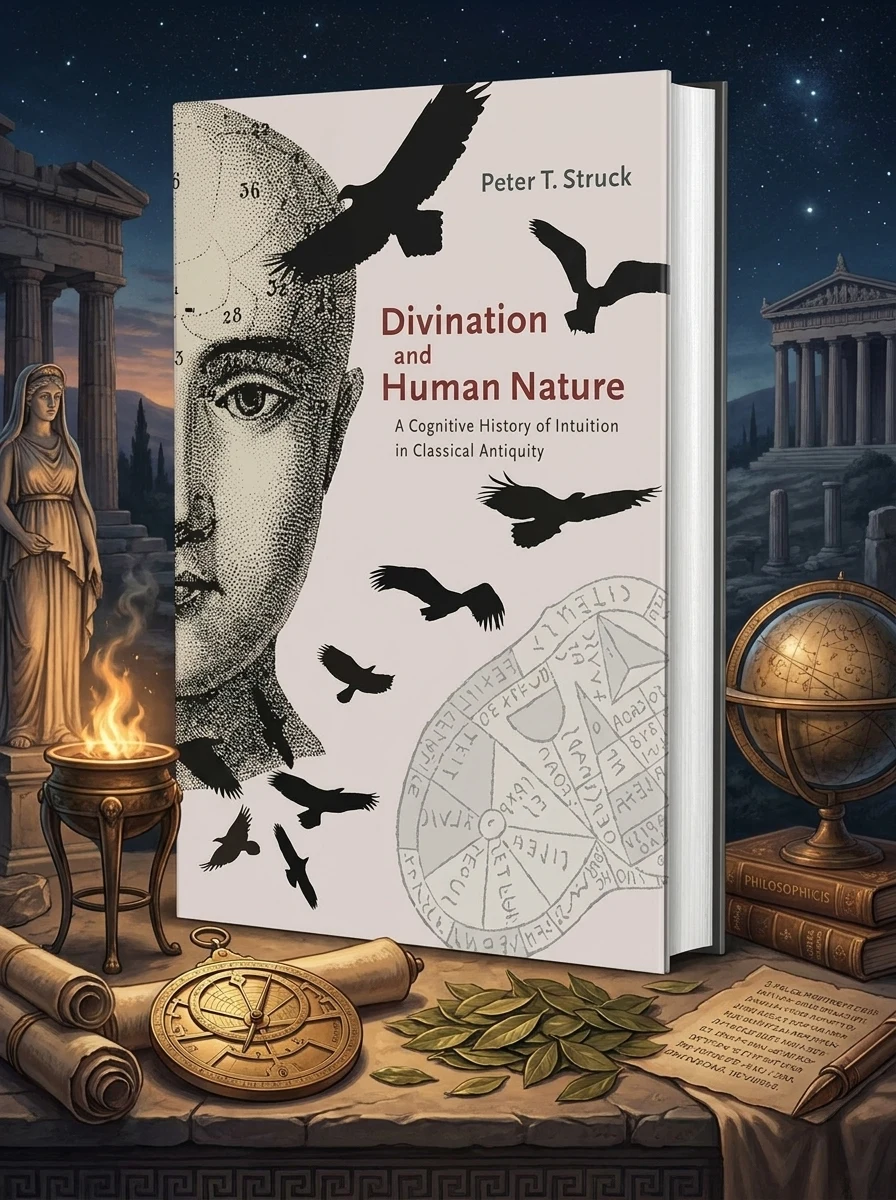
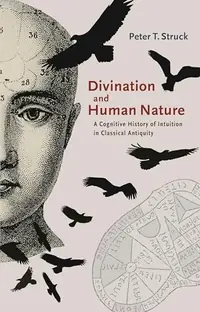
Divination and Human Nature: A Cognitive History of Intuition in Classical Antiquity
Stock reported in the catalog; fulfillment is confirmed with your request.
Uncover the lost philosophical roots of intuition, bridging ancient divination with modern cognitive thought.
Peter Struck's work recontextualizes ancient divination, moving beyond simplistic notions of divine messages or primitive superstition. He delves into how classical philosophers, including Plato, Aristotle, the Stoics, and Neoplatonists, grappled with uncanny insights and premonitions. Far from dismissing these as supernatural events, these thinkers saw them as intrinsic aspects of human cognition and physiology. Struck argues their detailed inquiries represent an early, sophisticated exploration into the nature of intuition, proposing a compelling cognitive history that links ancient philosophical thought to contemporary understandings of human insight. This book illuminates a profound, often overlooked, intellectual tradition.
This work sits at the intersection of classical philosophy and cognitive science, reexamining how ancient thinkers like Plato and Aristotle understood intuition not as supernatural but as physiological. It bridges the gap between historical theological inquiry and modern psychological frameworks regarding human insight.


📝 Description: Divination and Human Nature: A Cognitive History of Intuition in Classical Antiquity
💎 Expert review
📖 Why choose it
Why this book is worth reading
Readers fascinated by the intellectual lineage of intuition will find this book profoundly illuminating. It offers a sophisticated alternative to viewing ancient divination as mere superstition, revealing instead a rigorous cognitive history. If you are interested in how classical philosophers like Plato and the Stoics analyzed premonitions as intrinsic aspects of human physiology, this text provides essential context. It is ideal for those seeking to understand the philosophical roots of uncanny insights and their connection to contemporary cognitive thought. This work rewards careful study with a deep appreciation for an overlooked tradition that links ancient wisdom to modern understanding.
⭐ Reader reviews
Reader rating
Struck presents a compelling argument that ancient divination was a serious cognitive inquiry rather than primitive belief. However, this academic rigor means it is not suitable for casual readers seeking practical divination guides or simple historical anecdotes. Those expecting a narrative about mystical experiences or supernatural phenomena will likely find the focus on philosophical mechanics dry and dense. The book demands patience from anyone unfamiliar with classical metaphysical debates. It is strictly for scholars and serious enthusiasts of intellectual history who appreciate detailed analysis over accessible storytelling.
❓ Frequently asked questions
📖 Who should read this
If you're fascinated by the intersection of ancient philosophy, psychology, and esoteric traditions, this book is for you. Explore how classical thinkers approached intuition, challenging conventional views of divination. Anyone seeking to understand the historical depth of human cognitive studies will find it profoundly illuminating.
🎯 Key themes and symbolism
Ancient Intuition's Roots
Struck uncovers how classical philosophers like Plato and Aristotle didn't merely accept divination as divine decree, but meticulously investigated extraordinary insights. They explored premonitions and omens as phenomena rooted in human nature, proposing early theories on the physiological and psychological underpinnings of what we now call intuition, offering a surprisingly modern perspective.
Philosophical Inquiry into Divination
The book highlights how diverse ancient schools—from Stoics to Neoplatonists—converged on seeing divination not just as religious practice, but as an observable, albeit puzzling, human capacity. Struck reveals their sophisticated attempts to understand how individuals could possess insights seemingly beyond normal rationality, positioning their studies as foundational to cognitive history.
Reclaiming Ancient Wisdom
Struck challenges modern dismissals of ancient divinatory beliefs as primitive. Instead, he presents the ancient philosophical discourse as a sophisticated, early attempt to understand anomalous human perception. This work elevates their observations to a significant precursor in the study of human cognition, encouraging a re-evaluation of classical contributions to understanding the mind.
💬 Quotes from the book
“The ancient philosophical inquiry into seemingly irrational premonitions reveals not primitive superstition, but a sophisticated attempt to map the cognitive landscape of human insight.”
“For Plato and his successors, the occasional accuracy of omens was not merely divine intervention, but an observable phenomenon demanding a rigorous, physiological, and psychological explanation.”
📜 Historical context
📚 Glossary
- Divination
- Intuition
- Neoplatonists
📔 Questions to reflect on
- How might understanding ancient philosophical views on intuition reshape our contemporary perspectives on subconscious knowledge or psychic phenomena?
- If ancient philosophers considered certain insights to be physiological projections, how does this compare to modern neuroscientific understandings of the mind?
- Reflect on a personal experience of 'uncanny insight.' How does Struck's framework help you contextualize or re-evaluate that experience?
🏛 Books from this publisher Princeton University Press
All books from this publisher →
 87
87



You might also like
See more → 83
83
 91
91
 91
91