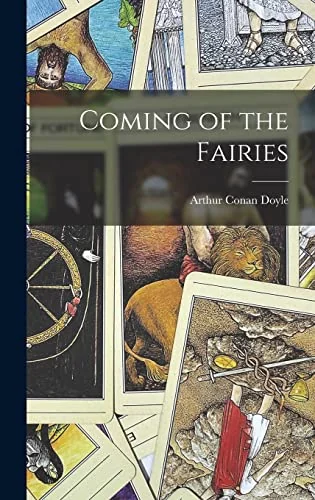
Coming of the Fairies
✍️ Doyle, Arthur ConanIn this extraordinary work, Sir Arthur Conan Doyle, renowned for his logical detective, Sherlock Holmes, turns his keen intellect to the baffling phenomenon of fairies. He meticulously examines the famous Cottingley photographs and associated testimonies, presenting a compelling case for the existence of these elusive beings. This isn't a whimsical tale, but a serious inquiry into the edges of perception and the unseen world, challenging conventional skepticism with earnest conviction. Doyle invites readers to consider the evidence, pushing the boundaries of what is considered real.


📝 Description: Coming of the Fairies
💎 Expert review
📖 Why choose it
Why this book is worth reading
Readers fascinated by the intersection of logic and the mystical will find this book particularly rewarding. Sir Arthur Conan Doyle applies his renowned deductive methods to a subject usually dismissed as fantasy, offering a unique perspective on belief and evidence. Those interested in literary history will appreciate seeing the creator of Sherlock Holmes tackle such a controversial topic with earnest conviction. It challenges conventional skepticism and invites an open-minded exploration of perception. This is not for those seeking whimsical folklore but for individuals willing to examine serious inquiries into the edges of reality and the hidden world, making it a compelling read for curious minds.
⭐ Reader reviews
Reader rating
This text offers a fascinating glimpse into Doyle’s serious attempt to validate fairy existence through photographic evidence, diverging sharply from his fictional detective work. However, readers expecting light entertainment or traditional fantasy will be disappointed, as the tone is strictly investigative and earnest. Skeptics may find the arguments unconvincing, viewing them as a departure from scientific rigor rather than an extension of it. The book is best suited for those interested in the history of spiritualism or Doyle’s personal beliefs. It lacks narrative flair, focusing instead on testimony analysis. Consequently, it may feel dry to general audiences but remains a crucial document for understanding early 20th-century occult debates and the limits of contemporary skepticism.
❓ Frequently asked questions
📖 Who should read this
If you're a seeker of hidden truths, a connoisseur of the unexplained, or someone fascinated by the intersection of science, spirituality, and folklore, this book offers a unique expedition into the heart of an enduring mystery. Prepare to have your perceptions challenged.
🎯 Key themes and symbolism
Skepticism & Belief
Doyle, famously a man of reason, here grapples with the tension between scientific doubt and spiritual conviction. He meticulously presents what he believes is empirical evidence for fairies, daring readers to suspend their disbelief and consider a world beyond ordinary perception, challenging the very definition of truth.
The Unseen World
This book delves deep into the possibility of dimensions beyond our immediate senses, exploring the notion that other intelligent life forms coexist with humanity, albeit in a different vibratory plane. Doyle uses fairy sightings as a gateway to discussing broader spiritualist concepts of an interconnected, hidden reality.
Folklore's Enduring Power
Doyle's investigation isn't just about fairies; it's a testament to the persistent human fascination with mythical creatures and the stories that shape our understanding of the natural world. He bridges ancient lore with modern photographic technology, examining how timeless narratives continue to manifest in contemporary experience.
📜 Historical context
📚 Glossary
- Occultism
- Fairy Lore
- Spiritualism
📔 Questions to reflect on
- Reflect on a time you encountered something that challenged your established beliefs. How did you reconcile it with your worldview?
- In what ways do you think modern society might be "blind" to phenomena that earlier cultures accepted as real?
- Consider the role of imagination versus evidence in shaping our understanding of the world. Where do you draw the line?