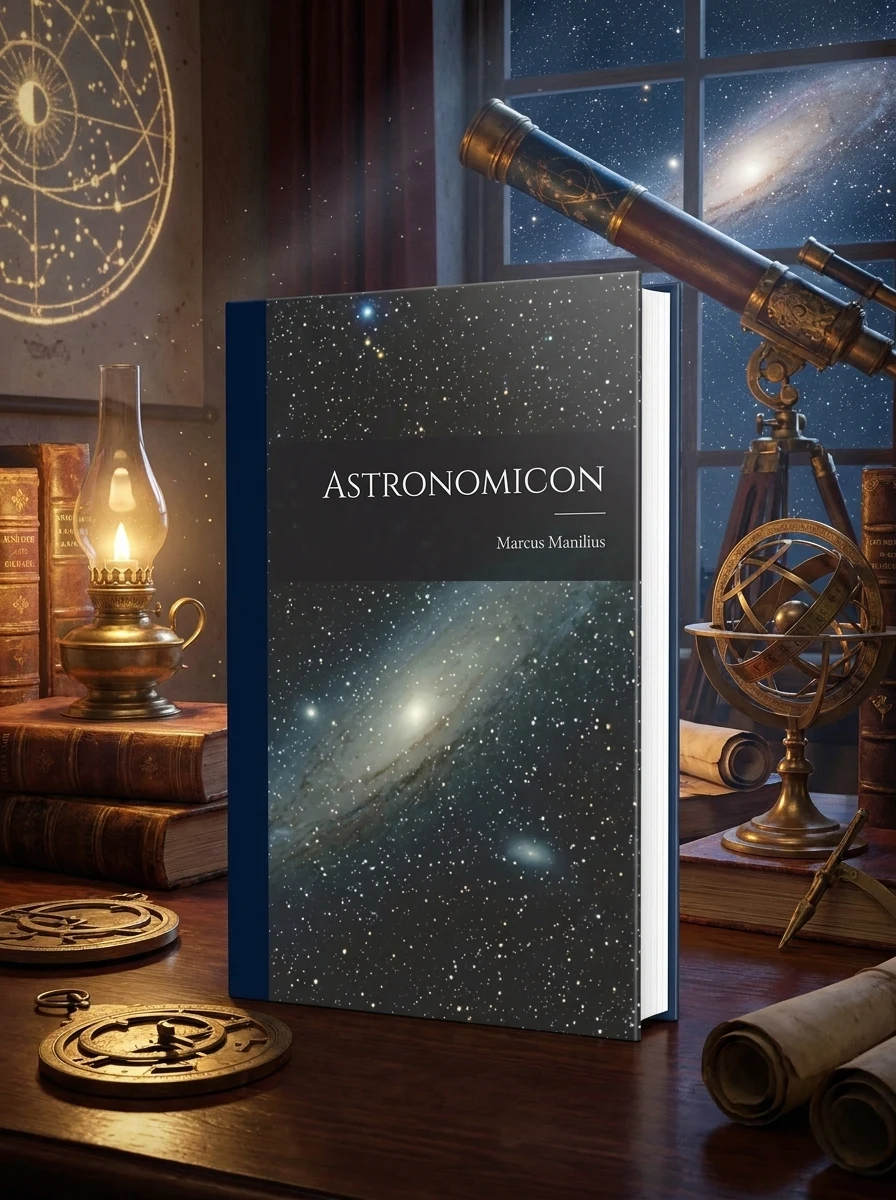
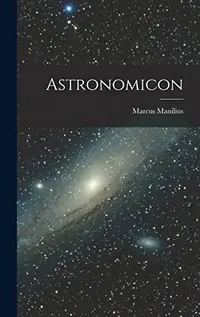
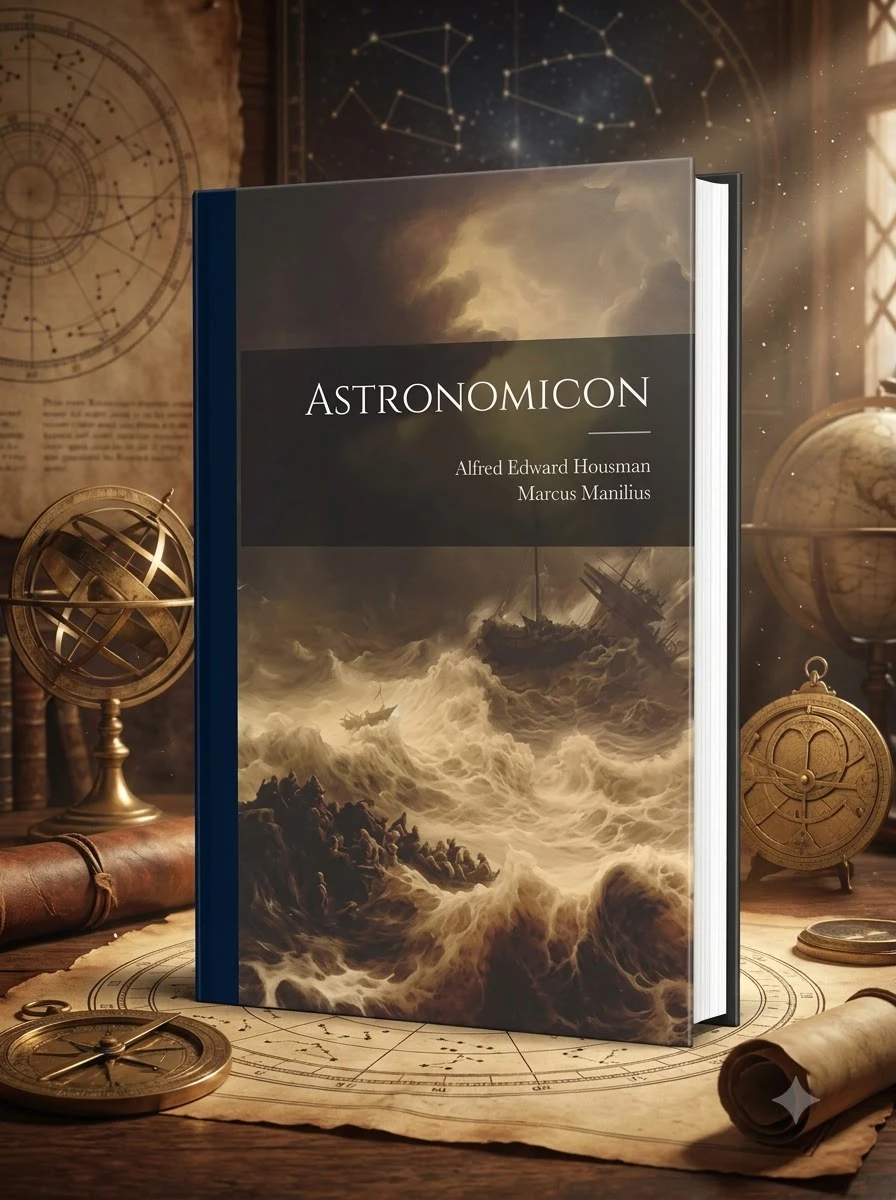
Astronomicon Manilius, Marcus
Manilius, MarcusStock reported in the catalog; fulfillment is confirmed with your request.
Uncover ancient Rome's cosmic vision, where starlight wove the tapestry of human fate.
Marcus Manilius's "Astronomicon" is a monumental poetic treatise from the Augustan age, offering a profound exploration of the cosmos. Far more than a simple astronomical text, this work delves deep into the intricate relationship between celestial mechanics and human destiny, blending scientific observation with philosophical inquiry. Manilius systematically outlines the principles of astrology, describing constellations, planetary influences, and methods for interpreting their significance. It stands as a critical window into the sophisticated cosmological understanding and spiritual beliefs prevalent in the Roman world, presenting a unique synthesis of early science and esoteric wisdom.
This work emerges from the Augustan age of ancient Rome, serving as a vital artifact of Roman cosmological understanding and spiritual beliefs. It represents a sophisticated synthesis where early scientific observation intertwines seamlessly with esoteric wisdom and philosophical inquiry.


📝 Description: Astronomicon Manilius, Marcus
💎 Expert review
📖 Why choose it
Why this book is worth reading
Readers fascinated by the intersection of ancient science and spiritual destiny will find this text profoundly rewarding. It offers a unique window into how starlight was believed to weave the tapestry of human fate in Rome. Those seeking to understand the intellectual depth of the Augustan age will appreciate Manilius's systematic outline of planetary influences and constellations. This book is ideal for scholars of esoteric history who wish to explore the sophisticated cosmological frameworks that defined Roman spiritual life, providing a rich foundation for studying early astrological theory and its philosophical underpinnings.
⭐ Reader reviews
Reader rating
Manilius’s monumental poetic treatise demands patience from casual readers, as it blends dense scientific observation with complex philosophical inquiry. It is not suited for those seeking quick, practical horoscope advice or light entertainment; this is a rigorous exploration of cosmic mechanics. However, for the dedicated student of occult history, it provides an unparalleled look at ancient Roman spiritual beliefs. The text’s value lies in its candid presentation of how celestial bodies were viewed as direct agents of destiny. Readers must be prepared for a challenging but intellectually stimulating journey through the sophisticated cosmological understanding of the era.
❓ Frequently asked questions
📖 Who should read this
If you are captivated by the origins of Western esotericism, the philosophy of ancient Rome, or the historical intertwining of science and spirituality, this foundational text offers unparalleled insight into the cosmic worldview of antiquity.
🎯 Key themes and symbolism
Cosmic Determinism & Fate
Manilius meticulously argues that the heavens are not merely distant lights, but rather an active, deterministic force shaping individual lives and historical events. This theme explores how ancient thinkers grappled with free will versus predestination, seeing the celestial sphere as a grand, immutable clock dictating earthly occurrences and human fortunes, a cornerstone of classical astrological thought.
Astronomy as Philosophy
Beyond mere observation, Manilius elevates the study of the stars to a profound philosophical endeavor. He views the cosmos as a divine mechanism, whose ordered movements reveal the very nature of existence, morality, and the divine. This perspective intertwines rigorous celestial mapping with deep metaphysical questions, suggesting that understanding the universe is key to understanding oneself and one's place within the grand design.
Ancient Astrological Practice
The "Astronomicon" serves as an invaluable compendium of astrological knowledge from the early Roman Empire. It details methodologies for casting horoscopes, interpreting planetary aspects, and understanding the significance of the Zodiac. Readers gain insight into how ancient practitioners sought to predict futures, analyze personalities, and advise on worldly affairs based on the precise positions and influences of celestial bodies.
💬 Quotes from the book
“For the heavens, which reveal themselves to our gaze, hold all things destined, and their silent paths foretell the human journey.”
“Observe the ordered dance of stars, the swift return of seasons, and know that wisdom is written in the eternal script of the cosmos.”
📜 Historical context
📚 Glossary
- Astronomicon
- Zodiac
- Celestial Sphere
📔 Questions to reflect on
- How does the ancient concept of celestial determinism compare with modern understandings of free will and destiny?
- If the universe is indeed an ordered system, what implications does this have for our search for meaning and purpose?
- Consider how the blend of scientific observation and spiritual interpretation in ancient texts like "Astronomicon" differs from contemporary thought. What is gained or lost in each approach?
✍️ More books by this author Manilius, Marcus
All books by this author →
🏛 Books from this publisher Legare Street Press
All books from this publisher →

 83
83
 87
87


You might also like
See more →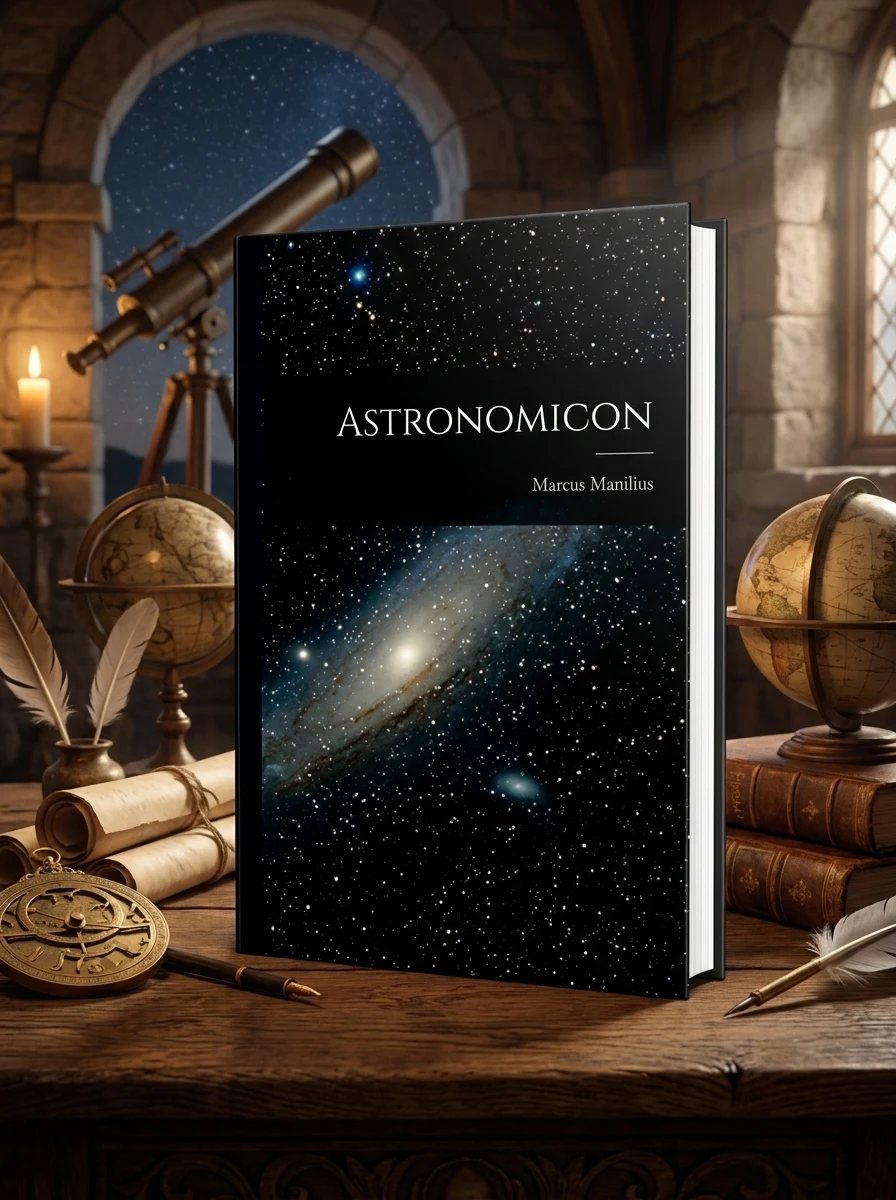 82
82
 88
88