US shipping Secure card payment Occult and esoteric books

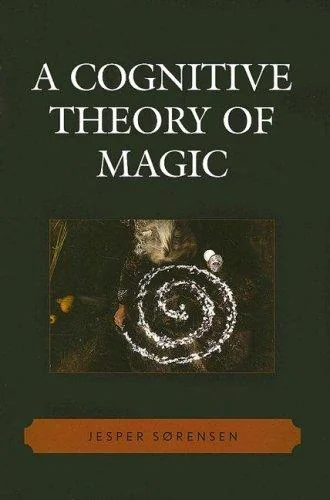
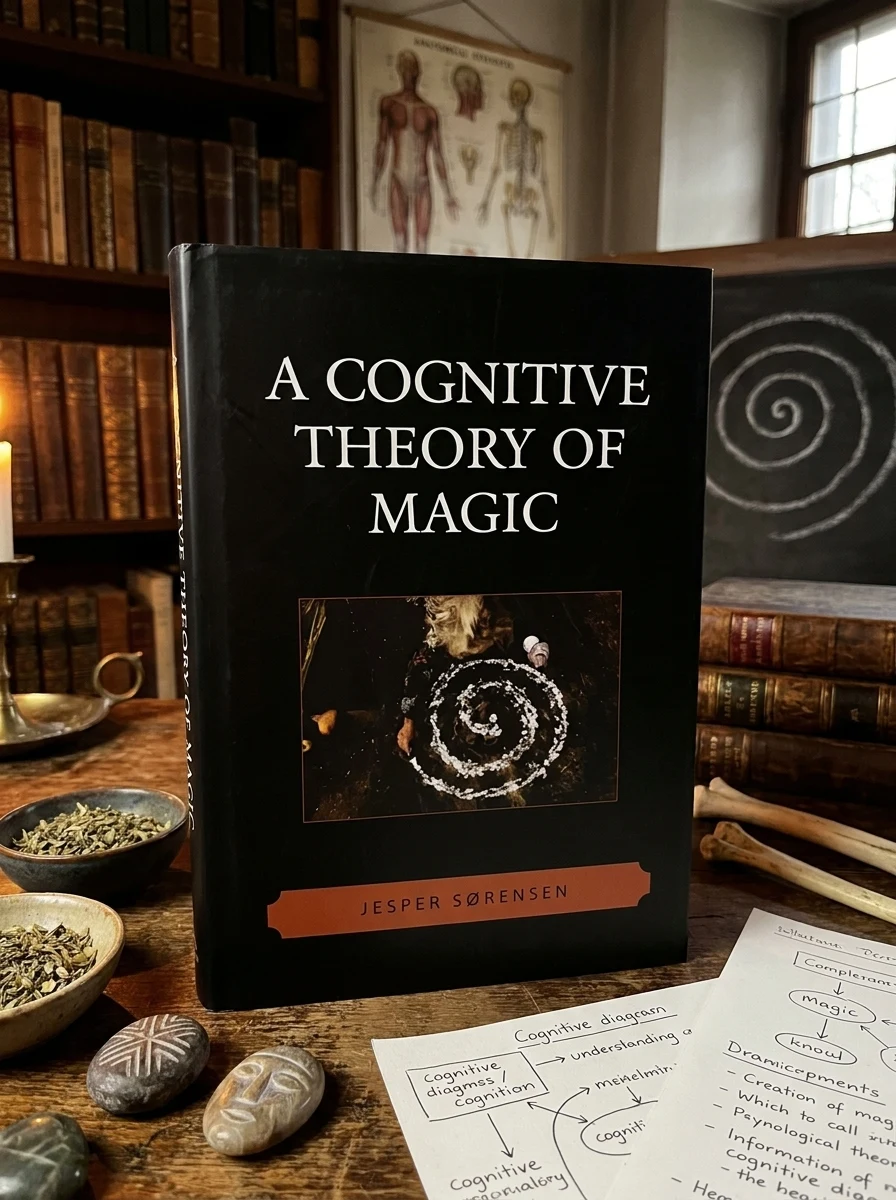
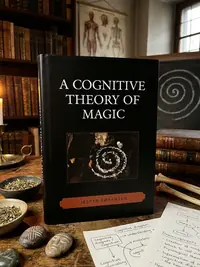
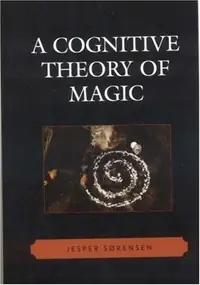
Cognitive Theory of Magic Sørensen, Jesper

Sørensen, Jesper
Reader rating
4.6
(1 reviews) 146 sold
In stock

Stock reported in the catalog; fulfillment is confirmed with your request.

📚 ABOUT THE BOOK

Uncover the hidden cognitive architecture that transforms mere ritual into potent magical practice.

Sørensen dismantles outdated anthropological models to reveal the universal mental mechanisms driving magical belief. By analyzing classical ethnographic cases, he demonstrates how the human mind naturally infuses power into rituals through contagion and similarity. This work argues that magic is not superstition, but a rational cognitive process where physical actions trigger deep-seated psychological representations of efficacy, making the impossible feel tangible and real.

Key themes
Cognitive anthropology Ritual efficacy Psychological contagion
Historical context

This work bridges the gap between traditional occult practice and modern cognitive science, challenging the anthropological status quo by applying rigorous mental frameworks to esoteric rituals. It positions magic not as primitive superstition but as a sophisticated psychological phenomenon rooted in universal human cognition.


Difficulty
●●● Demanding
Fans will love it
Edward Tylor · James George Frazer · Malinowski's Argonauts of the Western Pacific · Cognitive Science of Religion literature
⚜️ Ceremonial Magic
🏛 Altamira Press 📖 232 pages 📔 Hardcover 📐 Hardcover ISBN: 9780759110373
Fun fact
Sørensen delivers a sharp, intellectual dissection of magical thought, offering fresh insights into why rituals feel potent. It excels in linking anthropology with cognitive psychology. However, practitioners seeking spiritual validation may find it too clinical. It sits firmly in academic theory, essential for understanding the mind behind the magic.
📚 This book appears in Esoterica Books

📝 Description: Cognitive Theory of Magic Sørensen, Jesper

Magic is a universal phenomenon. Everywhere we look people perform ritual actions in which desirable qualities are transferred by means of physical contact and objects or persons are manipulated by things of their likeness. In this book Sørensen embraces a cognitive perspective in order to investigate this long-established but controversial topic. Following a critique of the traditional approaches to magic, and basing his claims on classical ethnographic cases, the author explains magic's universality by examining a number of recurrent cognitive processes underlying its different manifestations. He focuses on how power is infused into the ritual practice; how representations of contagion and similarity can be used to connect otherwise distinct objects in order to manipulate one by the other; and how the performance of ritual prompts representations of magical actions as effective. Bringing these features together, the author proposes a cognitive theory of how people can represent magical rituals as purposeful actions and how ritual actions are integrated into more complex representations of events. This explanation, in turn, yields new insights into the constitutive role of magic in the formation of institutionalised religious ritual.

💎 Expert review

💎
Esoterica Books editorial team
Occult literature desk
Sørensen’s dismantling of outdated models is refreshing, yet this dense academic approach will alienate casual hobbyists seeking simple spell instructions. It is not suited for readers who prefer mystical immediacy over structural analysis. However, for those willing to engage with complex ethnographic cases, the insight into how physical actions trigger psychological representations is profound. The book demands patience and a willingness to confront the scientific mechanisms behind belief. It is a challenging but rewarding read for the intellectually curious occultist.
✓ EDITOR'S REVIEW

📖 Why choose it

📖

Why this book is worth reading

Serious practitioners and scholars seeking to understand the psychological underpinnings of their craft will find this text indispensable. Sørensen offers a compelling argument that magic is a rational cognitive process, transforming how one views ritual efficacy. For those tired of mystical vagueness, the analysis of contagion and similarity provides a tangible framework for understanding why certain actions feel potent. It validates the practitioner's experience through scientific lens, making it essential for anyone wishing to deepen their theoretical grasp of ceremonial magic without sacrificing intellectual rigor or empirical grounding.

⭐ Reader reviews

The starting rating comes from the team Esoterica Books —
⭐ Esoterica editorial review Editorial rating 4.6/5
★★★★
Scholars of ritual studies, psychologists of religion, and practitioners interested in the mental frameworks that underpin magical efficacy rather than just its historical or sociological context.

Reader rating

4.6
Based on 1 reviews
5
0
4
1
3
0
2
0
1
0
E
Esoterica Books editorial team

Sørensen’s dismantling of outdated models is refreshing, yet this dense academic approach will alienate casual hobbyists seeking simple spell instructions. It is not suited for readers who prefer mystical immediacy over structural analysis. However, for those willing to engage with complex ethnographic cases, the insight into how physical actions trigger psychological representations is profound. The book demands patience and a willingness to confront the scientific mechanisms behind belief. It is a challenging but rewarding read for the intellectually curious occultist.

❓ Frequently asked questions

No, it analyzes the cognitive processes that make practitioners perceive rituals as effective, treating magic as a psychological phenomenon rather than an ontological one.
While rigorous, it avoids excessive jargon, focusing on clear cognitive explanations that appeal to those interested in the mechanics of belief.

📖 Who should read this

Scholars of ritual studies, psychologists of religion, and practitioners interested in the mental frameworks that underpin magical efficacy rather than just its historical or sociological context.

🎯 Key themes and symbolism

Cognitive anthropology

Ritual efficacy

Psychological contagion

💬 Quotes from the book

“Magic is not a failure of logic, but a success of cognitive association.”

“Rituals transform abstract desires into tangible actions through the mind's bias toward physical contact.”

📜 Historical context

Emerging from the critique of Frazerian and Malinowskian traditions, this work bridges cognitive science and anthropology. It moves beyond viewing magic as primitive error, positioning it instead as a universal feature of human cognition that explains how ancient rituals persist across cultures by exploiting innate mental shortcuts.

📚 Glossary

Contagion
Similarity
Ritual Efficacy

📔 Questions to reflect on

  1. When have you felt a physical object held power beyond its material properties?
  2. How does the similarity between a symbol and its target influence your emotional response?
  3. In what ways do your daily rituals create a sense of control over uncertain outcomes?

You might also like

See more →