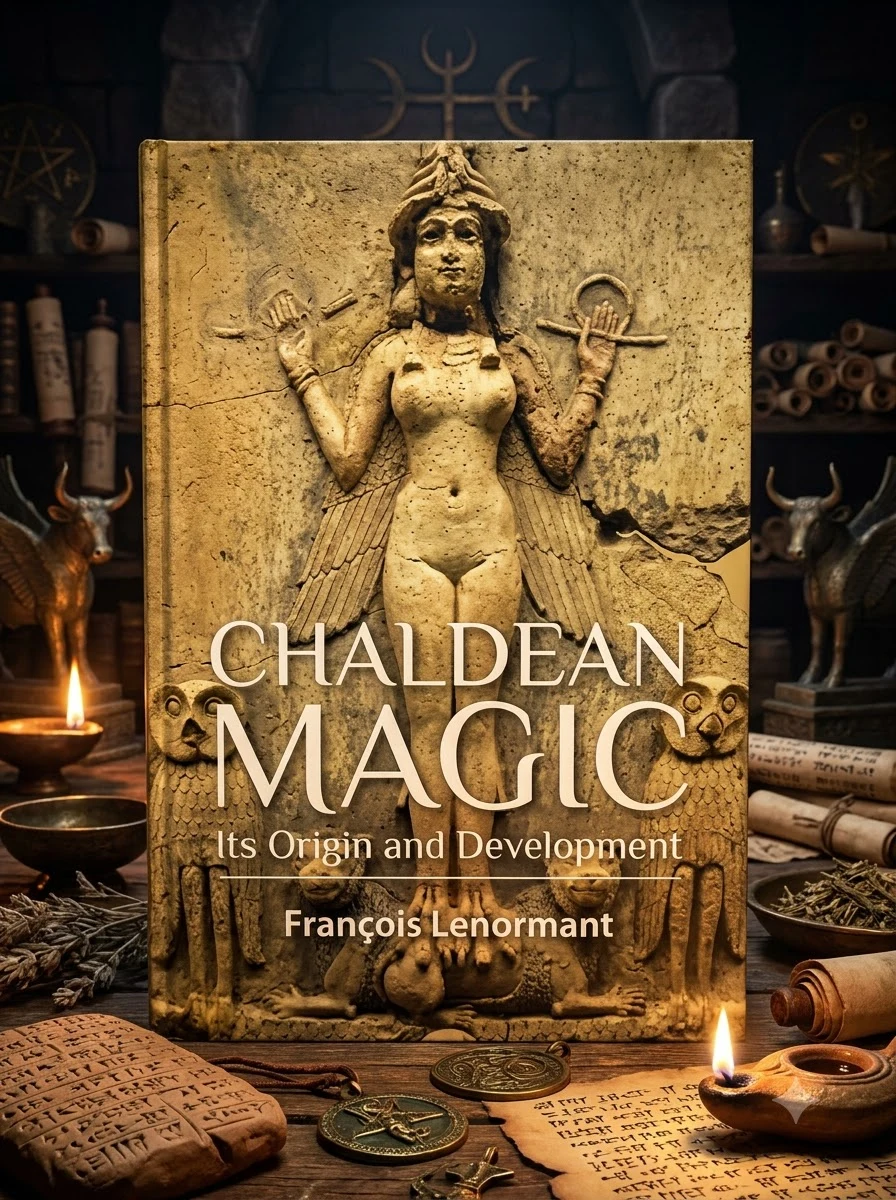
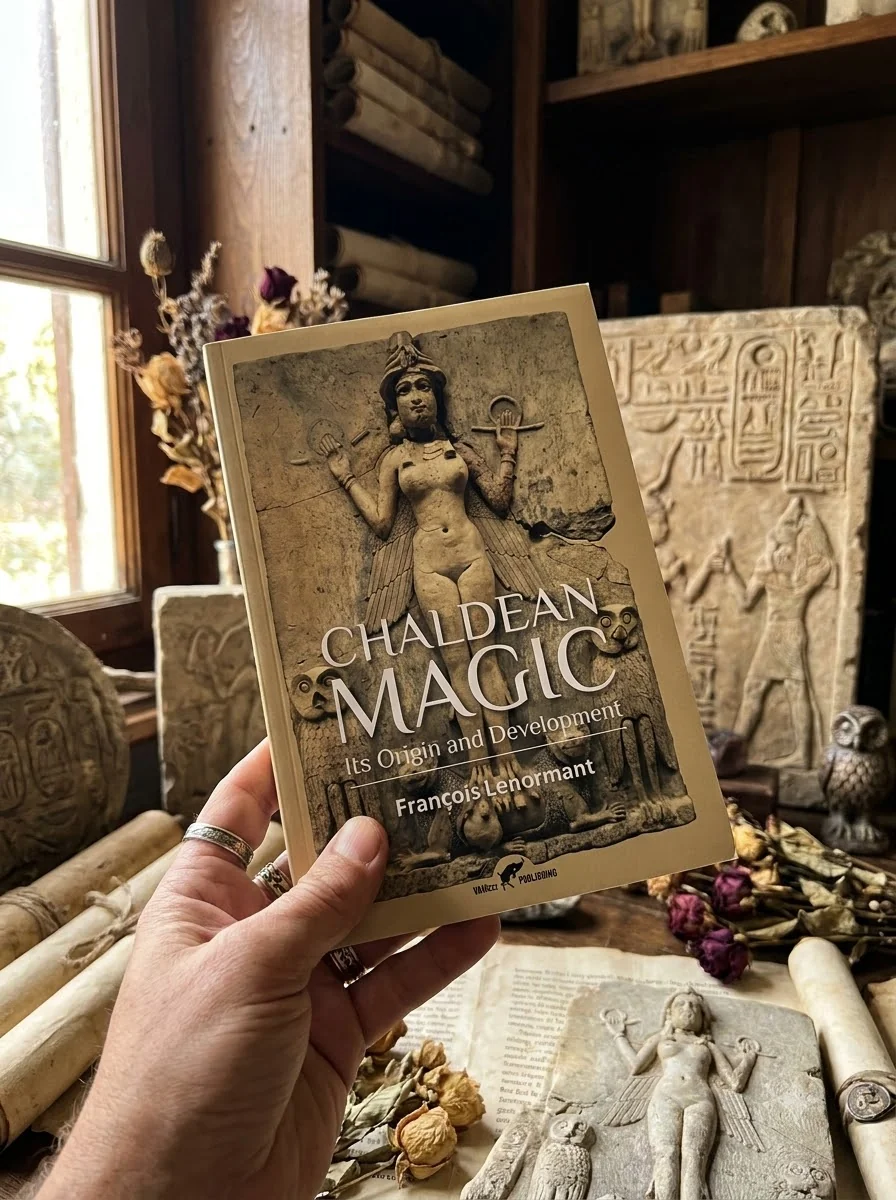
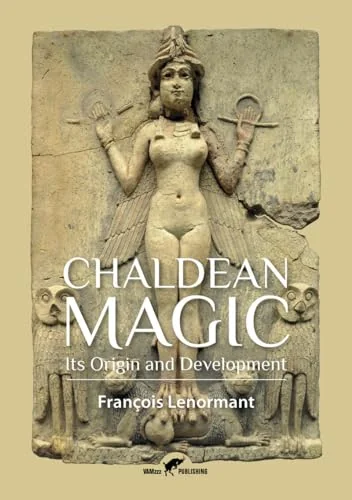
Chaldean Magic: Its Origin and Development
✍️ Lenormant, FrançoisAn enlarged 1874 study of Chaldean magic, cuneiform texts, demonology, and comparative ancient mythology.
This edition expands upon Lenormant's earlier studies, Les Premieres Civilisations and La Divination et la Science des Présages. By analyzing Assyrian thought directly from cuneiform inscriptions, Lenormant highlights how Chaldean beliefs bridge pre-systemic shamanism and structured occultism. The text examines spirits that coalesced with natural powers, giving readers an detailed look into ancient demonology. The volume includes a Post Scriptum with an extensive author biography and bibliography.
First published in France during 1874, this work sits between older shamanistic practices and the formal systematization of nineteenth-century occult study. It analyzes Assyrian, Akkadian, Egyptian, Median, and Finno-Tartarian religious traditions through cuneiform linguistic evidence.


📝 Description: Chaldean Magic: Its Origin and Development
💎 Expert review
📖 Why choose it
Why this book is worth reading
Dedicated practitioners of ceremonial magic and serious academic researchers will find immense value in this meticulously expanded study. Lenormant offers a rare glimpse into the primordial roots of magical practice, tracing its evolution from ancient Chaldea through to contemporary esoteric thought. By comparing Chaldean rituals with Egyptian, Median, and Akkadian traditions, the book reveals profound cross-cultural connections often overlooked in superficial guides. It is particularly beneficial for those seeking to understand the theoretical underpinnings of demonology, including incubi, succubi, and elemental spirits, within a historical framework that validates modern occultism’s ancient lineage.
⭐ Reader reviews
Reader rating
While Lenormant’s work is undeniably significant for its comparative analysis and vivid detailing of Chaldean demonology, it is not for the casual reader seeking quick spell instructions. The text demands patience and an interest in dense historical comparison rather than practical application. Readers looking for simplified, modernized interpretations of magic may find the academic rigor and focus on ancient shamanic lore tedious. It is best suited for those willing to engage with complex cultural intersections and who appreciate a scholarly approach to the origins of esoteric systems over immediate usability.
❓ Frequently asked questions
📖 Who should read this
For scholars of ancient civilizations, religion, or anthropology, and for modern occultists seeking the historical bedrock of their practices, this volume is indispensable. It provides a unique window into the foundational esoteric thought that predates many known magical traditions.
🎯 Key themes and symbolism
Demonic Entities and Nature
The text provides a fascinating deep dive into the intricate hierarchy of Chaldean demons. Readers will encounter detailed descriptions of incubi, succubi, vampires, and other elemental spirits, revealing their close connection to the fundamental forces of nature and the primeval world. This section offers unique insights into ancient conceptions of malevolent spiritual forces.
Bridging Ancient Occult Systems
Lenormant's work uniquely traces the historical trajectory of occult thought, from its nascent forms in pre-shamanistic traditions through to the more systematized magical philosophies that emerged later. It demonstrates how early Chaldean practices laid groundwork for subsequent esoteric developments, offering a crucial perspective on the evolution of magic itself.
📜 Historical context
📚 Glossary
- Chaldea
- Cuneiform
- Demonology
📔 Questions to reflect on
- How do ancient Chaldean concepts of elemental spirits compare to modern understandings of nature's subtle energies or spiritual entities?
- Considering the book's comparative approach, what insights can be gained by examining similar magical systems from entirely different cultures and time periods?
- If Lenormant regarded his revised English edition as a new work, what does this tell us about the evolving nature of scholarly research and the pursuit of truth in esotericism?