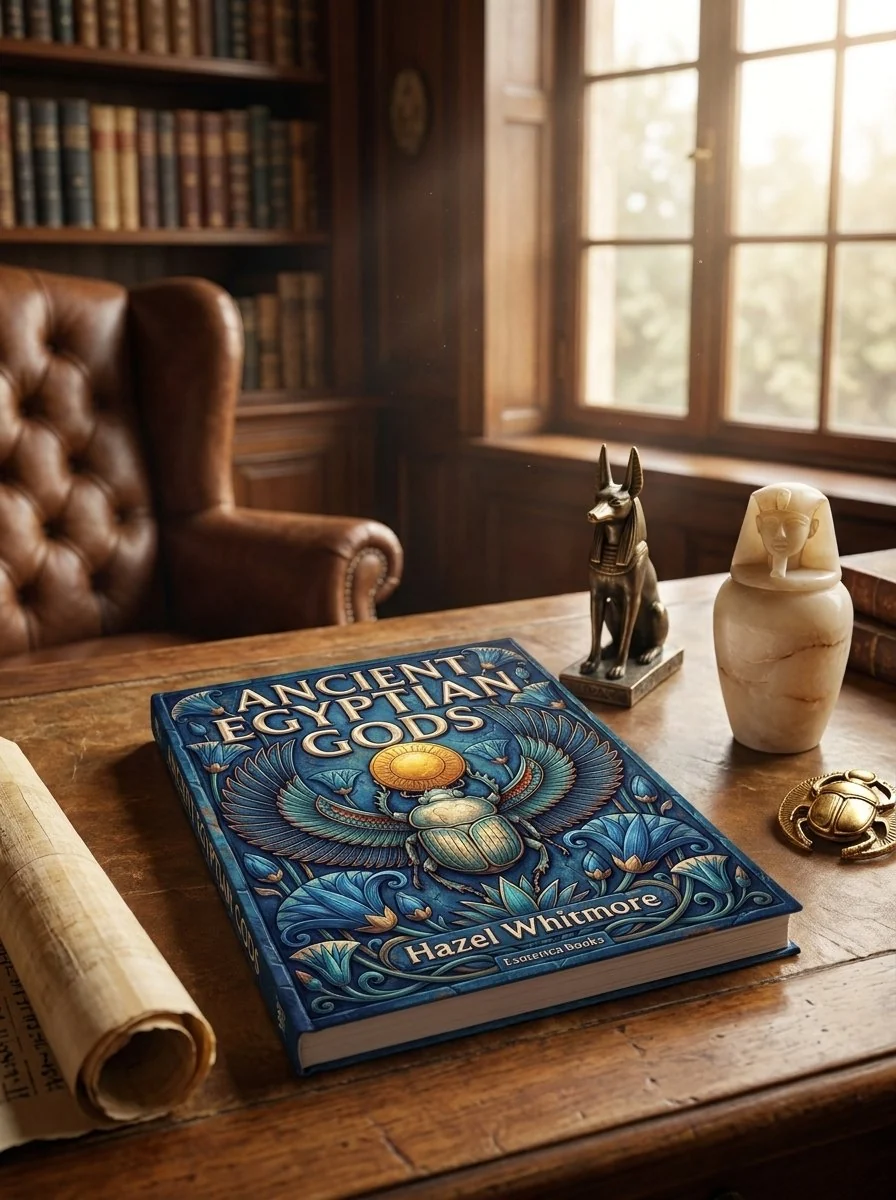
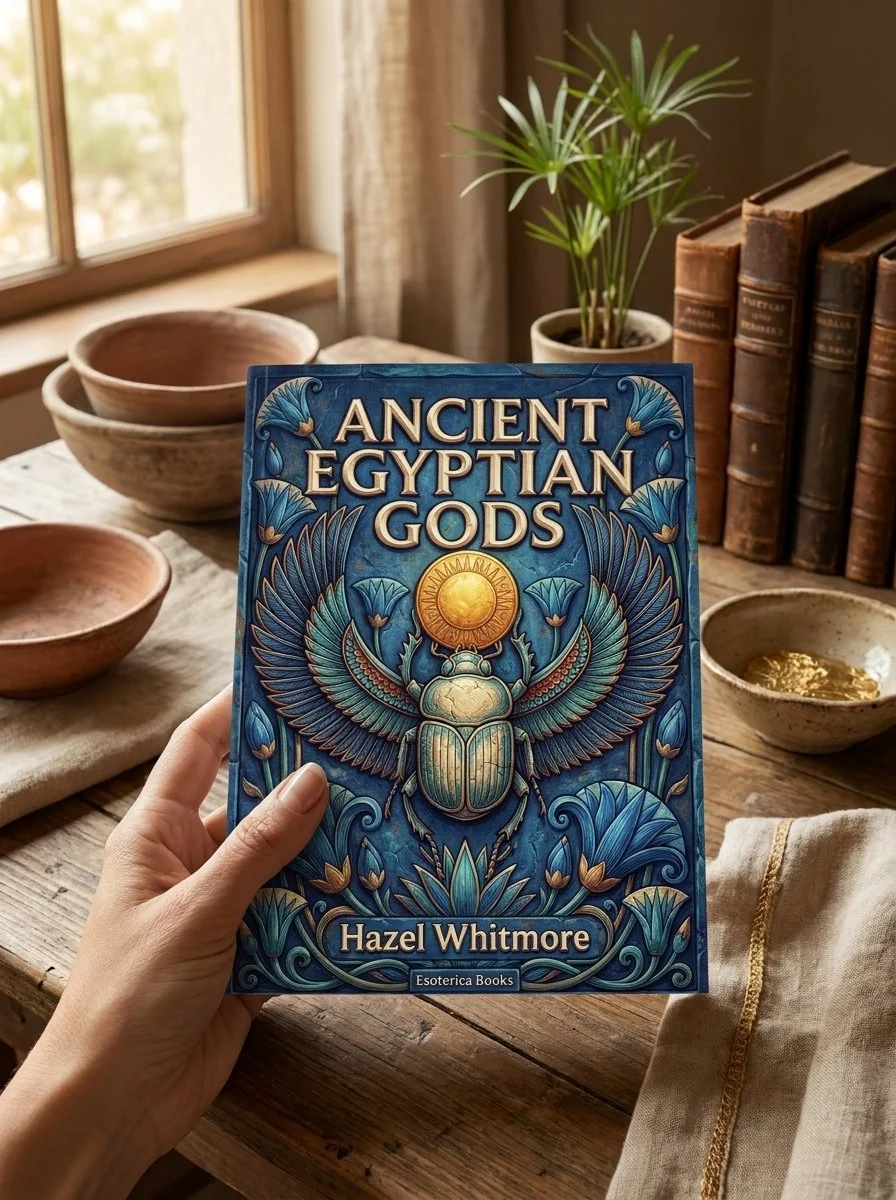
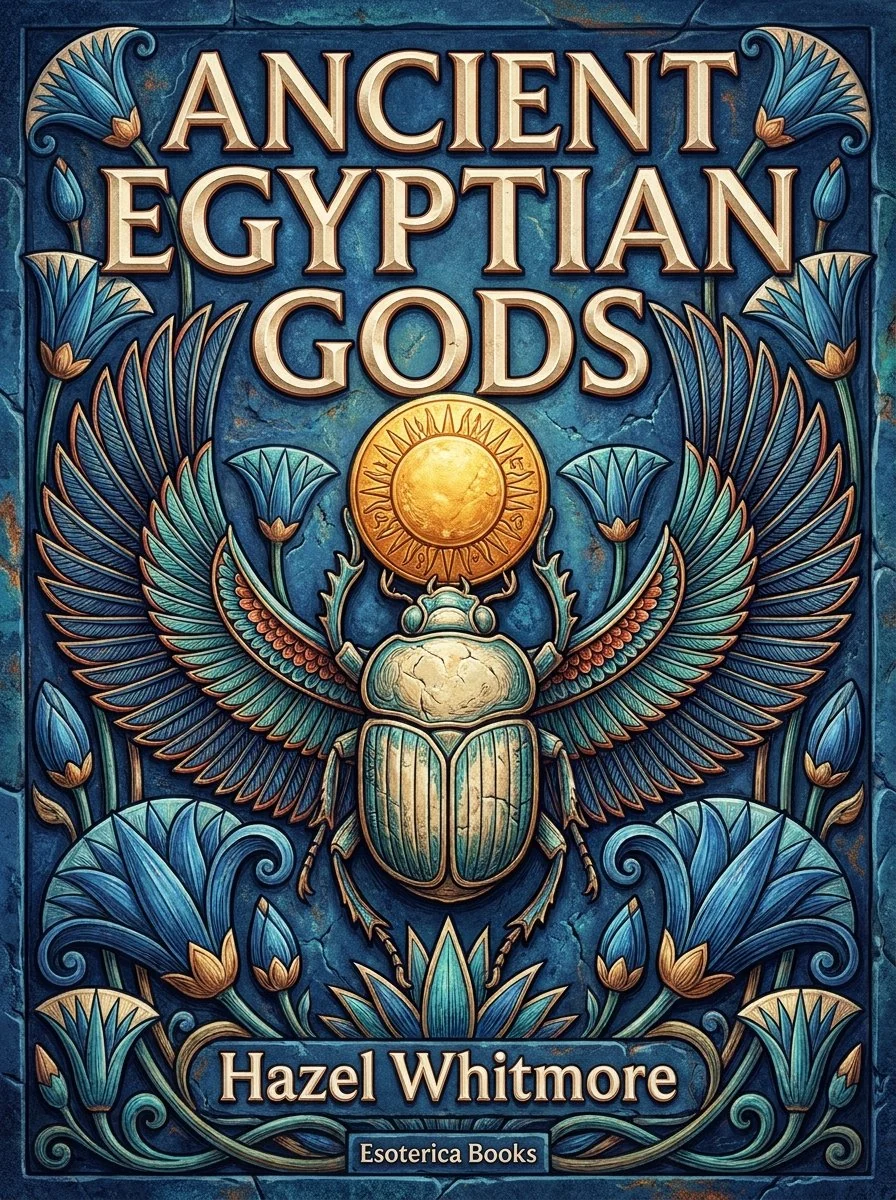
Ancient Egyptian Gods: A Practical Guide
Meet ten Egyptian gods, explore their creation stories, and build a personal devotional practice with the N.E.T.E.R. Method.
Discover the ancient Egyptian pantheon through ten major gods and goddesses, their sacred symbols, divine families, and fascinating creation myths. This beginner-friendly guide introduces Ra, Osiris, Isis, Horus, Anubis, Thoth, Bastet, Hathor, Amun-Ra, and Nut, explaining their roles in Egyptian mythology and religious life. Using the original five-stage N.E.T.E.R. Method, readers move from discovering the deities to creating a thoughtful personal devotional practice with simple altars, traditional-inspired offerings, symbolic objects, prayers, and reflective journaling.
Ancient Egyptian religion was polytheistic, with numerous deities whose identities, attributes, and relationships could overlap or vary across religious traditions. This guide approaches the pantheon through its mythology and symbolism while distinguishing contemporary personal devotional arrangements from ancient temple practices.


📝 Description: Ancient Egyptian Gods: A Practical Guide
📖 Why choose it
Why this book is worth reading
Egyptian mythology can feel overwhelming when different gods share attributes, divine families overlap, and creation stories offer several explanations for the world's beginnings. This guide provides an approachable starting point without requiring prior knowledge. Its greatest practical strength is the connection between learning and doing: after discovering a deity's mythology and symbolism, you can prepare an offering, arrange a devotional space, write a prayer, or record your reflections. The N.E.T.E.R. framework gives these activities a clear and memorable structure.
⭐ Reader reviews
Reader rating
This guide takes a practical, beginner-friendly approach to a subject that can easily become confusing. Its introduction to ten central deities provides a useful starting point, while the chapters on creation traditions, divine families, and the stories of Osiris, Isis, and Horus give the pantheon a recognizable structure. The N.E.T.E.R. Method is a particularly useful organizational feature, connecting mythology and symbolism with devotional activities such as preparing offerings, arranging an altar, and keeping a journal. The inclusion of practical candle and incense safety is welcome. One limitation: readers seeking an advanced historical or Egyptological examination will find the treatment introductory rather than scholarly. Editorially, its strength is accessibility and practical application.
❓ Frequently asked questions
📖 Who should read this
Ideal for complete beginners interested in ancient Egyptian gods and goddesses, mythology, sacred symbolism, and contemporary devotional practices. It also suits readers who want practical guidance for creating a personal altar and exploring Egyptian spirituality through study, offerings, and reflection.
🎯 Key themes and symbolism
Egyptian Pantheon
Creation Mythology
Sacred Symbols
Modern Devotion
📜 Historical context
📚 Glossary
- Egyptian pantheon
- Ma'at
- Heliopolitan Ennead
- Hermopolitan Ogdoad
- Offering
- N.E.T.E.R. Method
📔 Questions to reflect on
- Which Egyptian deity first captured your attention, and what particular symbols, stories, or qualities made you curious about this god or goddess?
- How do the different Egyptian creation traditions, especially Heliopolis, Hermopolis, and Memphis, expand your understanding of how ancient Egyptians imagined the beginning of the world?
- If you created a devotional space today, which deity would you honor, what three symbolic objects would you include, and what words would you write in your opening intention?
📖 Read on the blog
✍️ More books by this author Hazel Whitmore



🏛 Books from this publisher Esoterica Books
You might also like
See more →
Have a question about this item?
Ask about the edition, condition, delivery or anything else — we reply by email or phone, usually within a day.
