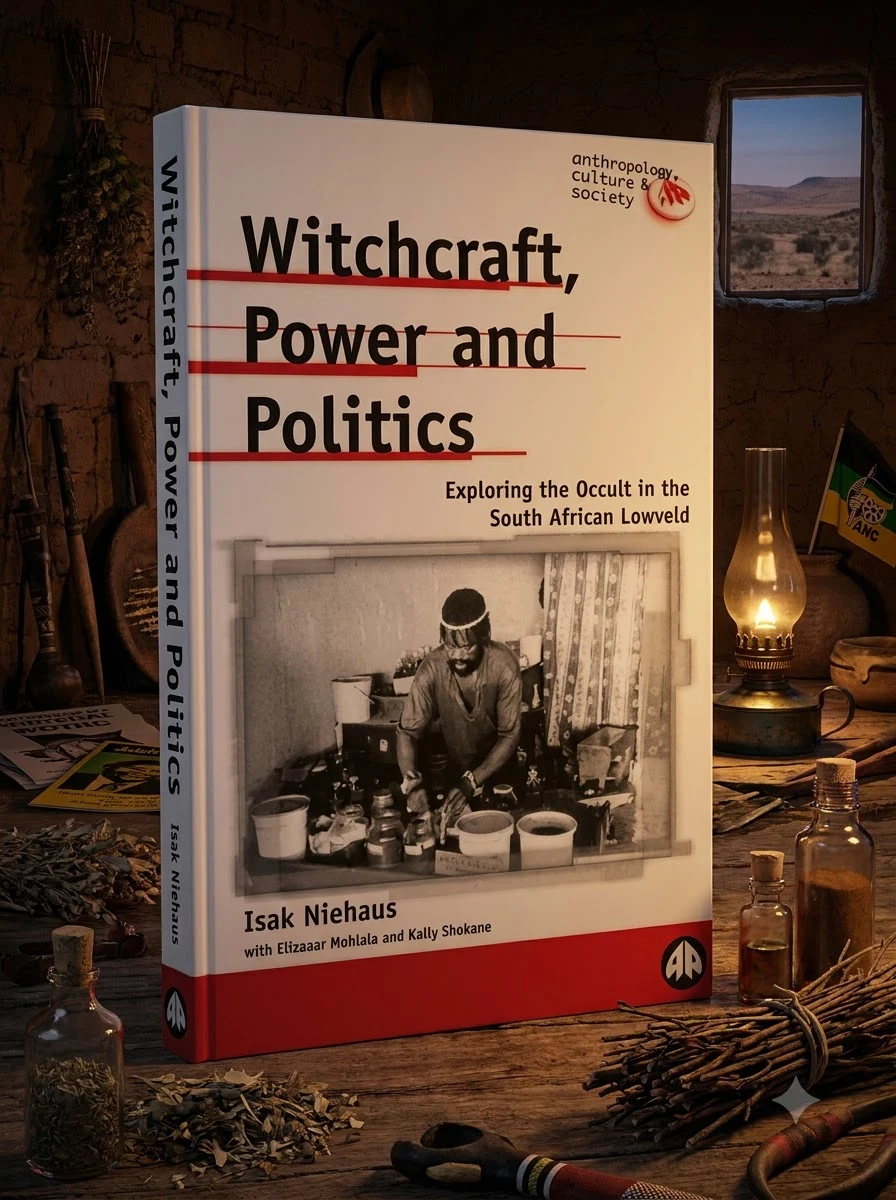
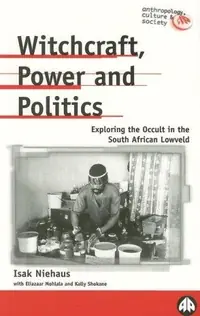
Witchcraft, Power and Politics: Exploring the Occult in the South African Lowveld Niehaus, Isak
Niehaus, Isak; , Mohlala, Eliazaar; , Shokaneo, KallyStock reported in the catalog; fulfillment is confirmed with your request.
Uncover the potent entanglement of sorcery and power in tumultuous apartheid-era South Africa.
Isak Niehaus delivers a compelling ethnographic exploration of witchcraft and its pursuit within 1980s South Africa. This study meticulously unpacks how magical beliefs were interwoven with profound social upheaval, deeply influenced by contemporary political and economic forces. Niehaus reveals how the apartheid regime, liberation struggles, and the post-apartheid era each shaped perceptions of sorcery. He illustrates how political factions, including the ANC, leveraged these beliefs, and examines the evolving roles of traditional chiefs and the Christian church, alongside fraught intergenerational and gender relations. This offers deep insight into the complex dynamics of power.
This work sits firmly within the anthropological study of contemporary African esotericism, specifically examining the intersection of traditional magic and modern political struggle in late twentieth-century South Africa.


📝 Description: Witchcraft, Power and Politics: Exploring the Occult in the South African Lowveld Niehaus, Isak
💎 Expert review
📖 Why choose it
Why this book is worth reading
Readers deeply interested in the sociology of power, the anthropology of religion, and post-colonial studies will find this ethnographic exploration profoundly rewarding. It offers a rare, nuanced window into how magical beliefs are not merely superstitions but active political tools during times of immense social upheaval. Those fascinated by the complex interplay between traditional authority figures, liberation movements, and religious institutions in South Africa will gain critical insights into how sorcery accusations reflect broader societal tensions. This book is essential for understanding the lived experience of apartheid and its aftermath through the lens of occult practice, revealing how ordinary people navigate extraordinary political forces.
⭐ Reader reviews
Reader rating
This text provides a rigorous academic analysis of witchcraft’s role in South African politics, appealing primarily to scholars and serious students of anthropology or history. It is dense with ethnographic detail and theoretical framing, making it unsuitable for casual readers seeking light fantasy or simple spiritual guides. The narrative prioritizes complex socio-political dynamics over accessible storytelling, which may alienate those expecting a straightforward historical account or practical magical instruction. Readers looking for entertainment or simplistic explanations of occult practices will likely find this work too academic and dry.
❓ Frequently asked questions
📖 Who should read this
If you're fascinated by the intersection of anthropology, political science, and the occult, or seeking to understand how magical beliefs adapt and thrive amidst profound social change, this book is essential. It offers a nuanced perspective for those interested in African history and power dynamics.
🎯 Key themes and symbolism
Witchcraft as Social Drama
This book reframes witchcraft not as an outdated superstition, but as a dynamic cultural phenomenon deeply enmeshed in everyday life. Niehaus demonstrates how accusations and beliefs serve as a lens through which communities interpret and respond to rapid social change, economic pressures, and political shifts, highlighting its contemporary relevance beyond mere folklore.
The Politics of Sorcery
Niehaus exposes how various political entities, from the apartheid state to the ANC, strategically utilized witchcraft beliefs to advance their agendas. This theme illustrates how accusations and fear of magic became tools for control, dissent, and power consolidation, revealing the profound political dimensions embedded within seemingly supernatural phenomena.
Modernity and Tradition Intersect
The study challenges simplistic notions of 'traditional' witchcraft existing in isolation. Instead, it shows how magical practices and beliefs are continually reinterpreted and adapt within a modernizing world, particularly during periods of intense political transformation. It highlights the complex interplay between enduring cultural practices and contemporary societal pressures.
💬 Quotes from the book
“Witchcraft, in the Lowveld, was not a relic of a forgotten past but a living, breathing force, perpetually re-negotiated within the crucible of political change.”
“The accusations of sorcery often served as a potent, albeit veiled, commentary on emerging inequalities and the shifting landscape of power between generations and genders.”
📜 Historical context
📚 Glossary
- Ethnography
- Apartheid
- Lowveld
📔 Questions to reflect on
- How might our own contemporary societal anxieties manifest through belief systems that appear to be 'traditional' or 'supernatural'?
- Consider a historical or current political movement. How could accusations or fears of 'otherness' (like witchcraft) be leveraged to consolidate power or suppress dissent?
- In what ways do changes in economic or political structures impact intergenerational relationships, and how might these tensions find expression in cultural beliefs?
✍️ More books by this author Niehaus, Isak; , Mohlala, Eliazaar; , Shokaneo, Kally
All books by this author →
🏛 Books from this publisher Pluto Press (UK)
All books from this publisher →You might also like
See more →
 91
91