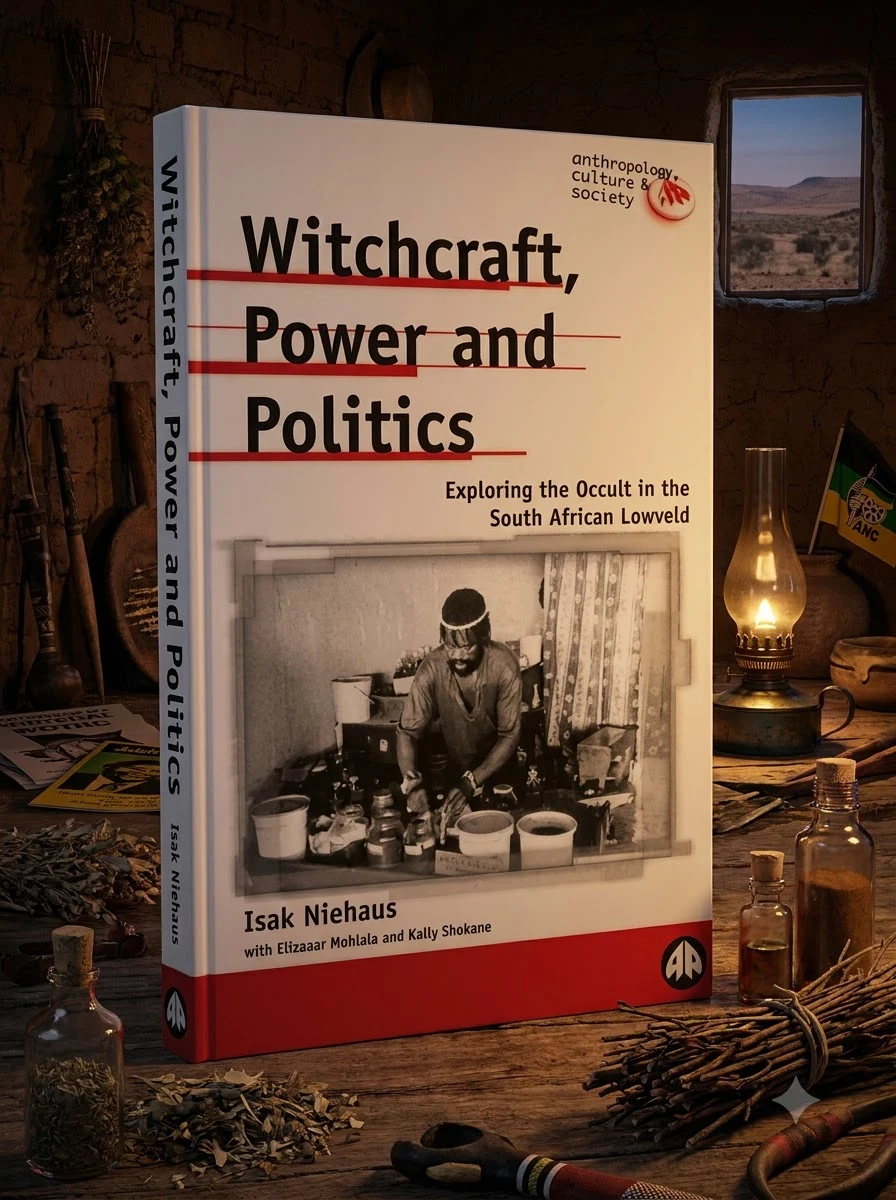
Witchcraft, Power and Politics: Exploring the Occult in the South African Lowveld Niehaus, Isak
Niehaus, Isak; , Mohlala, Eliazaar; , Shokaneo, Kally 86
86
 Editorial score
How we rate
Editorial score
How we rate
This edition can be ordered. No arrival date is confirmed.
Witchcraft isn't ancient superstition, but a potent force shaping modern South African politics.
Isak Niehaus, along with Mohlala and Shokaneo, delivers an incisive ethnographic study, dissecting the intricate role of witchcraft in South Africa during the tumultuous 1980s and its transition to post-apartheid. This work challenges the simplistic view of witchcraft as a mere relic of tradition, instead revealing it as a dynamic social drama profoundly intertwined with the era's political shifts, economic pressures, and the struggles for power. It meticulously illustrates how these beliefs were instrumentalized by various factions, from political movements to traditional authorities, and how they reflected deep-seated societal tensions.
This work sits within the tradition of critical ethnography and political anthropology, examining how occult beliefs function as active agents in contemporary state formation rather than static cultural relics.


📝 Description: Witchcraft, Power and Politics: Exploring the Occult in the South African Lowveld Niehaus, Isak
💎 Expert review
📖 Why choose it
Why this book is worth reading
Scholars and readers interested in the intersection of spirituality and governance will find this text indispensable. It offers a rare, grounded perspective on how witchcraft operates not as superstition but as a political tool during South Africa’s turbulent transition. By analyzing the Lowveld specifically, it reveals how power dynamics were negotiated through occult lenses. Those seeking to understand the complexities of post-apartheid society, economic pressure, and traditional authority will gain valuable insights into the mechanisms of social control and resistance. It is essential for anyone wishing to move beyond theoretical abstractions and see the tangible impact of belief systems on modern political landscapes.
⭐ Reader reviews
Reader rating
This is a dense, academic ethnography that demands patience and intellectual rigor from its audience. While intellectually stimulating for those studying political anthropology or African studies, it will likely alienate casual readers seeking accessible narratives or practical magical guidance. The text prioritizes complex sociological analysis over engaging storytelling, making it unsuitable for those who prefer light reading or straightforward historical accounts without deep theoretical framing.
❓ Frequently asked questions
📖 Who should read this
If you're drawn to the intersection of anthropology, political science, and occult studies, or seek to understand how deeply spiritual beliefs can shape contemporary societal structures and power dynamics, this book offers an essential and illuminating perspective on a complex subject.
🎯 Key themes and symbolism
Witchcraft as Social Drama
This book masterfully reframes witchcraft, moving beyond its categorization as a primitive belief. It demonstrates how accusations and fears function as a complex social language, expressing and mediating deep-seated conflicts, anxieties, and power struggles within communities, particularly during periods of profound societal upheaval and change.
Politicization of Belief
Niehaus meticulously unpacks how witchcraft beliefs were strategically leveraged by political entities, including the ANC, within the context of apartheid, the liberation movement, and the emerging post-apartheid state. This reveals how spiritual convictions can become potent tools in political agendas and power consolidation.
Shifting Social Hierarchies
The study illuminates the evolving roles of traditional leaders and the Christian church amidst rapid change, often toward more conservative stances. Furthermore, it exposes the underlying tensions in intergenerational and gender relations, showing how witchcraft accusations frequently become a proxy for these societal fault lines.
💬 Quotes from the book
“The accusation of witchcraft, far from being a static remnant of ancient superstition, revealed itself as a fluid social currency, meticulously deployed to negotiate power, express dissent, and solidify allegiances in a landscape fractured by political upheaval.”
“In the shadow of a changing regime, traditional healers and Christian ministers alike found their authority challenged, their pronouncements on the occult often bending to the prevailing political winds, reflecting a society grappling with its spiritual and secular leadership.”
📜 Historical context
📚 Glossary
- Ethnography
- Lowveld
- Apartheid
📔 Questions to reflect on
- Reflect on a time when a belief system, seemingly outside of mainstream politics, was used to influence or manipulate a political or social outcome.
- How might rapid societal change, like the transition from apartheid, intensify existing intergenerational or gender conflicts, and how might these tensions manifest in unexpected ways?
- Consider the concept of "traditional culture" in your own context. How might seemingly ancient practices or beliefs be actively shaped and reinterpreted by modern political or economic forces?
✍️ More books by this author Niehaus, Isak; , Mohlala, Eliazaar; , Shokaneo, Kally
All books by this author →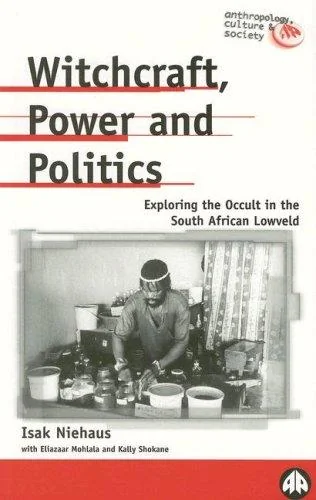
🏛 Books from this publisher Pluto Press (UK)
All books from this publisher →You might also like
See more →