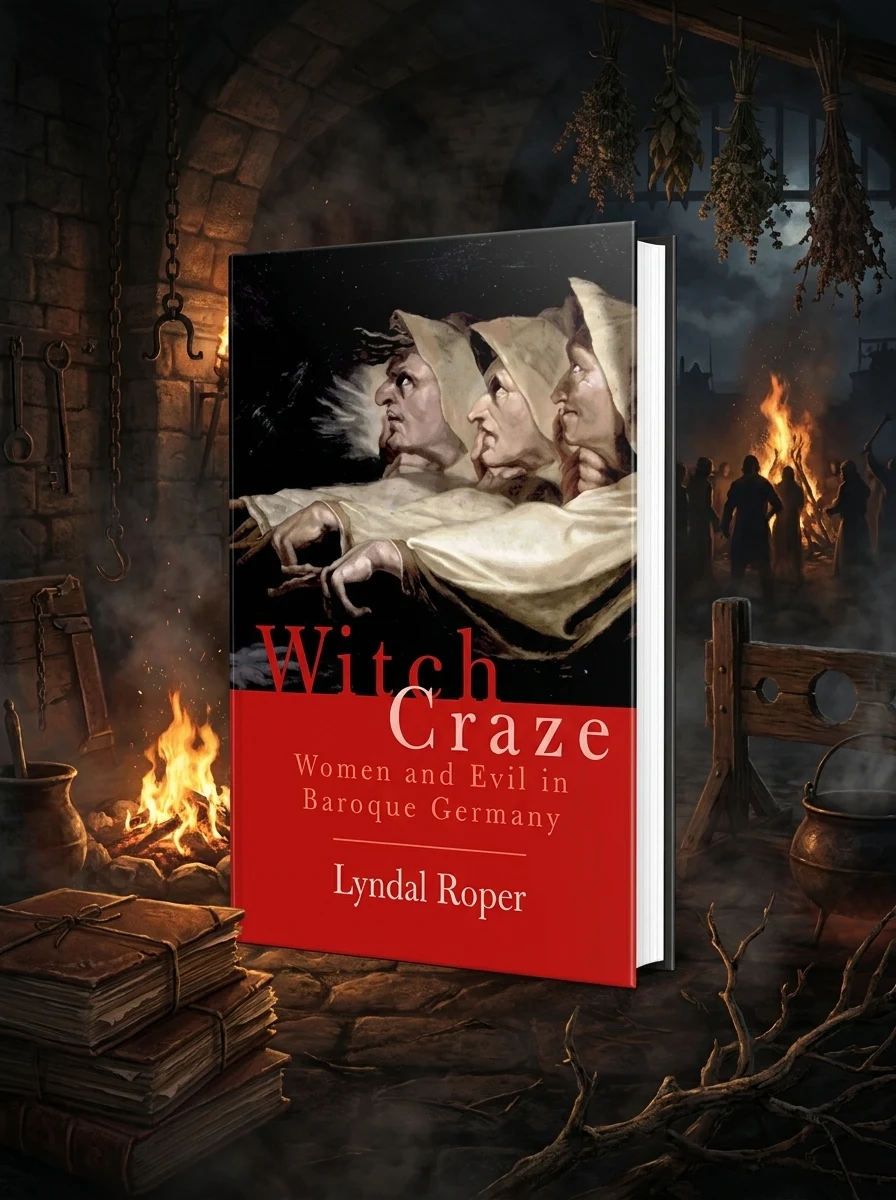
Witch Craze: Terror and Fantasy in Baroque Germany
This edition can be ordered. No arrival date is confirmed.
Uncover the terrifying psychology behind the Baroque witch hunts through rare German trial records.
Lyndal Roper delves deep into the grim reality of witch trials in sixteenth and seventeenth-century Southern Germany. By analyzing hundreds of original court transcripts, she reconstructs the lives of the accused, revealing how societal anxieties transformed elderly women into scapegoats. This work moves beyond mere chronology to explore the psychological mechanisms of fear and the cultural construction of evil. It examines how torture extracted confessions and how literary depictions of witches influenced the demonization of older women, offering a chilling look at the intersection of gender, power, and superstition in early modern Europe.
This work sits firmly within the historiography of early modern Europe, specifically examining the intersection of gender, power, and superstition during the Baroque period in Southern Germany. It contributes to the broader scholarly discourse on how societal anxieties were projected onto marginalized figures through legal and cultural mechanisms.


📝 Description: Witch Craze: Terror and Fantasy in Baroque Germany
💎 Expert review
📖 Why choose it
Why this book is worth reading
Scholars, historians, and readers deeply interested in the psychological underpinnings of historical persecution will find immense value in this text. By leveraging rare German trial records, the author reconstructs the grim realities faced by elderly women who became scapegoats for societal fears. This book is essential for those seeking to understand not just the chronology of events, but the cultural construction of evil and the specific mechanisms of torture that extracted confessions. It offers a chilling, nuanced look at how literary depictions influenced demonization, making it vital for anyone exploring the complex dynamics of gender and power in early modern Europe.
⭐ Reader reviews
Reader rating
Honestly wasn't sure what to expect, but I'm impressed. You can tell why this work has endured. Highly recommend to serious students.
Took a chance on this and glad I did. I appreciated how the argument builds steadily from first principles. Plenty of passages worth underlining; my copy is already full of margin notes. Delivery took a bit longer than quoted. Still worth having on the shelf.
Lyndal Roper provides a rigorous, psychologically grounded analysis of Baroque witch hunts, moving beyond simple chronology to explore the terrifying mechanics of fear. While the reliance on original court transcripts offers unique insight into the lives of the accused, this academic density may alienate casual readers seeking narrative flair or accessible storytelling. Those looking for a light read or a focus on Wiccan spirituality rather than historical trauma will likely find this text too dense and grim. However, for those committed to understanding the cultural construction of evil through primary sources, it remains an indispensable, albeit heavy, contribution to esoteric history.
❓ Frequently asked questions
📖 Who should read this
Readers interested in the sociological roots of religious persecution, the history of gender dynamics in early modern Europe, and those seeking to understand how cultural narratives shape historical violence against marginalized groups.
🎯 Key themes and symbolism
Gendered persecution
Psychology of mass hysteria
Cultural demonization of aging
💬 Quotes from the book
“The witch was not just a criminal, but a mirror reflecting society's deepest fears about female autonomy and aging.”
“Confessions were not truths, but narratives forced into existence by the machinery of the state.”
📜 Historical context
📚 Glossary
- Baroque Germany
- Trial Transcripts
- Scapegoating
📔 Questions to reflect on
- How do modern societal fears create new 'witches' or scapegoats in contemporary culture?
- In what ways does ageism intersect with gender bias in historical and current narratives?
- How can we distinguish between genuine historical testimony and coerced confessions in primary sources?
🏛 Books from this publisher Yale University Press
All books from this publisher →

You might also like
See more →

 91
91