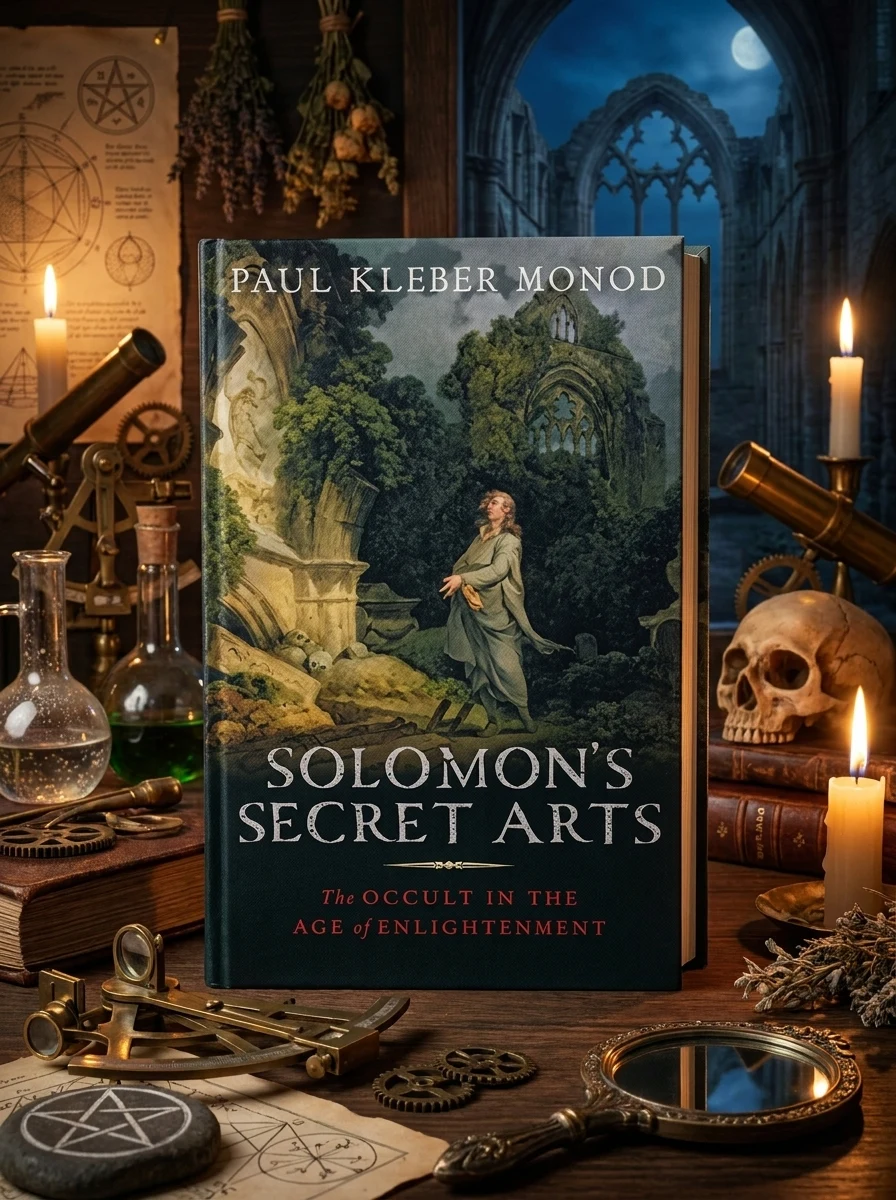
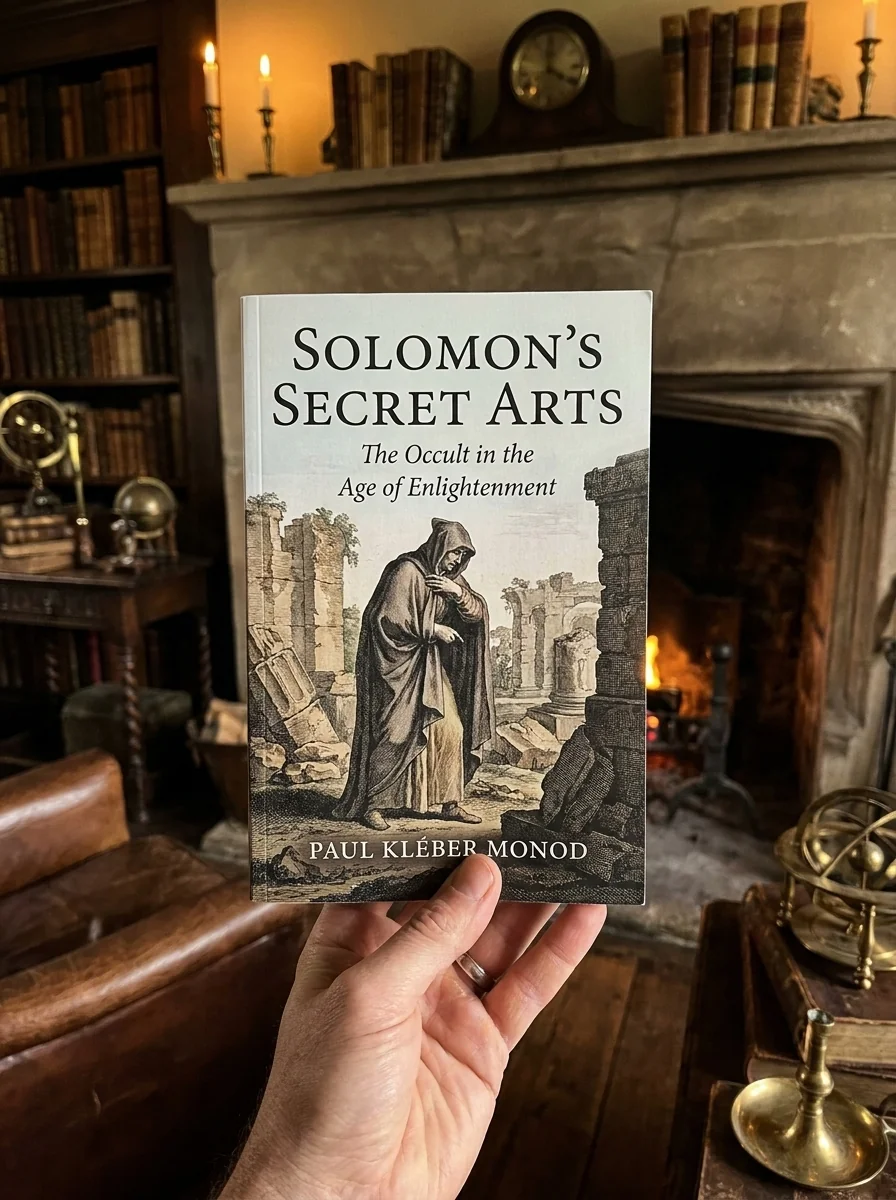
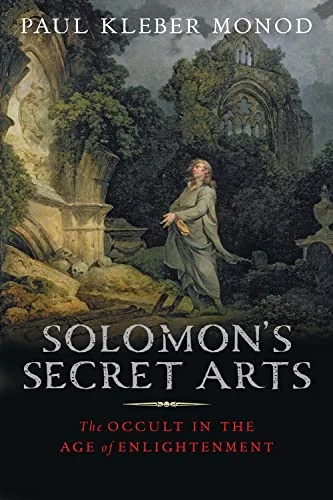
Solomon's Secret Arts: The Occult in the Age of Enlightenment
Paul Monod challenges conventional wisdom, revealing that the architects of the Enlightenment—figures like Newton and Locke—were often deeply engaged with the spiritual, the magical, and the occult. This compelling work illustrates how, despite an emphasis on reason and science, esoteric traditions not only endured but thrived, particularly in clandestine circles. From a mid-eighteenth-century resurgence to its undeniable influence on political radicalism and early Romantic literature, Monod meticulously demonstrates that the occult was never truly discarded. Instead, it subtly wove itself into the fabric of modern thought, proving its enduring relevance beyond a mere relic of the past.


Praise for this book
“[A] serious yet lively work, chockablock with facts, anecdotes, and original research.”
📝 Description: Solomon's Secret Arts: The Occult in the Age of Enlightenment
📑 What's inside
- List of Illustrations
- Acknowledgments
- Introduction: What Was the Occult?
- Part 1. Aurora, 1650-1688
- Chapter 1. The Alchemical Heyday
- Chapter 2. The Silver Age of the Astrologers
- Chapter 3. The Occult Contested
- Part 2. Eclipse, 1688-1760
- Chapter 4. A Fading Flame
- Chapter 5. The Newtonian Magi
- Chapter 6. The Occult on the Margins
- Part 3. Glad Day, 1760-1815
- Chapter 7. The Occult Revival
- Chapter 8. An Occult Enlightenment?
- Chapter 9. Prophets and Revolutions
- Conclusion
- Manuscript Sources
- Notes
- Index
💎 Expert review
📖 Why choose it
Why this book is worth reading
Readers fascinated by the hidden undercurrents of history will find this book indispensable for understanding how spiritual and magical traditions survived the rise of reason. Monod offers a compelling correction to the standard view that the Enlightenment was purely secular, revealing how figures like Newton engaged deeply with esoteric knowledge. If you are interested in the intersection of science, politics, and mysticism, or if you wish to trace the roots of early Romanticism through its occult influences, this text provides a meticulous and necessary perspective on how these hidden currents shaped modern thought.
⭐ Reader reviews
Reader rating
Monod’s scholarship is rigorous, yet this volume demands patience from readers expecting a conventional history of science. It is not suitable for those who prefer straightforward narratives that strictly separate the Enlightenment's rational achievements from its mystical dimensions, nor for casual readers seeking accessible popular history without academic depth. However, for those willing to engage with complex arguments about political radicalism and spiritual endurance, it is a vital corrective. The book successfully demonstrates that esoteric traditions were not discarded but subtly wove themselves into the fabric of modern intellectual life, proving their enduring relevance beyond mere relics.
❓ Frequently asked questions
📖 Who should read this
If you're fascinated by the hidden histories of ideas, or if the interplay between science, spirituality, and societal change intrigues you, this book is essential. It offers a profound re-evaluation for anyone curious about the true intellectual tapestry of the Enlightenment.
🎯 Key themes and symbolism
Enlightenment's Occult Core
This book brilliantly exposes the surprising paradox of the Age of Reason: its most esteemed thinkers, often lauded for their scientific and empirical breakthroughs, also harbored profound interests in esoteric and magical practices. It recontextualizes the intellectual landscape, suggesting a more complex, less purely rational foundation for modern thought than commonly understood.
Resilient Esoteric Traditions
Monod traces the subterranean survival and eventual resurgence of occult practices throughout the late seventeenth and eighteenth centuries. Despite periods of official suppression, these traditions found new life, particularly with the emergence of anti-establishment religious movements, demonstrating their deep-seated appeal and adaptability in a changing world.
Modernity's Esoteric Roots
Far from being an archaic curiosity, the occult is presented here as an integral, formative element of the modern world. The book argues that these spiritual arts were not abandoned but were reincorporated into new systems of knowledge and cultural expressions, influencing everything from political radicalism to the nascent Romantic movement, shaping our present.
📜 Historical context
📚 Glossary
- Enlightenment
- Occultism
- Empiricism
📔 Questions to reflect on
- How does acknowledging the occult interests of Enlightenment figures change your perception of that era?
- Consider how seemingly contradictory belief systems might coexist or even inform each other in contemporary society. Can you think of examples?
- If the occult wasn't discarded but incorporated into new forms of learning, what might that imply about the nature of 'progress' in human thought?