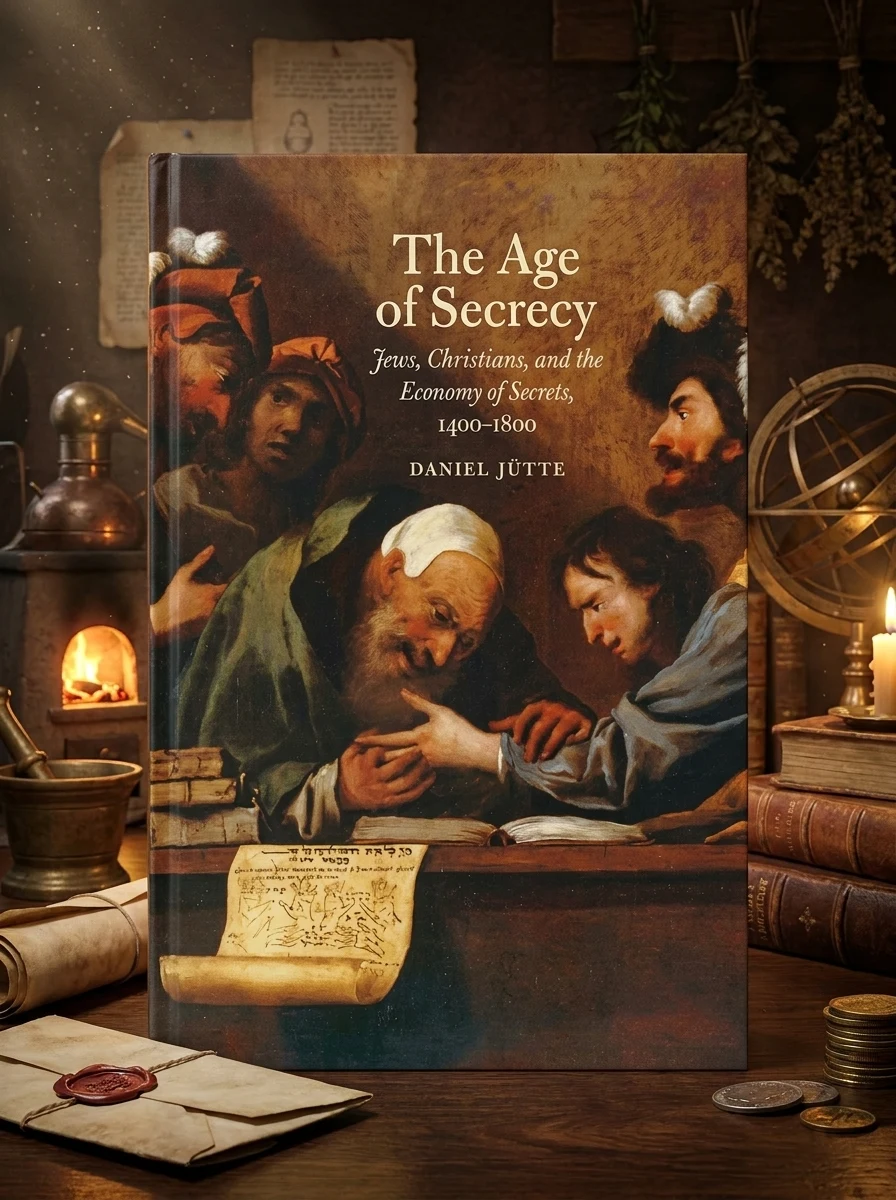
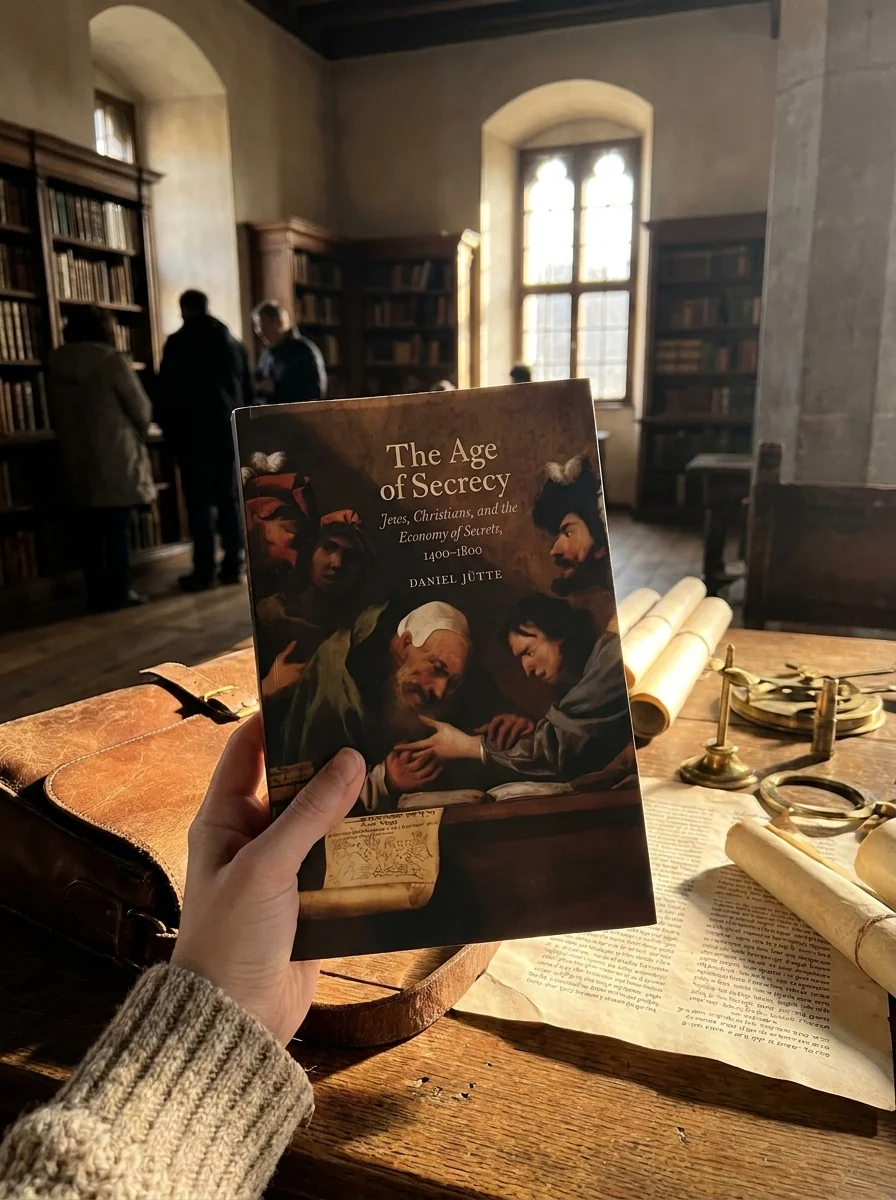
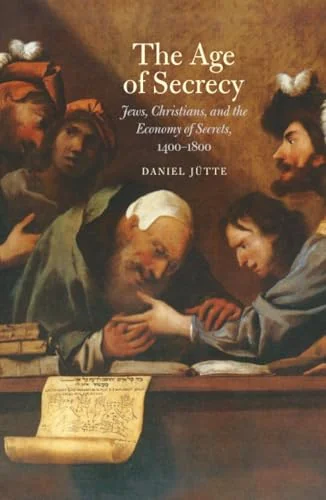
Age of Secrecy: Jews, Christians, and the Economy of Secrets, 1400-1800
This compelling historical inquiry delves into a pivotal era, from the fifteenth to the eighteenth centuries, when Europe was profoundly influenced by the pervasive belief in secrets. Far from being mere curiosities, arcane insights were considered essential, positive knowledge permeating every facet of society. This book meticulously traces how these concealed truths, ranging from economic strategies and scientific discoveries to political maneuvering and mystical practices, formed a complex 'economy' that connected Jewish and Christian communities. It redefines our understanding of knowledge, power, and faith during a transformative period.


Praise for this book
“An important, widely researched, and fascinating contribution to our understanding of both early modern European history and Jewish history.”
📝 Description: Age of Secrecy: Jews, Christians, and the Economy of Secrets, 1400-1800
💎 Expert review
📖 Why choose it
Why this book is worth reading
This book offers a fascinating lens for readers interested in how hidden knowledge functioned as a vital social and economic currency in early modern Europe. It is particularly rewarding for those who appreciate nuanced historical analysis that challenges standard narratives about the separation of religion and commerce. By tracing the complex 'economy' of secrets, it reveals how arcane insights were not mere curiosities but essential tools for navigating political maneuvering and mystical practices. Readers who enjoy uncovering the subtle connections between Jewish and Christian communities will find this inquiry deeply compelling. It provides a fresh perspective on how concealed truths shaped identity and power dynamics across different facets of society during a transformative era.
⭐ Reader reviews
Reader rating
Jütte’s rigorous historical inquiry is a significant contribution to understanding the pervasive belief in secrets from the fifteenth to eighteenth centuries. However, it may not suit readers seeking light, narrative-driven history or those uninterested in dense academic analysis of economic and theological intersections. Those looking for simple answers about religious history might find the complexity overwhelming. The book demands attention to detail regarding how concealed truths influenced daily life and societal structures. It is best appreciated by scholars and enthusiasts who value meticulous documentation over broad generalizations, accepting that the 'economy' of secrets was a serious, positive force rather than a mere backdrop for intrigue.
❓ Frequently asked questions
📖 Who should read this
If you are captivated by the hidden histories of Europe, the intersection of religion and science, or the profound impact of esoteric thought on society, this book is an essential acquisition. It offers a fresh, scholarly perspective for those seeking to understand the true complexities of an age defined by its veiled wisdom.
🎯 Key themes and symbolism
The "Economy of Secrets"
The book brilliantly articulates how secrets functioned as a form of currency and capital in early modern Europe. It explores how individuals and groups accumulated, exchanged, and guarded hidden knowledge, thereby influencing social status, political power, and economic advantage. This concept reveals a sophisticated system where what was concealed held immense value, shaping the very structure of society.
Interfaith Dimensions of Secrecy
A core insight of this work is the intricate interplay between Jewish and Christian traditions concerning the nature and practice of secrecy. It examines how both communities engaged with hidden knowledge, from kabbalistic mysticism to alchemical pursuits, and how their shared yet distinct approaches contributed to the broader cultural landscape of the 'Age of Secrecy.' It highlights mutual influences and unique expressions.
Arcane Knowledge as Positive Science
Challenging modern perceptions, the book demonstrates that in this period, what we now consider 'arcane' or 'esoteric' was often viewed as legitimate and highly valuable scientific knowledge. It details how the pursuit of hidden principles, whether in natural philosophy, medicine, or technology, was seen as a rational and effective means to understand and manipulate the world, rather than mere superstition.
📜 Historical context
📚 Glossary
- Arcane Knowledge
- Economy of Secrets
- Esotericism
📔 Questions to reflect on
- Consider how the concept of 'positive knowledge' has evolved from the 15th-18th centuries to today. What do we consider 'secret' knowledge now, and how does it function in our society?
- Reflect on the interplay between religious traditions and the pursuit of hidden knowledge. Can you identify contemporary examples where spiritual beliefs intersect with what some might consider 'arcane' or specialized information?
- If secrets were a form of 'currency' in early modern Europe, what kinds of information or 'hidden knowledge' hold the most social or economic value in your own experience or observations today?