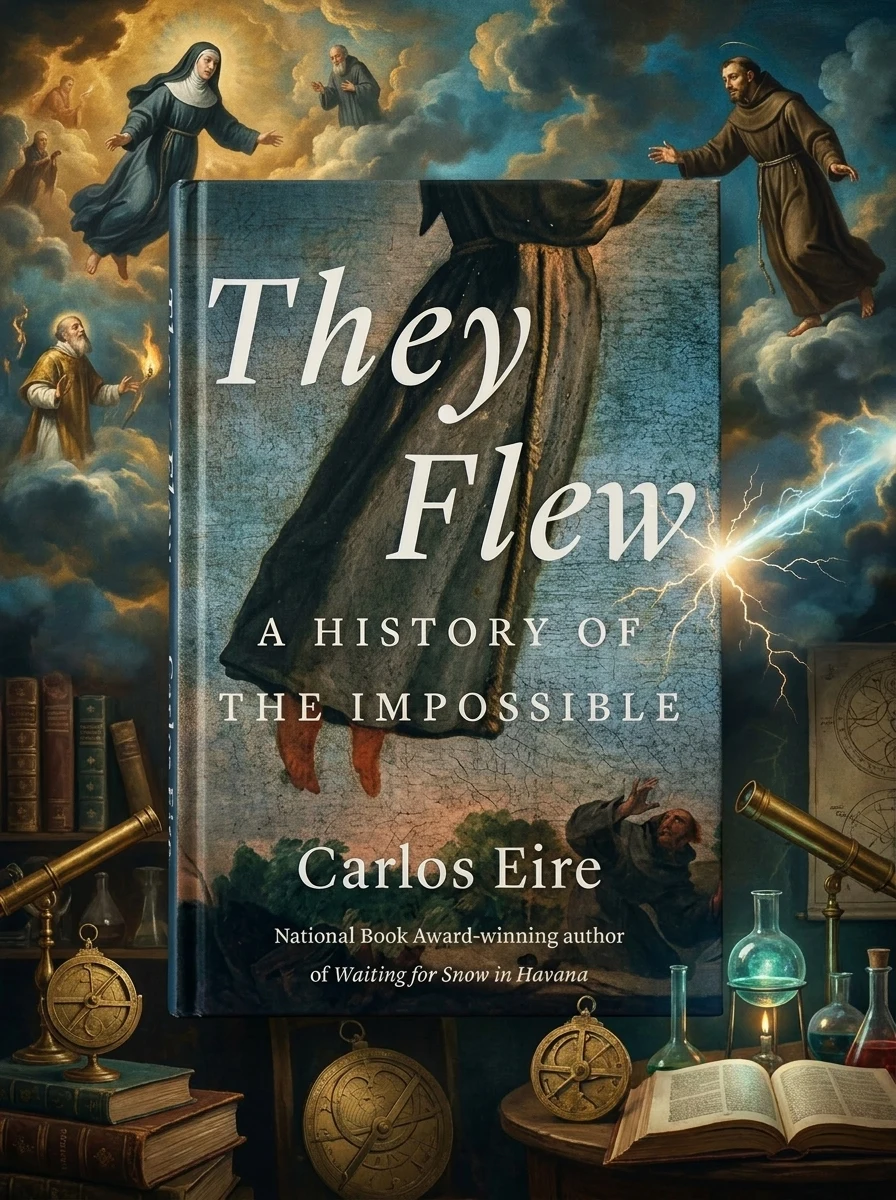
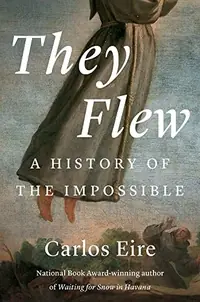
They Flew: A History of the Impossible
This edition can be ordered. No arrival date is confirmed.
Uncover how impossible wonders shaped the dawn of scientific thought.
Carlos M. N. Eire masterfully navigates the fascinating intersection where miraculous events met the nascent age of reason. This compelling study delves into the early modern era, when tales of levitating saints, bilocating figures, and accused witches were not mere fantasy but integral to lived experience. Eire meticulously examines how a society on the cusp of scientific revolution grappled with phenomena deemed impossible by its emerging intellectual elite, challenging our preconceived notions about the boundaries between the natural and supernatural during a pivotal historical shift. It's a profound look at belief in an age of burgeoning skepticism.
This work situates itself within the intellectual history of the early modern era, exploring the complex interplay between miraculous beliefs and the emerging age of reason before the full onset of the scientific revolution.


📝 Description: They Flew: A History of the Impossible
💎 Expert review
📖 Why choose it
Why this book is worth reading
Readers fascinated by the delicate boundary between faith and empirical inquiry will find profound value in this text. It offers a unique window into a time when levitation and bilocation were not dismissed as fantasy but were integral to lived experience for many. This book is essential for those seeking to understand how the dawn of scientific thought grappled with phenomena deemed impossible by the intellectual elite of the period. It challenges preconceived notions about the natural versus the supernatural, providing a nuanced perspective on belief during an age of burgeoning skepticism. If you are interested in the sociological and philosophical underpinnings of historical worldviews, this study reveals how miraculous events shaped the very foundations of modern scientific thought.
⭐ Reader reviews
Reader rating
Eire provides a meticulous examination of early modern phenomena, weaving together history, theology, and nascent science. While intellectually rigorous and rewarding for those willing to engage with dense historical analysis, this book may not suit readers seeking light entertainment or straightforward magical manuals. It is decidedly academic in tone, focusing on the intersection of belief and reason rather than offering practical occult guidance. Skeptics who prefer clear-cut demarcations between history and myth might find the author's sympathetic exploration of 'impossible' wonders frustrating. However, for scholars and serious enthusiasts of esoteric history, it stands as a compelling study of how society navigated the cusp of scientific revolution.
❓ Frequently asked questions
📖 Who should read this
If you're fascinated by the history of belief, the complex interplay between science and spirituality, or the intellectual battles that shaped the modern world, this book is for you. Readers interested in the occult's historical roots will find its exploration of early modern phenomena particularly illuminating.
🎯 Key themes and symbolism
Impossible Phenomena
Eire explores documented accounts of seemingly impossible events like levitation, bilocation, and witchcraft, which were surprisingly commonplace in the early modern period. He treats these occurrences not as mere superstition, but as significant cultural and historical facts that demanded explanation and shaped societal understanding of reality, even as empirical thought began its ascent.
Dawn of Modernity
The book meticulously charts the intellectual and cultural shift from a world deeply rooted in religious belief and acceptance of the miraculous, to one increasingly influenced by scientific inquiry and skepticism. Eire reveals the complex processes by which new modes of thinking gradually began to challenge and redefine what was considered possible, paving the way for the modern scientific worldview.
Natural vs. Supernatural
This work scrutinizes how the lines between the natural and supernatural were dramatically redrawn during the transition to modernity. Eire demonstrates that while scientific understanding expanded, the presence of inexplicable phenomena forced thinkers to reconsider these boundaries, highlighting a period of intense intellectual friction and redefinition regarding the very fabric of existence.
💬 Quotes from the book
“Before the age of skepticism truly solidified its grip, the air itself seemed to ripple with wonders, where saints ascended and witches soared, not merely in folklore but in documented experience.”
“The paradoxical dance between undeniable marvels and the rising tide of empirical reason shaped a new human consciousness, one forced to reconcile the miraculous with the measurable.”
📜 Historical context
📚 Glossary
- Levitation
- Bilocation
- Early Modern Era
📔 Questions to reflect on
- How might our own understanding of reality be shaped by phenomena we currently deem 'impossible' but are widely believed by others?
- Reflect on a time when a personal experience challenged your preconceived notions of what is scientifically or naturally possible. How did you reconcile this tension?
- Consider how the definitions of 'natural' and 'supernatural' have evolved throughout history. What might these terms mean to us in another century?
🏛 Books from this publisher Yale University Press
All books from this publisher →




You might also like
See more →

 91
91

 91
91
 91
91