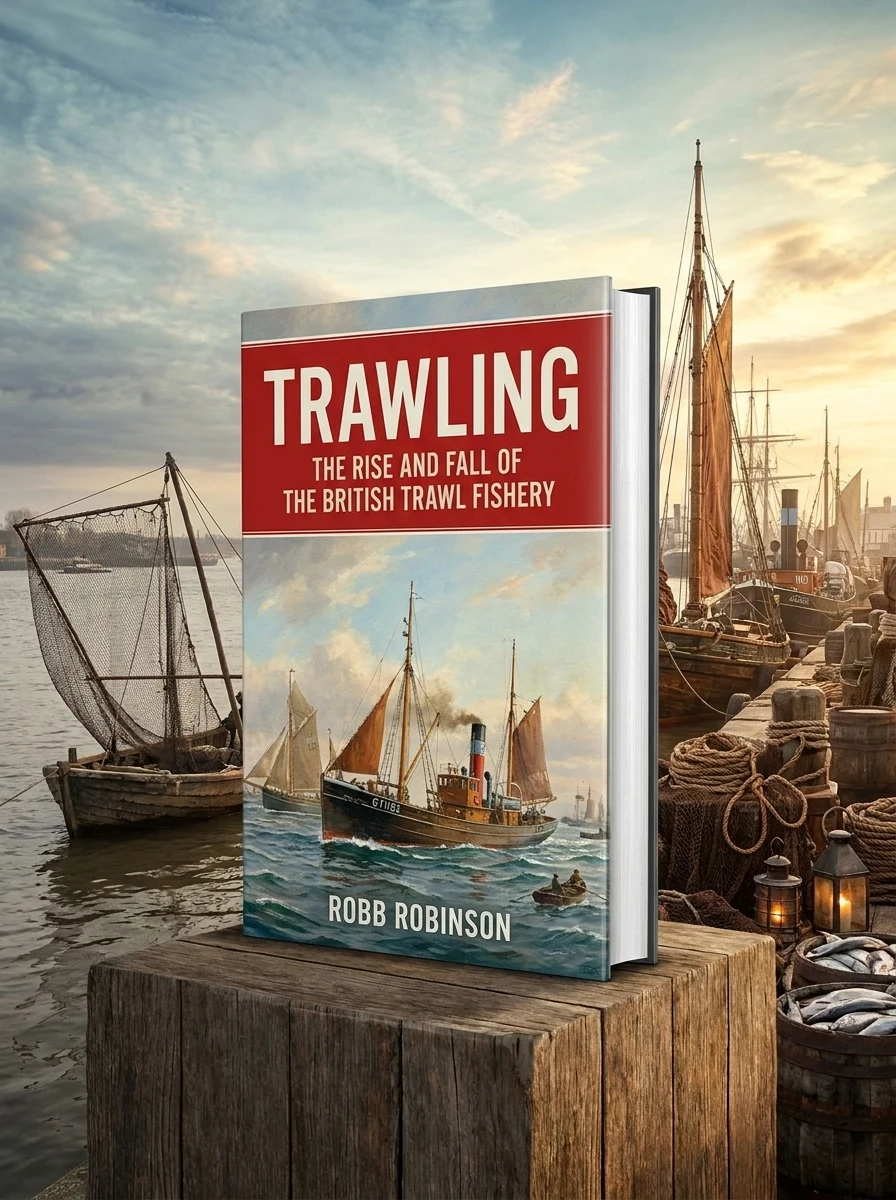
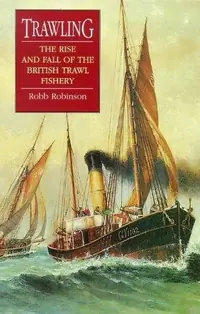
Trawling Robinson, Robb
Stock reported in the catalog; fulfillment is confirmed with your request.
Unearth the hidden currents of Britain's maritime past, where industry met the deep.
This compelling historical narrative meticulously chronicles the evolution of trawling in Britain, from its primitive fourteenth-century origins to its zenith as a global maritime force. Robb Robinson traces how technological advancements, notably the beam trawl and later steam vessels, propelled Britain to pre-eminence in European fishing. The account navigates intense growth and international rivalry, ultimately detailing the industry's decline in the late 20th century, offering a thorough survey of this vital, yet often overlooked, aspect of British economic history.
This work situates itself within the niche of British maritime economic history, bridging the gap between industrial archaeology and social narrative. It explores the profound impact of technological evolution on national identity during the rise and fall of a key industry.


📝 Description: Trawling Robinson, Robb
💎 Expert review
📖 Why choose it
Why this book is worth reading
Readers with an appetite for the tangible history of industry and the shifting tides of economic power will find this volume indispensable. It offers a rare glimpse into how technological innovation, from primitive gear to steam vessels, reshaped Britain's global standing. Those fascinated by the intricate dance between human endeavor and the natural world will appreciate the detailed account of international rivalry and industrial zenith. It is particularly valuable for scholars and enthusiasts seeking to understand the overlooked narratives that underpin modern economic structures, providing a comprehensive yet accessible survey of a vital historical period.
⭐ Reader reviews
Reader rating
Robb Robinson delivers a meticulous chronicle that serves as an essential reference for maritime historians and economists alike. The narrative effectively tracks the trajectory from fourteenth-century origins to late twentieth-century decline, offering rigorous analysis of technological shifts. However, casual readers seeking dramatic plotlines or fictionalized accounts may find the dense focus on industrial mechanics and economic factors tedious. It is not suited for those expecting a light, leisurely beach read; rather, it demands engagement with historical data and industrial context. Ideal for academic libraries and serious students of British history who value thoroughness over entertainment.
❓ Frequently asked questions
📖 Who should read this
If the hidden mechanics of industrial history, untold maritime endeavors, or the rise and fall of national influence captivate you, this meticulous account of Britain's trawling saga will illuminate a fascinating chapter in human ingenuity and decline.
🎯 Key themes and symbolism
Early Fishing Innovations
Delves into the rudimentary beginnings of trawling, highlighting early devices like the 'wondyrychoun' and the societal resistance they faced. It uncovers how these initial, often controversial, methods paved the way for more sophisticated techniques, illustrating the slow, incremental march of technological progress in a vital industry.
Industrial Maritime Dominance
Explores how the widespread adoption of the beam trawl and subsequent steam-powered vessels transformed British fishing. The narrative reveals how these innovations not only spurred the growth of major east coast ports but also cemented Britain's status as a leading European maritime power for centuries.
The Fading Empire of Seas
Chronicles the eventual erosion of Britain's once-unrivaled position in global trawling. The book examines the impact of various conflicts, including the Cod Wars, and fierce international competition, detailing the factors that led to the significant reduction of Britain's distant water fishing interests by the 1990s.
💬 Quotes from the book
“Even in the nascent days of the fourteenth century, the 'wondyrychoun' stirred legislative ire, a testament to humanity's enduring quest to extract from the depths, and the subsequent friction with established order.”
“The embrace of steam propulsion in the 1880s was not merely an incremental shift; it was the engine of an empire, propelling British fleets into distant, previously unimaginable, fishing grounds with relentless efficiency.”
📜 Historical context
📚 Glossary
- Trawling
- Beam Trawl
- Wondyrychoun
📔 Questions to reflect on
- Consider the cyclical nature of technological innovation and societal resistance, as exemplified by early trawling. What contemporary technologies face similar debates, and why?
- Reflect on how a nation's dominance in one industry, like British trawling, can rise and fall. What factors contribute to such shifts in global economic power?
- Imagine the lives of those involved in the trawling industry across centuries. How did their relationship with the sea and technology evolve, and what personal sacrifices might have been made for progress?
🏛 Books from this publisher Liverpool University Press
All books from this publisher →

 85
85



You might also like
See more →

 91
91


 91
91