US shipping Secure card payment Occult and esoteric books

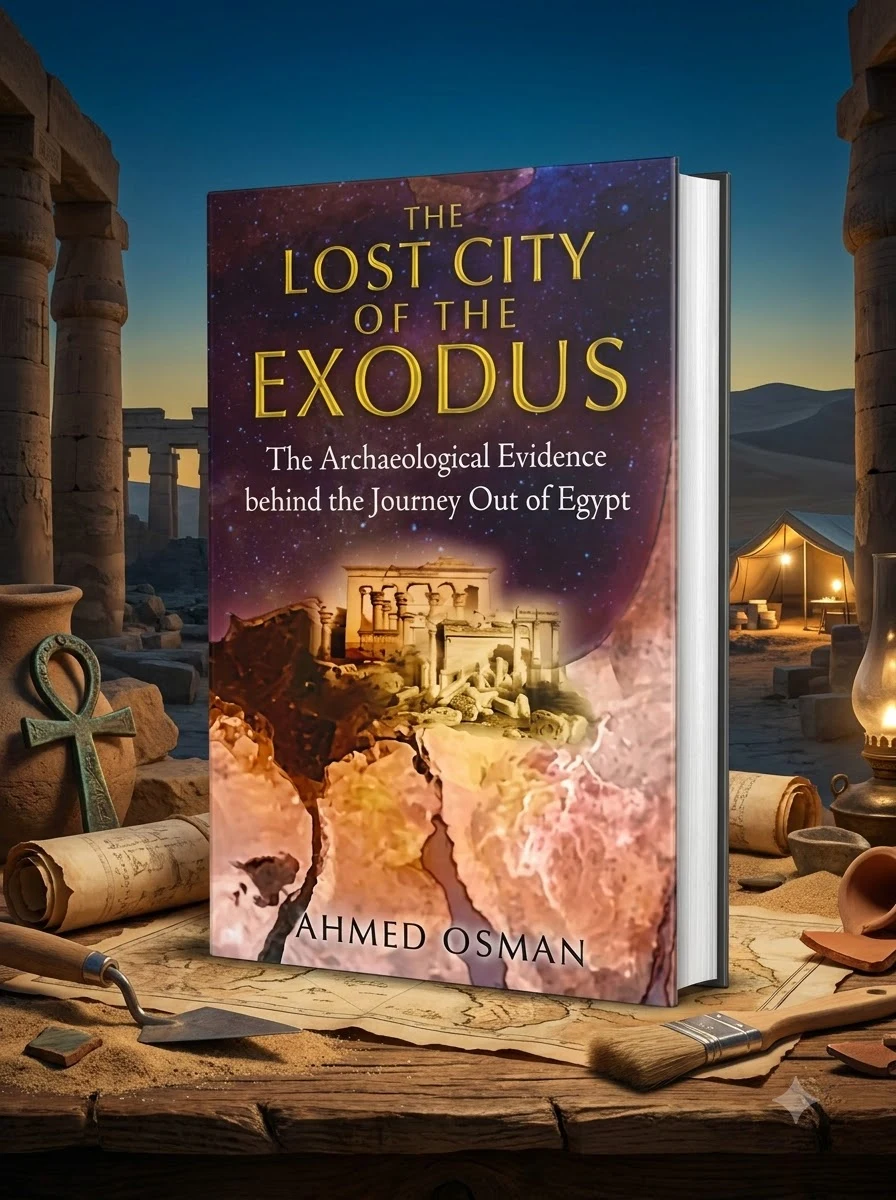
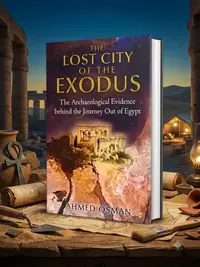
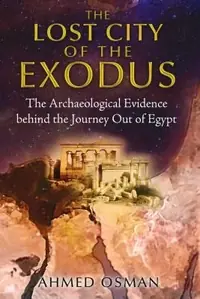
The Lost City of the Exodus: The Archaeological Evidence Behind the Journey Out of Egypt

Osman, Ahmed
Reader rating
4.5
(1 reviews) 134 sold
Availability to be confirmed

This edition can be ordered. No arrival date is confirmed.

📚 ABOUT THE BOOK

Uncover the forgotten truth behind the Exodus, hidden in plain sight for millennia.

Ahmed Osman presents a compelling case for the true location of the Exodus city, a discovery he first made decades ago and which recent archaeology now supports. He argues that conventional scholarship has overlooked this pivotal site by focusing on incorrect historical periods and regions. Through meticulous comparative research of Hebrew scriptures and ancient Egyptian records, Osman pinpoints the city of Zarw as the starting point for the journey to Canaan. This work challenges the prevailing view of the Exodus as mere myth, restoring its historical foundation and detailing Osman's efforts to gain official recognition.

Key themes
Archaeological Revisionism Reclaiming Biblical History Interpreting Ancient Texts
Historical context

This work sits at the intersection of esoteric archaeology and alternative biblical history, challenging mainstream academic consensus within the occult and philosophical traditions that seek tangible evidence for spiritual narratives.


Difficulty
●● Moderate
Fans will love it
Erich von Däniken · Graham Hancock · Heinrich Schliemann
🕯️ Occult Philosophy
🏛 Bear & Company 📅 2014 📖 224 pages 📔 Paperback 📐 Paperback ISBN: 9781591431893
Fun fact
Ahmed Osman's work is a truly provocative and meticulously researched volume that courageously challenges archaeological orthodoxy. It excels at offering a compelling, alternative framework for understanding the Exodus, drawing from deep textual analysis. This book will disappoint those unwilling to question established timelines or expecting simple, uncontested answers. It stands as a vital contribution to the ongoing conversation about biblical historicity and the reinterpretation of ancient Egyptian evidence.

📝 Description: The Lost City of the Exodus: The Archaeological Evidence Behind the Journey Out of Egypt

Recent archaeological findings confirm Osman's 25-year-old discovery of the location of the city of the Exodus - Explains why modern scholars have been unable to find the city of the Exodus: they are looking in the wrong historical period and thus the wrong region of Egypt - Details the author's extensive research on Hebrew scriptures and ancient Egyptian texts and records, which allowed him to pinpoint the Exodus site - Reveals his effort to have his finding confirmed by the Egyptian government, including his debates with Zahi Hawass, Egyptian Minister for Antiquities Affairs When the first archaeologists visited Egypt in the late 1800s, they arrived in the eastern Nile Delta to verify the events described in the biblical Book of Exodus. Several locations believed to be the city of the Exodus were found but all were later rejected for lack of evidence. This led many scholars to dismiss the Exodus narrative merely as a myth that borrowed from accounts of the Hyksos expulsion from Egypt. But as Ahmed Osman shows, the events of Exodus have a historical basis and the ruins of the ancient city of Zarw, where the Road to Canaan began, have been found. Drawing on decades of research as well as recent archaeological findings in Egypt, Ahmed Osman reveals the exact location of the lost city of the Exodus as well as his 25-year effort to have this finding confirmed by the Egyptian government, including his heated debates with Zahi Hawass, former Egyptian Minister for Antiquities Affairs. He explains why modern scholars have been unable to find the city of the Exodus: they are looking in the wrong historical period and thus the wrong region of Egypt. He details his extensive research on the Pentateuch of the Hebrew scriptures, the historical scenes recorded in the great hall of Karnak, and other ancient source texts, which allowed him to pinpoint the Exodus site after he discovered that the Exodus happened not during the pharaonic reign of Ramses II but during that of his grandfather Ramses I. Osman concluded that the biblical city of the Exodus was to be found at Tell Heboua at the ruins of the fortified city of Zarw, the royal city of Ramses I--far from the Exodus locations theorized by previous archaeologists and scholars. In 2012, after 20 years of archaeological work, the location of Zarw was confirmed by Egyptian officials exactly where Osman said it would be 25 years ago. Thus, Osman shows that, time and again, if we take the creators of the source texts at their word, they will prove to be right.

💎 Expert review

💎
Esoterica Books editorial team
Occult literature desk
Osman’s argument is bold, yet it relies heavily on his personal interpretation of Egyptian records rather than broad consensus. Skeptics and strict academic historians will likely dismiss the methodology as speculative rather than evidential. The book may frustrate readers seeking definitive, peer-reviewed proof, as it prioritizes narrative coherence over rigorous historiographical standards. However, for those open to alternative perspectives within the esoteric community, it provides a stimulating, if controversial, framework. It is not suited for those requiring conventional academic validation or those who view the Exodus strictly as theological metaphor without historical basis.
✓ EDITOR'S REVIEW

📖 Why choose it

📖

Why this book is worth reading

Readers fascinated by the intersection of faith and forensic history will find this text deeply rewarding. Those who feel that conventional scholarship has dismissed rather than disproven biblical accounts will appreciate Osman’s meticulous comparative approach. It offers a sense of intellectual vindication for those who believe the Exodus is historical fact obscured by academic bias. The book appeals to seekers of hidden truths, providing a narrative that bridges ancient scripture with modern archaeological discovery. It is ideal for individuals eager to explore how recent findings might validate long-held spiritual beliefs, offering a compelling alternative to skeptical narratives.

⭐ Reader reviews

The starting rating comes from the team Esoterica Books —
⭐ Esoterica editorial review Editorial rating 4.5/5
★★★★
If you question established historical narratives and seek a deeper understanding of biblical events through an archaeological lens, this book is for you. It's perfect for those fascinated by ancient Egypt, scriptural mysteries, and the intersection of faith and historical inquiry, offering a…

Reader rating

4.5
Based on 1 reviews
5
0
4
1
3
0
2
0
1
0
E
Esoterica Books editorial team

Osman’s argument is bold, yet it relies heavily on his personal interpretation of Egyptian records rather than broad consensus. Skeptics and strict academic historians will likely dismiss the methodology as speculative rather than evidential. The book may frustrate readers seeking definitive, peer-reviewed proof, as it prioritizes narrative coherence over rigorous historiographical standards. However, for those open to alternative perspectives within the esoteric community, it provides a stimulating, if controversial, framework. It is not suited for those requiring conventional academic validation or those who view the Exodus strictly as theological metaphor without historical basis.

❓ Frequently asked questions

Osman contends that conventional scholars have been searching in the wrong historical period and geographical area within Egypt. Their assumptions about the Exodus timeline led them to overlook the actual site, which required a re-evaluation of both biblical and Egyptian chronological data.
The author presents compelling archaeological and textual evidence to establish a strong historical foundation for the Exodus narrative, suggesting it's not merely a myth. He outlines his discoveries and the arguments supporting his identification of the city of Zarw.

📖 Who should read this

If you question established historical narratives and seek a deeper understanding of biblical events through an archaeological lens, this book is for you. It's perfect for those fascinated by ancient Egypt, scriptural mysteries, and the intersection of faith and historical inquiry, offering a fresh, provocative perspective.

🎯 Key themes and symbolism

Archaeological Revisionism

Osman challenges established archaeological paradigms by asserting that the conventional search for the Exodus city has been fundamentally flawed. He re-evaluates historical timelines and geographical assumptions, proposing a new framework that aligns biblical narratives with tangible evidence found in an overlooked region of Egypt.

Reclaiming Biblical History

This book offers a profound counter-argument to the widespread academic dismissal of the Exodus as purely mythological. Osman meticulously uncovers the historical anchors for this foundational biblical event, asserting that the narratives are rooted in actual occurrences rather than being mere allegorical tales or borrowings from other ancient accounts.

Interpreting Ancient Texts

Osman's methodology relies heavily on a sophisticated, comparative analysis of both Hebrew scriptures and ancient Egyptian records. He demonstrates how cross-referencing these distinct textual traditions can unlock previously hidden insights, revealing congruences that traditional scholarship has either missed or misinterpreted in its quest to locate the Exodus city.

💬 Quotes from the book

“The prevailing academic dismissal of the Exodus as myth rests on a fundamental misdating of the event itself, leading scholars to search in centuries where no evidence could possibly exist.”

“By meticulously aligning specific details within the Hebrew narratives with overlooked passages in ancient Egyptian records, the true path and starting point of the Exodus emerges from the shadows of historical ambiguity.”

📜 Historical context

For over a century, scholars have debated the historical veracity of the Exodus, often dismissing it as myth due to a lack of confirming archaeological sites in expected locations. This work positions itself against that prevailing skepticism, challenging the notion that the Exodus narrative merely borrowed from accounts of the Hyksos expulsion. Osman re-establishes a historical basis for the event, placing it within a re-evaluated Egyptian timeline and offering a new path for investigation.

📚 Glossary

Zarw
Hyksos Expulsion
Hebrew Scriptures

📔 Questions to reflect on

  1. How might a re-evaluation of historical timelines, as proposed by Osman, challenge other long-held beliefs about ancient history or biblical events?
  2. Consider the implications if the Exodus narrative is indeed rooted in historical fact rather than being purely mythological. How does this impact your understanding of faith and history?
  3. Osman faced skepticism from established figures like Zahi Hawass. Reflect on the role of dissent and new perspectives in archaeological discovery and academic discourse.

🏛 Books from this publisher Bear & Company

All books from this publisher →
You might also like

See more →