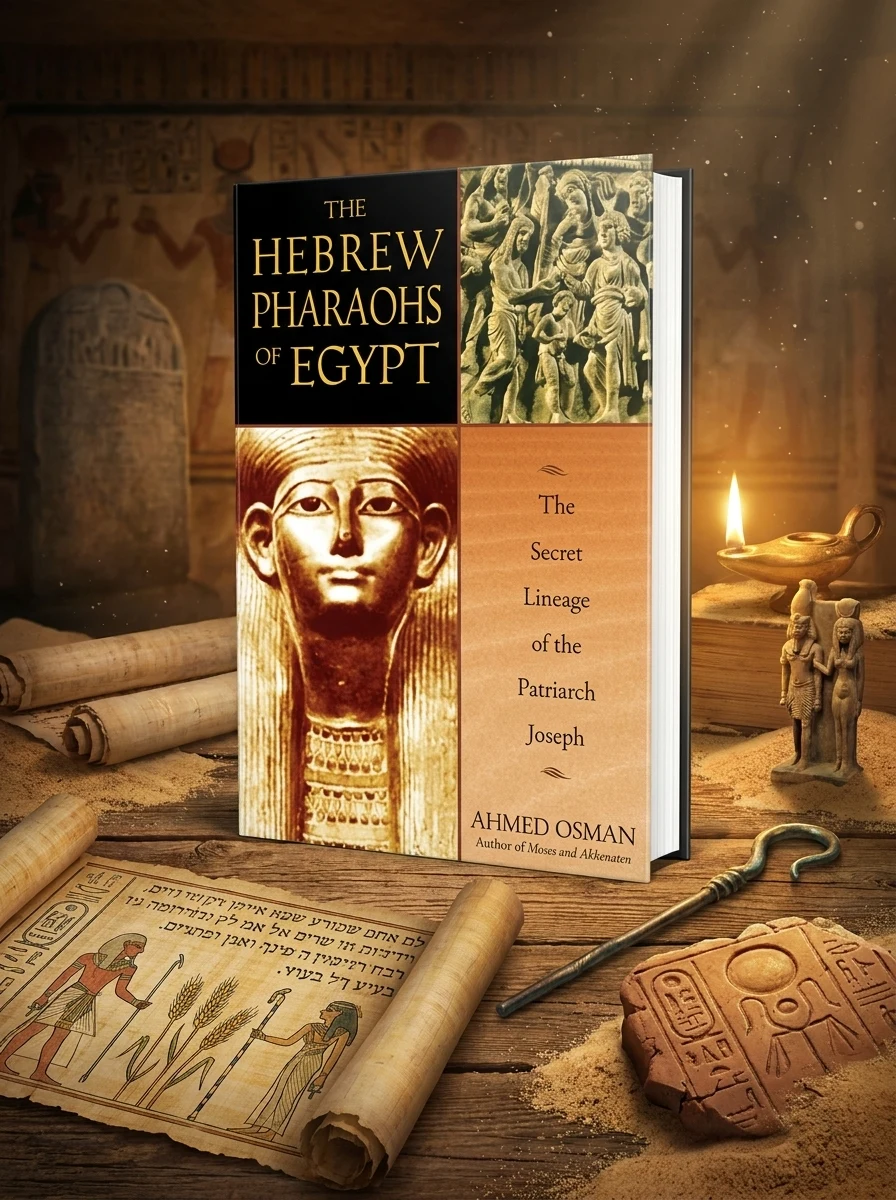
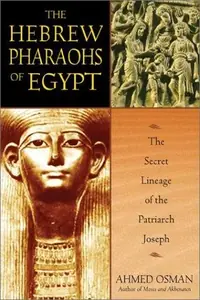
The Hebrew Pharaohs of Egypt: The Secret Lineage of the Patriarch Joseph
Osman, Ahmed

This edition can be ordered. No arrival date is confirmed.
Is ancient Egypt's enigmatic vizier, Yuya, truly the biblical Patriarch Joseph?
Ahmed Osman boldly proposes a radical re-evaluation of ancient history, asserting that the revered biblical figure Joseph and the powerful 18th Dynasty Egyptian vizier Yuya are, in fact, the same individual. Drawing upon intricate details from Egyptian, Hebrew, and Koranic texts, this book meticulously unravels a hidden lineage, suggesting profound implications for the origins of monotheism and the true timeline of the Exodus. Osman's compelling thesis challenges conventional timelines, offering a fascinating new perspective on the intertwined fates of early Hebrew and Egyptian civilizations.
This work sits within the niche of alternative historical revisionism and esoteric theology, challenging established biblical chronologies through cross-cultural textual analysis. It bridges the gap between ancient Egyptian political history and Hebrew religious narrative, appealing to those interested in the hidden intersections of monotheistic origins.


📝 Description: The Hebrew Pharaohs of Egypt: The Secret Lineage of the Patriarch Joseph
💎 Expert review
📖 Why choose it
Why this book is worth reading
Readers fascinated by the intersection of archaeology and theology will find this book a compelling invitation to rethink familiar narratives. If you have ever wondered if the biblical Patriarch Joseph shares a tangible identity with the Egyptian vizier Yuya, this text offers a meticulously researched perspective that connects intricate details from Hebrew, Egyptian, and Koranic sources. It is ideal for those seeking to understand the profound implications of this proposed lineage on the origins of monotheism. By challenging conventional timelines, the author provides a fresh lens through which to view the intertwined fates of early Hebrew and Egyptian civilizations, satisfying a deep curiosity about hidden historical truths and alternative religious histories.
⭐ Reader reviews
Reader rating
Osman presents a bold thesis that demands attention from those open to radical historical re-evaluations. The book succeeds in weaving together diverse textual traditions to propose a unified identity for Joseph and Yuya, offering a stimulating intellectual exercise. However, it does not suit readers who adhere strictly to conventional academic timelines or who prefer established archaeological consensus over alternative interpretations. Skeptics seeking rigorous peer-reviewed evidence may find the speculative nature of the lineage claims unsatisfying. This work is best approached as an intriguing hypothesis rather than definitive fact, appealing primarily to those willing to suspend disbelief for the sake of exploring a fascinating, albeit unconventional, historical narrative.
❓ Frequently asked questions
📖 Who should read this
For seekers of ancient truth and those who question established narratives, this book offers a thrilling intellectual adventure. If you're drawn to alternative histories, biblical reinterpretation, and the enigmatic connections between cultures, prepare for a paradigm shift in your understanding of the past.
🎯 Key themes and symbolism
Joseph's Egyptian Identity
Osman presents a compelling argument that the biblical Patriarch Joseph, sold into slavery and rising to power in Egypt, is none other than Yuya, a prominent vizier of the 18th Dynasty. He highlights shared titles and anomalies in Yuya's burial and appearance, suggesting a non-Egyptian origin for this influential figure.
Monotheism's Egyptian Roots
The book explores how Yuya's influence might have paved the way for the revolutionary monotheistic reforms under his daughter, Queen Tiye, and grandson, Akhnaten. This offers a new lens through which to view the sudden emergence of Atenism, suggesting a deeper, perhaps Hebrew, philosophical current within the Egyptian court.
Exodus Re-Dated
By identifying Joseph with Yuya, the author re-calibrates the traditional timeline for the Exodus narrative. This radical shift places the event in the era of Ramses I, proposing a fresh chronological framework for a pivotal moment in both biblical and Egyptian history, challenging centuries of scholarly consensus.
💬 Quotes from the book
“The anomalies surrounding Yuya are not mere coincidences; they are echoes of a narrative long suppressed, waiting for an observant eye to piece together the fragments of truth.”
“To truly comprehend the genesis of monotheism, one must look beyond the established religious texts and delve into the political and familial intricacies of the Egyptian court.”
📜 Historical context
📚 Glossary
- Yuya
- Akhnaten
- Vizier
📔 Questions to reflect on
- How might the identification of Joseph with Yuya reshape your understanding of the biblical narrative of Exodus and the early history of Israel?
- Consider the implications for the origins of monotheism if Queen Tiye and Akhnaten were indeed influenced by a figure like Joseph. Does this diminish or enhance the spiritual significance of the Abrahamic traditions?
- What are the challenges and benefits of reinterpreting ancient history through a lens that integrates religious texts with archaeological and genealogical evidence?
✍️ More books by this author Osman, Ahmed
All books by this author →
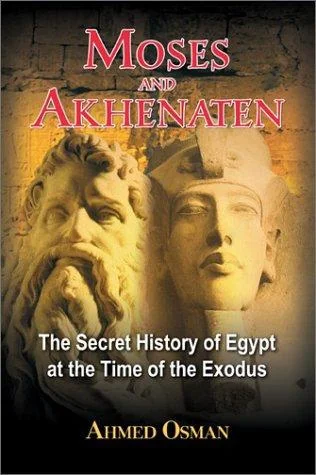
🏛 Books from this publisher Bear & Company
All books from this publisher →
You might also like
See more →