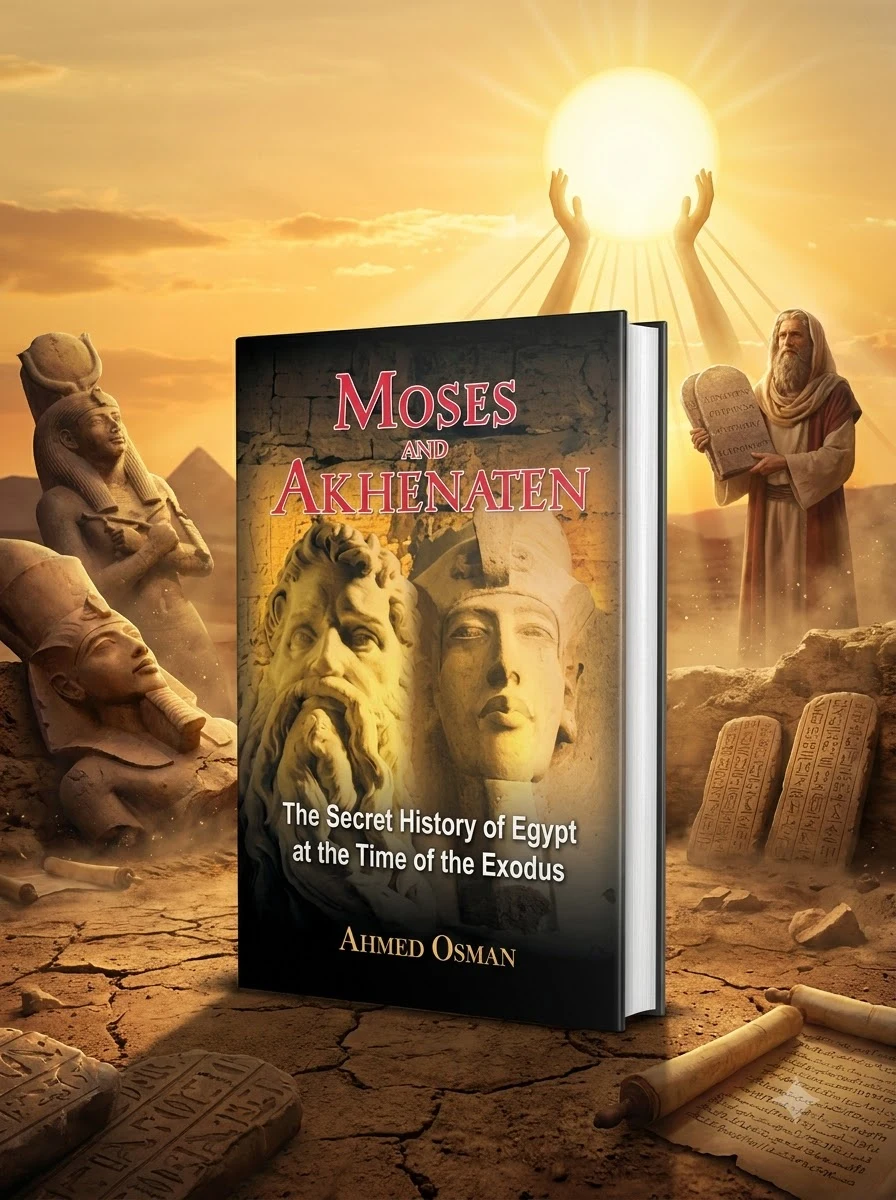
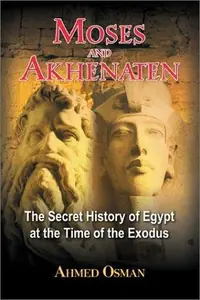
Moses and Akhenaten: The Secret History of Egypt at the Time of the Exodus
Osman, Ahmed

This edition can be ordered. No arrival date is confirmed.
Uncover the audacious theory uniting Moses and Egypt's 'heretic' pharaoh, Akhenaten.
Ahmed Osman presents a provocative re-evaluation of biblical and Egyptian narratives, asserting that the revered prophet Moses and Egypt's 'heretic' pharaoh, Akhenaten, are in fact the same historical figure. Drawing upon a compelling array of archaeological findings and historical records, Osman meticulously reconstructs a timeline that challenges centuries of religious and scholarly understanding. This work offers a revolutionary perspective on the origins of monotheism and the true lineage of Semitic faith, inviting readers to reconsider foundational myths and the intertwining fates of two monumental figures.
This work sits firmly within the intersection of alternative history and esoteric Egyptology, challenging mainstream scholarly consensus by reinterpreting foundational religious narratives through a unified historical lens.


📝 Description: Moses and Akhenaten: The Secret History of Egypt at the Time of the Exodus
💎 Expert review
📖 Why choose it
Why this book is worth reading
Readers fascinated by the hidden connections between ancient civilizations and religious origins will find this book deeply engaging. It is ideal for those who enjoy speculative history that dares to question established timelines and identities. If you are intrigued by the possibility that major religious figures share a single, complex origin story, Osman’s meticulous reconstruction offers a fresh perspective on the development of monotheism. This book appeals to seekers of alternative truths who appreciate detailed archaeological analysis woven into a compelling narrative about power, faith, and identity in ancient Egypt.
⭐ Reader reviews
Reader rating
Osman delivers a provocative re-evaluation that demands attention from enthusiasts of unconventional historical theories. However, this work is not suited for strict traditionalists or conventional biblical scholars who prioritize established consensus over speculative synthesis. Readers seeking definitive, widely accepted academic proof may find the arguments too audacious and the timeline reconstruction overly imaginative. It is best approached as a thought-provoking exploration rather than conclusive fact. Those comfortable with challenging foundational myths will appreciate the depth of research, while skeptics might dismiss the core premise as too radical to be credible within standard historiography.
❓ Frequently asked questions
📖 Who should read this
If you are a seeker of hidden histories, a devotee of ancient mysteries, or someone ready to critically re-examine the origins of faith, this book will enthrall you. It's for those who dare to question established narratives and embrace radical new perspectives.
🎯 Key themes and symbolism
Unified Prophetic Identity
This book boldly posits that Moses and Akhenaten, historically treated as separate and distinct figures, are in fact one and the same individual. Osman meticulously builds a case, using parallel timelines and events, to merge their biographies, suggesting a profound reinterpretation of both Egyptian royal history and the foundational narrative of the Abrahamic faiths.
Monotheism's Egyptian Roots
Osman delves into Akhenaten's revolutionary religious reforms, where the pharaoh abolished Egypt's vast pantheon in favor of a single, aniconic deity, the Aten. The book argues that this radical monotheistic vision, predating the traditional understanding of Mosaic monotheism, provides the true genesis point for the concept of a singular God, directly linking it to ancient Egypt.
Revisionist Ancient History
Challenging long-held academic and religious dogma, the author employs archaeological and documentary evidence to construct an alternative history of the Exodus. By identifying Moses with Akhenaten, the book fundamentally alters our understanding of the circumstances surrounding the Exodus, the pharaohs involved, and the subsequent development of early Israelite religion.
💬 Quotes from the book
“The striking confluence of historical events and religious reforms strongly indicates that the man known as Moses and the pharaoh Akhenaten shared a singular, revolutionary identity.”
“To truly comprehend the genesis of monotheism, one must look beyond the desert and into the heart of Akhenaten's court, where the concept of a singular, formless deity first took root.”
📜 Historical context
📚 Glossary
- Akhenaten
- Aten
- Exodus
📔 Questions to reflect on
- How does the idea of Moses and Akhenaten being the same person challenge or reinforce your existing understanding of biblical history and the origins of monotheism?
- If Osman's theory is true, what implications would it have for the cultural and religious legacy of ancient Egypt and its connection to Semitic traditions?
- Consider the role of 'heresy' in religious evolution. How did Akhenaten's perceived heresy contribute to a potential paradigm shift in spiritual thought?
✍️ More books by this author Osman, Ahmed
All books by this author →
🏛 Books from this publisher Bear & Company
All books from this publisher →
You might also like
See more →