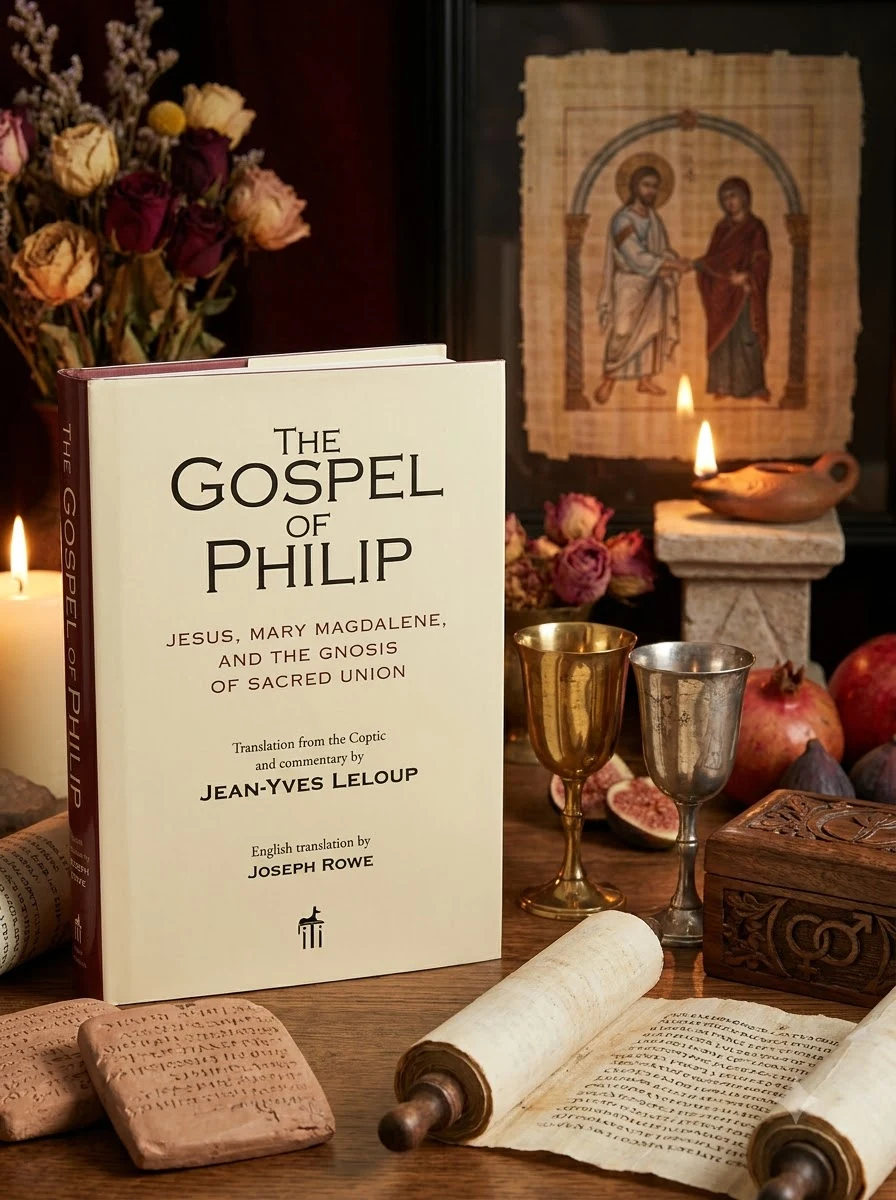
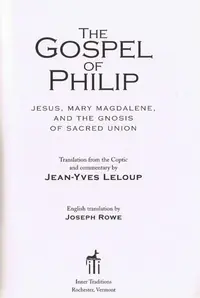
The Gospel of Philip: Jesus, Mary Magdalene, and the Gnosis of Sacred Union
LeLoup, Jean-Yves; , Needleman, Jacob

This edition can be ordered. No arrival date is confirmed.
Uncover the Gnostic secrets of Jesus and Mary Magdalene's sacred union.
Delve into Jean-Yves LeLoup's compelling translation and analysis of *The Gospel of Philip*, an apocryphal text challenging millennia of Christian doctrine. This work reveals an initiatic path rooted in the sacred union of masculine and feminine principles, positing a profound, physical relationship between Jesus and Mary Magdalene. LeLoup redefines the divine trinity to include a powerful feminine presence, offering a radical perspective where intimate partnership becomes the ultimate holy space. It's a vital text for those seeking a more inclusive and esoteric understanding of early Christianity.
This work engages with Gnostic Christianity and early apocryphal literature, challenging traditional doctrinal interpretations through an esoteric lens. It explores the intersection of sacred union philosophy and feminine theology within historical Christian mysteries.


📝 Description: The Gospel of Philip: Jesus, Mary Magdalene, and the Gnosis of Sacred Union
💎 Expert review
📖 Why choose it
Why this book is worth reading
Readers drawn to alternative spiritualities and the reclamation of feminine divine presence will find this text profoundly resonant. It offers a vital perspective for those seeking an inclusive understanding of early Christianity that honors physical intimacy as holy ground. Those interested in the dynamics of sacred union and initiatic paths rooted in balanced masculine and feminine principles will gain deep insight here. It is ideal for seekers wishing to explore esoteric interpretations of Jesus and Mary Magdalene beyond mainstream dogma, providing a radical yet grounded view of spiritual partnership.
⭐ Reader reviews
Reader rating
Jean-Yves LeLoup provides a compelling analysis that radically redefines the divine trinity through a powerful feminine presence. While intellectually stimulating for those open to Gnostic perspectives, it may not suit readers adhering strictly to orthodox Christian doctrine or those seeking purely historical textual criticism without philosophical interpretation. The book’s emphasis on physical intimacy as the ultimate holy space requires an open mind regarding non-traditional theological frameworks. It is best appreciated by those already familiar with esoteric Christianity who wish to deepen their understanding of sacred union rather than those looking for conventional biblical commentary.
❓ Frequently asked questions
📖 Who should read this
If you seek a radical reinterpretation of early Christian teachings, question traditional dogma, or yearn to explore the divine feminine's role in spirituality, this book offers profound insights. It's for those ready to challenge conventional narratives and embrace a more esoteric path.
🎯 Key themes and symbolism
Sacred Nuptial Chamber
This gospel radically redefines holiness, proposing that the 'nuptial chamber'—representing the sacred union of male and female—is the true holy of holies. It directly counters traditional Christian views that often demonized sexuality, instead presenting it as a divine reflection and a path to spiritual enlightenment, where God's presence is most keenly felt.
Mary Magdalene's Centrality
Far from being a repentant sinner, Mary Magdalene emerges as a pivotal figure, intimately connected to Jesus. *Philip* suggests a profound, even physical, sacred partnership between them, elevating her status beyond that of a mere disciple. This portrayal offers a powerful alternative to her marginalized role in canonical scripture, highlighting her spiritual authority.
Reimagined Divine Trinity
The text presents a revolutionary understanding of the Holy Trinity, incorporating the divine feminine. It posits God as the Father, the Holy Ghost as the Mother, and Jesus as the Son. This reinterpretation emphasizes that the complete image of God is found not in individuals, but in the sacred relationship and embrace between male and female, fostering wholeness.
💬 Quotes from the book
“The true holy of holies is found not in temples, but in the sacred embrace of balanced masculine and feminine energies, reflecting the divine.”
“Neither man nor woman alone bears God's complete image; it is in their sacred unity that divinity is fully revealed, mirroring the cosmic Father and Mother.”
📜 Historical context
📚 Glossary
- Apocryphal Gospels
- Gnosis
- Nuptial Chamber
📔 Questions to reflect on
- How does the concept of the 'nuptial chamber' challenge or expand your understanding of sacredness and intimacy, both personal and divine?
- Consider the implications of a divine feminine presence as the Holy Ghost. How might this alter traditional theological frameworks and your personal spiritual perspective?
- In what ways does Mary Magdalene's portrayal in this text resonate with or diverge from your previous perceptions of her role in early Christianity and spiritual history?
✍️ More books by this author LeLoup, Jean-Yves; , Needleman, Jacob
All books by this author →
🏛 Books from this publisher Inner Traditions International
All books from this publisher →



You might also like
See more →